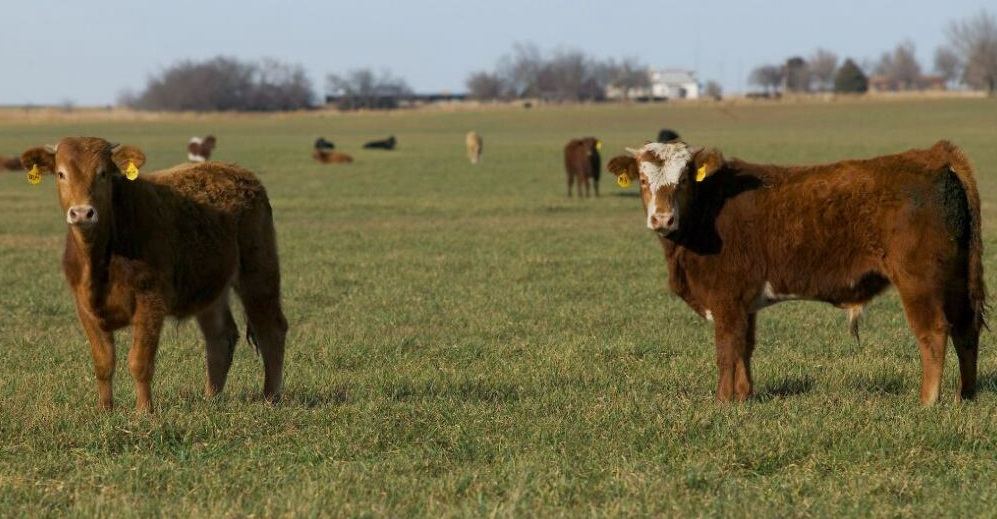
The U.S. beef cow herd is at historic lows, increasing the need for reliable sources of high-quality beef reducing feeder cattle availability and making challenging break evens for cattle feeders. One of the most promising solutions is the growing use of beef × dairy crossbred calves, made possible by advances in reproductive technology that allow dairy producers to create replacement heifers from elite cows and breed the remainder to beef sires. The resulting crossbreds consistently show better growth, efficiency, carcass quality and health than traditional dairy-type calves, providing value for dairies and cattle feeders.
To help producers understand how to best manage these calves and evaluate their economic potential, our team launched a coordinated research and Extension program following beef × dairy steers from birth through harvest. Studies at both research and commercial scales evaluated how preweaning nutritional level, post-weaning management programs and finishing systems affect gain, feed efficiency, carcass traits, profitability and greenhouse gas emissions. Economic modeling showed that dairy-beef steers can be as profitable as native beef, even with slightly higher feed costs. A Life-Cycle Analysis showed that calf-fed management reduced carbon footprint by 4.6 to 11.3% compared with yearling-fed systems. When emissions of the dairy cow were allocated primarily to milk production, the overall greenhouse gas intensity of dairy-beef systems was lower than that of native beef.
Extension outreach played a major role in delivering these findings to producers. Information was shared through field days, fact sheets, the Ranchers Thursday Lunchtime Webinar Series and regional programs such as the Five States Beef Conference. More than 10,000 producers, educators and industry professionals have participated in program events or used the online resources. Peer-reviewed publications, public datasets and media coverage further expanded the program’s reach.
The results are already influencing production decisions. Follow-up evaluations show improved producer confidence and adoption of recommended feeding and management strategies, especially in feedlots across Oklahoma and Texas. The work has improved cooperation between the beef and dairy sectors and increased understanding of how to raise crossbred calves efficiently while reducing their environmental footprint.
This research and Extension effort positions beef × dairy crossbreds as a practical, sustainable way to meet future beef demand. This work was supported in part by the intramural research program of the U.S. Department of Agriculture, National Institute of Food and Agriculture Critical Agricultural Research and Extension (CARES) Award No. 2022-68008-37102.
A Rancher’s Thursday Webinar Series presentation from May 2, 2024 covered effective post-weaning management of beef × dairy crossbreds at https://www.youtube.com/watch?v=gMFYRPaXX-4&t=91s.