Modernizing Farm Safety: Melissa Ploeckelman on Youth Guidelines and the “Stop-Think-Act” Strategy
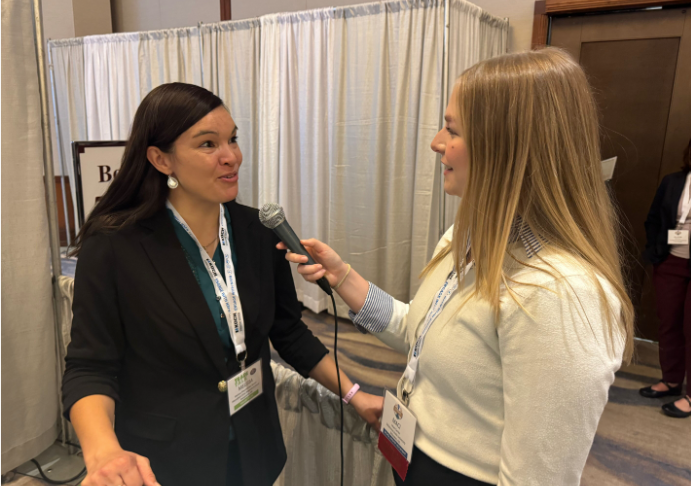
At the National Association of Farm Broadcasting (NAFB) convention, Oklahoma Farm Report’s Maci Carter sat down with Melissa Ploeckelman Brown of the National Farm Medicine Center to discuss a critical evolution in agricultural safety. While the farm remains a place of tradition, the hazards facing the next generation are shifting, prompting a new National Action Plan designed to guide safety protocols for the next decade.
The Silent Threat in the Cab According to Ploeckelman Brown, tractors remain the leading cause of injury and death among youth on farms, but the nature of the danger has changed. Decades ago, the primary fear was children falling from fenders on open tractors. Today, with modern, enclosed cabs, families often feel safer taking children along for “buddy rides.”
However, Ploeckelman Brown warned of a less visible danger: vibration.
“As youth are growing, their brains are still developing,” she explained. “That long-term vibration is actually causing damage on their brains and their hearing as their eardrums are still developing.”
Additionally, the sheer size of modern machinery has created massive blind spots. Operators often cannot see children running out to greet them, leading to tragic run-over incidents. The National Farm Medicine Center’s message remains “keep kids off tractors,” but the reasoning has pivoted to address these physiological and visibility risks.
A Blueprint for the Next Decade To address these modern realities, the Center has released a new National Action Plan featuring seven strategic goals. These include improving data collection on injuries, influencing public policy to secure safety funding, and identifying “emerging threats”—such as zoonotic diseases like H5N1.
A major pillar of the plan is dissemination—ensuring research doesn’t just sit on a shelf but reaches the farm gate.
Age vs. Ability One of the most difficult questions for farm families is determining when a child is ready to work. Ploeckelman Brown emphasized that age is an arbitrary number; safety depends on maturity, height, and weight.
“I’ve seen some 12-year-olds who are definitely tall enough and strong enough to drive a tractor… and I’ve seen some 16-year-olds who are just too small,” she noted.
To help parents make objective decisions, the Center promotes guidelines available at CultivateSafety.org/work. These guidelines break down the 50 most common farm tasks, outlining the physical and cognitive requirements necessary to perform them safely.
Words Matter: Why There Are No “Accidents” Ploeckelman Brown is also leading a charge to change the vocabulary of farm safety. She advocates for replacing the word “accident” with “incident.”
“The term ‘accident’ is defined as something that could not be prevented,” she said. “We know that most agricultural fatalities and injuries could have been prevented.”
She argued that vague headlines like “Farm Accident Kills Six” lead farmers to believe tragedies are unavoidable acts of fate. Conversely, descriptive language—such as detailing how a lack of gas monitors led to a manure pit tragedy—empowers farmers to identify similar risks on their own operations and take preventative action.
Empowering First Responders The interview also highlighted the RF-DASH program (Rural Firefighters Delivering Agricultural Safety and Health). While rural firefighters are experts in house fires and vehicle crashes, many lack training for agricultural emergencies.
RF-DASH encourages farmers to invite local fire departments to map their operations. This allows responders to identify hazards like fraying electrical cords near combustible chemicals before a fire starts, and to have a tactical plan in place should an emergency occur.
The Power of One Second Finally, Ploeckelman Brown left listeners with a simple, life-saving habit: “Stop-Think-Act.”
She shared a harrowing story of a neighbor who, while distracted by overhead wiring work, had his leg crushed by a slow-moving automatic manure scraper. The injury cost him part of his leg and forced him to hire help for his dairy operation.
“It only takes a second,” she urged. “When you’re switching from one task to the next, stop for one second. What could go wrong? … Do I have the tools?”
Despite the heavy topics, Ploeckelman Brown remains optimistic. “Farmers are resilient, and farmers care about each other,” she told Carter. By sharing stories and modernizing their approach to safety, the agricultural community is building a culture that protects its most valuable harvest: the next generation.