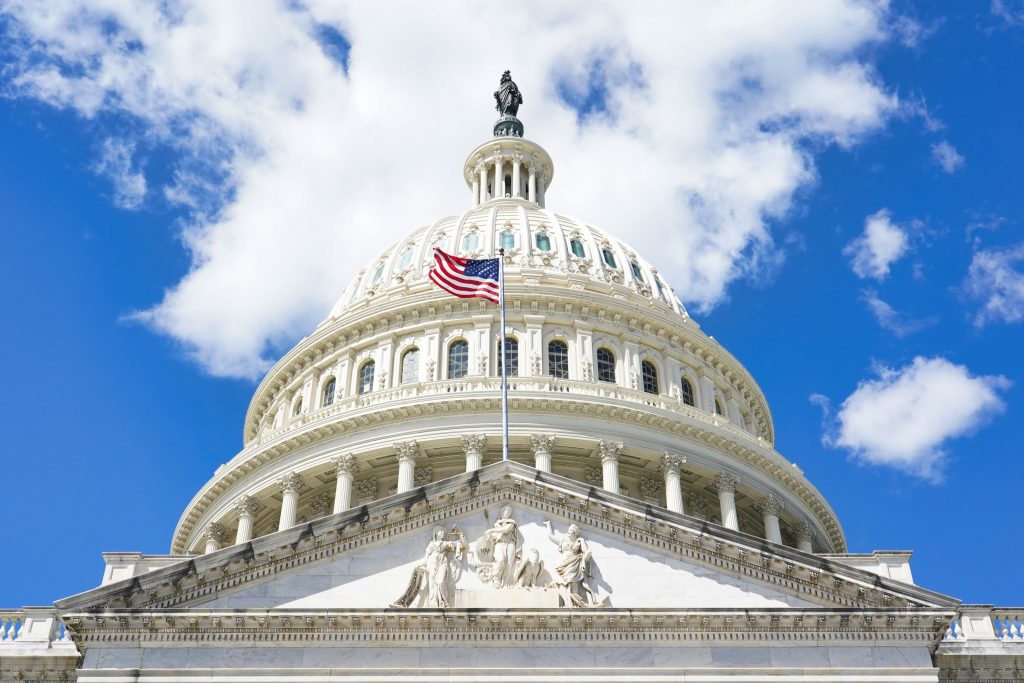
Last Night, the U.S. House of Representatives voted on legislation that ended the government shutdown. This package includes a clean continuing resolution that funds the government through January 30, 2026, as well as three appropriations bills that provide full fiscal year funding for Agriculture, Legislative Branch, and Military Construction and Veterans Affairs. These bills will ensure SNAP, WIC, and the VA are operating at full capacity through the end of the Fiscal Year. Lawmakers and Ag Groups Applaud End of Record-Breaking Shutdown
Congresswoman Stephanie Bice issued the following statement:
“Today, I voted to end the Democrat driven shutdown, the longest in history. This legislation responsibly reopens the government, fully funds three appropriations bills, and ensures that all federal employees who have been forced to work without pay will receive compensation. The last 43 days has been horrible for the country, and sadly it was all avoidable. Democrats chose to hold the American people hostage for political purposes. It is also important to note that every Democrat who voted against this legislation voted against providing funding for veterans, farmers, and rural communities. Legislation to keep the government open should have been passed weeks ago.”
National Farmers Union (NFU) President Rob Larew released the following statement in response to the U.S. House of Representatives voting to pass a continuing resolution that would provide funding to the federal government for another year. “We are relieved to see Congress reach an agreement to reopen the federal government along with another extension of the farm bill. But this is the bare minimum. “We’ve already lost too much time. The farm safety net is outdated and can’t keep up with today’s economic realities. Input costs remain high, trade relationships are uncertain, access to affordable healthcare is in danger, and the stress on rural communities continues to grow.”
Congressman Josh Brecheen released the following statement regarding his vote to reopen the government.
“Today, I voted to end the Schumer Shutdown and reopen the government. The continuing resolution (CR) that 216 of my Republican and 6 of my Democrat colleagues and I voted for will largely maintain current funding levels through January 30th, 2026. We also passed three appropriations bills tied to the CR—MilConVA, Agriculture, and Legislative Branch. While CRs are never optimal, this was a necessary step for reopening the government, keeping spending as low as possible, and resuming the process of passing the annual appropriations bills,” said Congressman Josh Brecheen.
American Farm Bureau Federation President Zippy Duvall commented today on the House vote to end the government shutdown. “Farm Bureau applauds the House for its vote to end the government shutdown, swiftly following the Senate’s vote. Farmers and ranchers rely on critical USDA services and disaster relief programs during these tough economic times, as do Americans who need access to food assistance programs and other services.
“We urge President Trump to quickly sign the continuing resolution so Congress can return its focus to policies that will improve the farm economy and expand opportunities for America’s farm families.”
The National Association of Wheat Growers (NAWG) CEO Sam Kieffer issued the following statement:
“NAWG welcomes Congress’s decision to reopen the federal government. This action provides critical funding to restart full USDA operations and the essential services that America’s farmers depend on to grow safe and nutritious food. Today’s vote by Congress also continues support for vital wheat research to benefit growers and consumers in the United States.”
“While this is a positive step, America’s wheat growers call on Congress to turn toward a long-term, bipartisan Farm Bill that provides clarity and certainty in turbulent times with low commodity prices and high input costs. In addition, Congress must prioritize fully reauthorizing the U.S. Grain Standards Act to facilitate market stability and confidence in U.S. wheat exports.”
National Cattlemen’s Beef Association (NCBA) Senior Vice President of Government Affairs Ethan Lane released the following statement in response to Congress passing a Continuing Resolution to end the government shutdown:
“American cattle producers need the federal government running at full capacity to provide critical services and market data. We thank Speaker Johnson and Majority Leader Thune for passing the funding package to end the shutdown and extend the Farm Bill. While we’re grateful to the Trump administration for easing the burden of the shutdown on producers, it still caused widespread disruptions, and we are glad it is now resolved.”
Oklahoma House Speaker Kyle Hilbert, R-Bristow, comments on the end of the 43-day-long federal government shutdown, the longest in American history:
“The end of this shutdown is a relief for hardworking families, but it should never have happened in the first place. Democrats played political games with essential services while Republicans advanced responsible funding bills to keep government open and accountable. Oklahomans expect leadership that puts people over politics. As we move forward, I urge federal leaders to focus on responsible budgeting, accountability and long-term solutions that ensure vital programs operate efficiently and hard-working American’s do not miss another paycheck.”
ASA Applauds Congressional Action to Reopen Federal Government:
The American Soybean Association applauds Congress for reopening the federal government after the U.S. House of Representatives approved the Senate-passed funding measure by a vote of 220-209, and President Trump signed it into law last night. The legislation restores funding for the U.S. Department of Agriculture for the next fiscal year, prevents a lapse in key Farm Bill provisions, extends the U.S. Grain Standards Act, and ensures continued operation of other critical federal services through the end of January. “The U.S. soybean industry is grateful for the restoration of federal funding, which will ensure farmers and all Americans regain access to essential government services we rely on,” said Caleb Ragland, ASA President and Kentucky soybean farmer. “Now that the government is open, growers need the federal government to get to work delivering much-needed farmer assistance and advancing other priorities that will help grow demand for U.S. soy, like finalizing biofuels regulations and strengthening trade opportunities. ASA is glad Congress found a path forward to end this impasse and urges lawmakers to keep that momentum going for America’s farmers.” ASA continues to urge policymakers to build on this progress and address ongoing priorities that support farmers, including implementation of key biofuel programs, measures to reduce farm input costs, and efforts to expand and stabilize export markets.
Oklahoma House Democratic Leader Cyndi Munson comments on government reopening:
Oklahoma House Democratic Leader Cyndi Munson, D-Oklahoma City, released the following statement on the reopening of the federal government. “Politicians in Washington failed Oklahomans by allowing this shutdown to occur and cutting off resources for hundreds of thousands of Oklahomans,” said Leader Munson. “The President had multiple opportunities to fulfill his duty of serving the American people by funding SNAP, and he continuously chose not to. That is not something we should forget. Even with the shutdown ending, Oklahomans are going to continue to face higher health care premiums and costs of living. We cannot forget that the Republican-led government in Washington purposefully caused needless stress for Oklahoma families with this shutdown. As the government reopens, leaders in Oklahoma should remain focused on creating the best outcomes for Oklahomans and ensuring everyone has access to the resources they need. I look forward to working with Republican state legislators to make sure this never happens again and Oklahomans lives are not left to hang in the balance because of decisions made by those in power at the federal level.”
USW Welcomes Federal Government Reopening and Passage of Key Ag Provisions
U.S. Wheat Associates (USW) today expressed appreciation for the reopening of the federal government, following passage of a continuing resolution that funds the federal government through January 31, 2026, and extends key agricultural provisions. “USW welcomes the reopening of the U.S. federal government, especially the passage of a full agricultural appropriations bill,” said Mike Spier, USW president and CEO. “We are grateful for the commitment to funding agricultural programs that are essential for supporting U.S. wheat farmers.” The U.S. House of Representatives passed the continuing resolution on Wednesday, November 12, after the U.S. Senate approved it on Monday, November 9. President Donald J. Trump signed the measure into law on Wednesday night. The legislation that reopened the federal government also delivered full appropriations for agriculture for fiscal year 2026, including funding USDA operations and reports. The bill extended farm bill programs left out of earlier budget reconciliation for one year, through September 30, 2026. Additionally, the bill provided $1.2 billion for the Food for Peace program and directed the USDA to work with the Department of State to review transferring the administration of the Food for Peace program from the State Department to the USDA. The extension of the U.S. Grain Standards Act through January 31, 2026, was also a significant priority for the U.S. wheat industry. The act authorizes USDA’s Federal Grain Inspection Service (FGIS) to establish the official marketing standards for grain and oilseeds and oversee grain inspection and grading services. The reauthorization bill restored FGIS’s authority to conduct this work and to collect and manage the user fees customers pay for this vital service. “Extending the U.S. Grain Standards Act was crucial for U.S. wheat farmers and our international customers,” Spier said. “The work of USDA’s FGIS underpins the integrity and efficiency of our U.S. grain marketing system and maintains the reliability of U.S. grain exports.”