
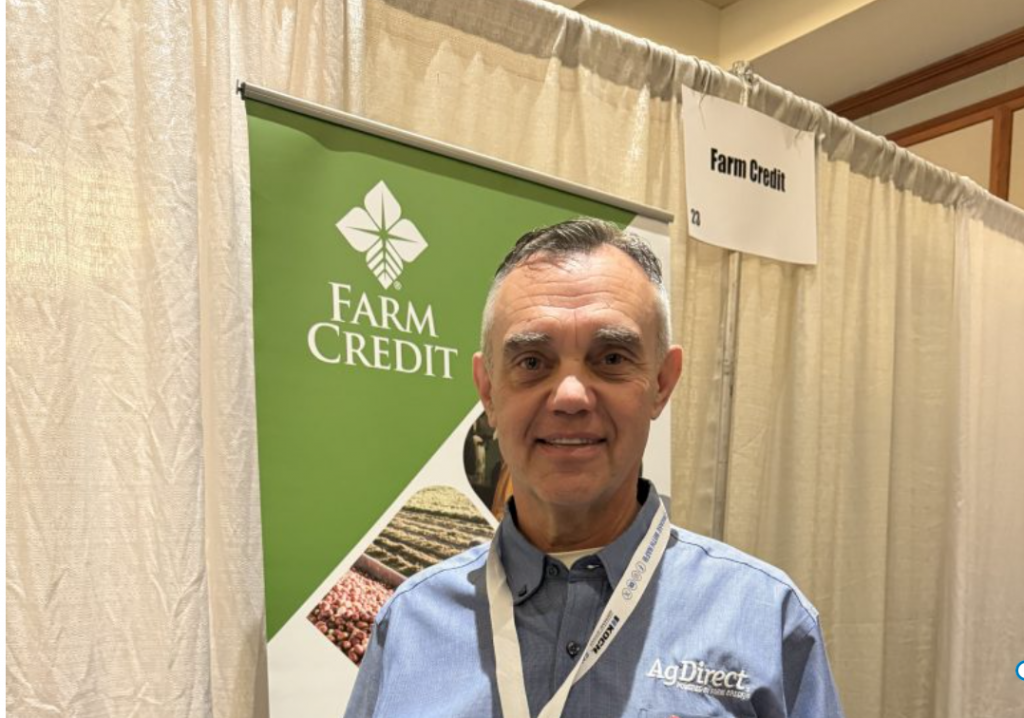
Intern Karleigh Erramouspe spoke with Brian Schrock, the territory manager of Ag Direct, who explained that fluctuating commodity prices and profit margins are causing producers to focus heavily on managing cash flow. He stated, “Customers are honestly trying to manage cash flow as much as possible, with possibly current debt, but taking on new debt to buy equipment.” With the rising cost of new machinery, producers are increasingly looking at “used equipment through auction channels, private party channels, as well as their dealers, to try to find good quality used equipment to meet their needs as they grow.”
Regarding trends in farm equipment, Schrock highlighted that dealer liquidations through auctions have been prominent over the past 12 to 18 months. “Dealers are trying to clean up their inventory, take it to auction, liquidate it to reduce their operating costs,” he said. He also noted that producers are exploring refinancing opportunities to improve cash flow, and that leasing—both for new and late-model used equipment—offers “a lower cost of entry with a lower initial payment up front” compared to traditional loans.
Looking ahead to 2026, Schrock projected that the availability of new equipment will remain constrained, primarily due to cost considerations. He explained, “Customers are very conscientious about how much money they are willing to lay out for new equipment…customers again, are looking at that used to try to manage that as well.” While new equipment sales may be limited, he emphasized that “used equipment is still readily available,” reflecting a continued reliance on pre-owned machinery in the current market environment.
On managing financial risk, Schrock described how Farm Credit works directly with producers to structure debt according to cash flow and tax considerations. He advised, “Take a look at your income opportunities. Know what your expenses are going to be, know what your cost per head or per acre is, and manage your upcoming purchases of equipment accordingly. Don’t overextend yourself when times are tight. Just be cautious.” His comments underscored the importance of careful financial planning and strategic decision-making for producers navigating uncertain market conditions.