
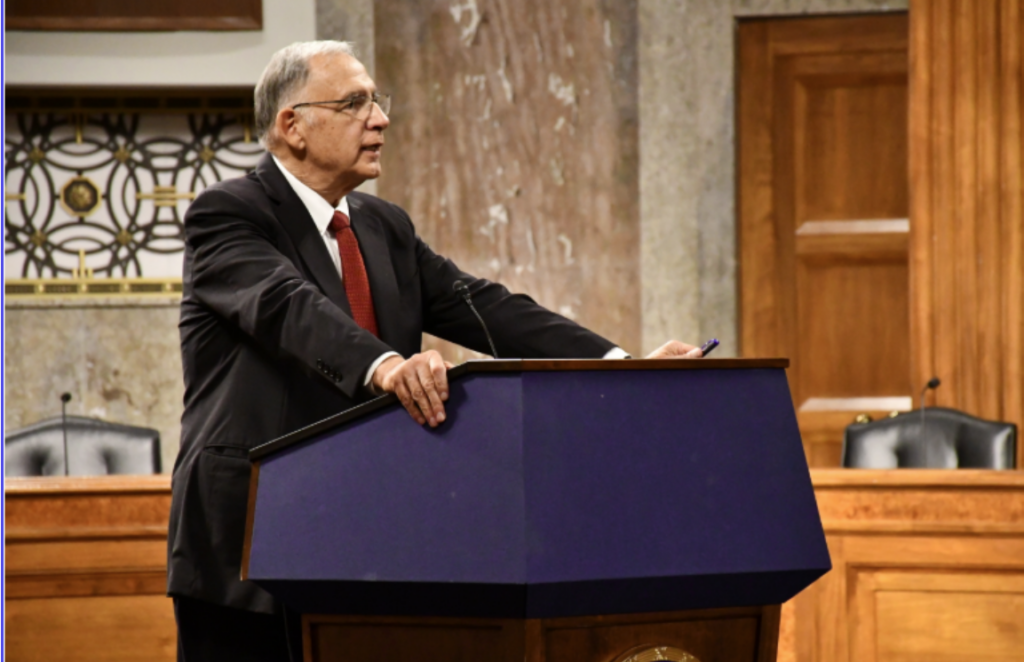
Following a contentious committee vote that ended without a resolution, U.S. Senate Agriculture Committee Chairman John Boozman expressed deep frustration over the stalled Farm Bill negotiations. Speaking with ag reporters prior to the August legislative recess, Boozman emphasized that American farmers, ranchers, and rural communities are facing urgent economic realities that require immediate Congressional action.
The current farm policy framework is based on the 2018 Farm Bill, which relied on economic data as far back as 2012. Boozman noted that the economic landscape for agriculture has shifted dramatically over the past decade, leaving producers under financial strain due to inflation and rising input costs.
“For years, American farmers and ranchers and rural communities have been asking Congress for the certainty that an updated Farm Bill reflecting today’s economic realities would provide,” Boozman said. “The world is totally different than it was in 2018 when this was crafted and then ran out in 2023.”
Key Priorities in the Proposed Legislation
Chairman Boozman highlighted several core provisions within the proposed bipartisan package that aim to modernize agricultural support:
- E15 Year-Round Access: Incorporates language expanding access to E15 fuel, a long-standing priority worked on for decades by committee members.
- Updated Loan Limits and Credit Tools: Increases Farm Service Agency (FSA) loan caps to align with current market prices for equipment, land, and infrastructure, replacing outdated limits.
- Support for Specialty Crops: Enhances programs, trade protections, and anti-dumping measures for fruit, vegetable, nursery, and tree nut producers.
- Strengthened Farm Safety Net: Modernizes risk management and safety net options across all commodities.
- Conservation and Food Security: Creates new conservation initiatives and provides $500 million for The Emergency Food Assistance Program (TEFAP) to support local food banks.
Boozman stressed the bipartisan nature of the package, noting that the initial en bloc amendment included more Democratic amendments than Republican ones.
Stumbling Block: SNAP Error Rates and State Cost-Sharing
The primary sticking point preventing the bill’s passage centers on Supplemental Nutrition Assistance Program (SNAP) administration and state-level error rates. The proposed legislation includes measures requiring states with high administrative error rates to share costs, alongside a requirement that benefit cards be updated with chip technology to prevent fraud and card-skimming.
While Democrats sought a two-year delay for states to comply with error rate reductions, Republican leadership offered a one-year compromise to give states time to bring error rates below six percent.
“This debate needs to be about passing a Farm Bill that supports producers and rural communities, not about preserving the gross mismanagement of SNAP benefits by states,” Boozman stated. “We fought really hard and were able to reach a compromise… Members of my conference were willing to be flexible in the interest of moving this critical legislation forward. That’s why it’s troubling that our Democratic colleagues refused to accept the deal.”
He clarified that the work requirement provisions in the bill—requiring able-bodied adults without dependents to work or volunteer 20 hours per week—were not the subject of dispute during committee discussions.
Next Steps Upon Return from Recess
Rather than closing out the committee session, Boozman left the committee in recess. This procedural move allows the committee to reconvene and immediately take up the bill for another vote shortly after Congress returns in September.
With only a short legislative window available before the end of the year, Boozman urged agricultural stakeholders and producers to engage directly with their elected representatives during the August break to advocate for getting the bill across the finish line.
“The work isn’t over, the challenges facing farm country haven’t let up, and I remain committed to working with anyone who is serious about getting a bipartisan Farm Bill across the finish line,” Boozman concluded.