

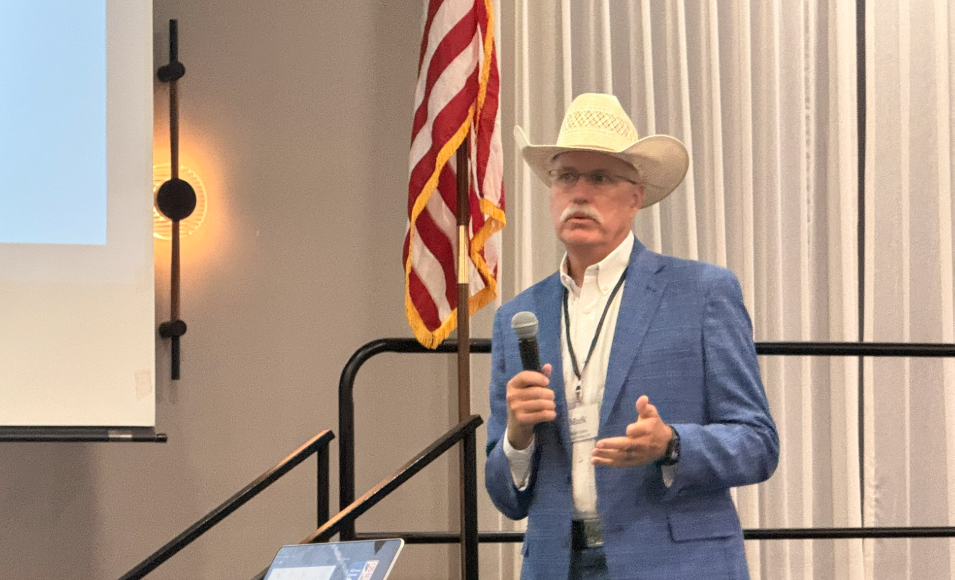
Effective livestock fly control strategies require a proactive, year-round approach to protect cattle health, maintain weight gains, and prevent chemical resistance across herds. Farm Director KC Sheperd sat down with Mark Upton of Central Life Sciences to discuss the current fly season, seasonal timing for management plans, the dangers of pesticide resistance, and the crucial role of public agricultural education.
Season Overview and the Importance of Proactive Planning
Fly pressure directly correlates with environmental moisture and seasonal temperatures. Years marked by abundant rainfall and lush grass growth naturally yield higher fly populations.
While producers often react to fly outbreaks during peak summer months, effective fly control begins well before insects become visible:
- Temperature Triggers: Fly populations begin emerging when temperatures consistently reach 60°F. Control measures should be in place prior to reaching this threshold.
- Fall Evaluation: The optimal time to plan next year’s strategy is late autumn (October or November). Producers should evaluate what methods worked during the current season and adjust their approach for the upcoming year.
- Integrated Pest Management (IPM): Establishing a preventative plan early stops the pest life cycle before populations reach economic injury levels.
Preventative Feed Additives vs. Knockdown Treatments
Central Life Sciences focuses heavily on preventative solutions within an Integrated Pest Management framework. Upton highlighted the distinct differences between preventative measures and adult contact treatments:
Feed-Through Additives (Prevention)
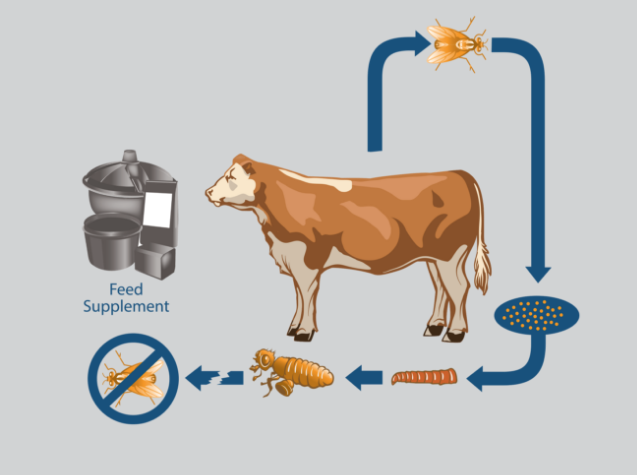
Feed additives—such as Altosid® and ClariFly®—pass through the animal’s digestive system into the manure, where target flies lay their eggs. These insect growth regulators (IGRs) break the fly life cycle by preventing larvae from developing into adult flies. Feed-through products carry no known resistance issues.
Knockdown and Adulticide Strategies (Treatment)
When fly populations surpass threshold levels, knockdown treatments provide immediate relief. These include sprays, scatter baits for dairies or feedlots, and topical applications.
While non-traditional application methods—such as using water guns for topical treatments—can be engaging, Upton cautions producers against potential drawbacks:
- Handling Stress: Repeatedly shooting cattle can increase livestock stress and make animals harder to handle over time.
- Under-Dosing Risks: Application tools that fail to deliver a full, uniform dose contribute directly to chemical resistance.
Managing Insecticide Resistance
Insecticide resistance presents a major challenge in cattle pest management, particularly when relying on adulticides such as pyrethroids, synthetic pyrethroids, or organophosphates.
- Cause of Resistance: Sub-lethal dosing—failing to apply enough chemical to kill the target adult insect—allows surviving pests to pass resistant traits to subsequent generations.
- Resistance Rotation: If a herd develops resistance to a specific class of chemistry (e.g., organophosphates), producers must rotate away from that active ingredient for several years. Returning to the chemistry after a hiatus often restores its efficacy.
- Pipeline Innovations: While regulatory approval through agencies like the EPA remains a lengthy process, new active ingredients and novel applications of existing chemistries continue to be developed to combat resistance.
The Role of Agricultural Advocacy and Education
Beyond pest control mechanics, Upton emphasized the broader responsibility of agricultural producers to educate consumers and non-farm audiences.
As fewer individuals grow up with direct ties to production agriculture, public interest in farming practices has increased. Producers are encouraged to act as knowledgeable stewards by clearly and patiently explaining routine management practices—whether addressing questions about animal health, hormones, or pest control—to help bridge the gap between production agriculture and the consuming public.
To learn more about all the proucts from Central Life Sciences, you can click here: