

Oklahoma farmers face important ARC and PLC enrollment decisions this fall as USDA’s Farm Service Agency (FSA) works through a delayed enrollment process for the 2026 crop year and opens the window for 2027 elections. With new reference prices, updated base acres and more information available about this year’s harvest and grain markets, producers have several factors to consider before choosing between the two programs.
Dr. Amy Hagerman, associate professor at Oklahoma State University, spoke with Oklahoma Farm Report associate farm reporter Carli Davenport about what farmers need to know before making their ARC and PLC elections, how the programs differ and which deadlines producers should keep in mind.
“These are both safety net programs available through USDA Farm Service Agency,” Hagerman said. “They’re authorized under the Farm Bill, and even though we are under an expired Farm Bill currently this fall, these programs were actually reauthorized through 2031 in the One Big Beautiful Bill Act that in the summer of 2025.”
Understanding the Difference Between ARC and PLC
Hagerman explained that ARC, or Agricultural Risk Coverage, is a revenue protection program, while PLC, or Price Loss Coverage, provides protection when market prices fall below established reference prices.
With ARC, USDA establishes a county-level yield and price at the beginning of the year to create a revenue guarantee. If the actual revenue for the harvested crop falls below that guarantee, producers may qualify for a payment.
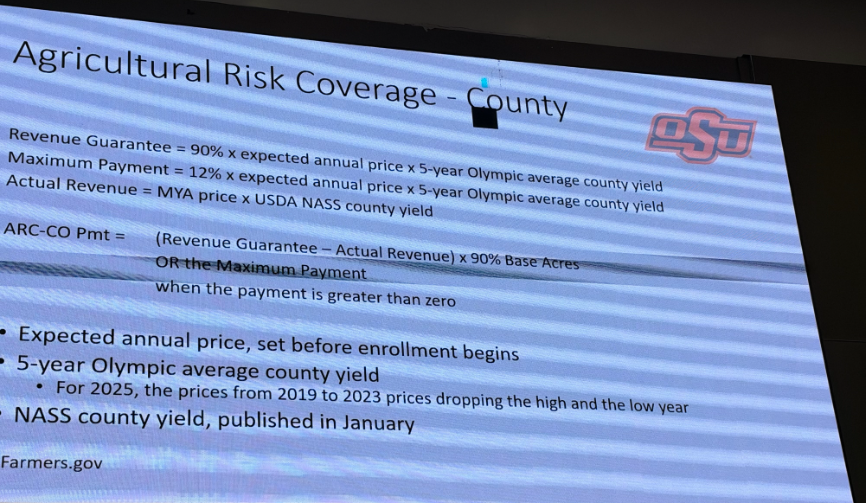
However, ARC payments are limited. “If revenue, actual revenue for the crop that’s harvested, falls below that revenue guarantee, it can trigger a payment, but there’s a maximum payment there,” Hagerman said. “It’s up to 12% of the guarantee, but no higher.”
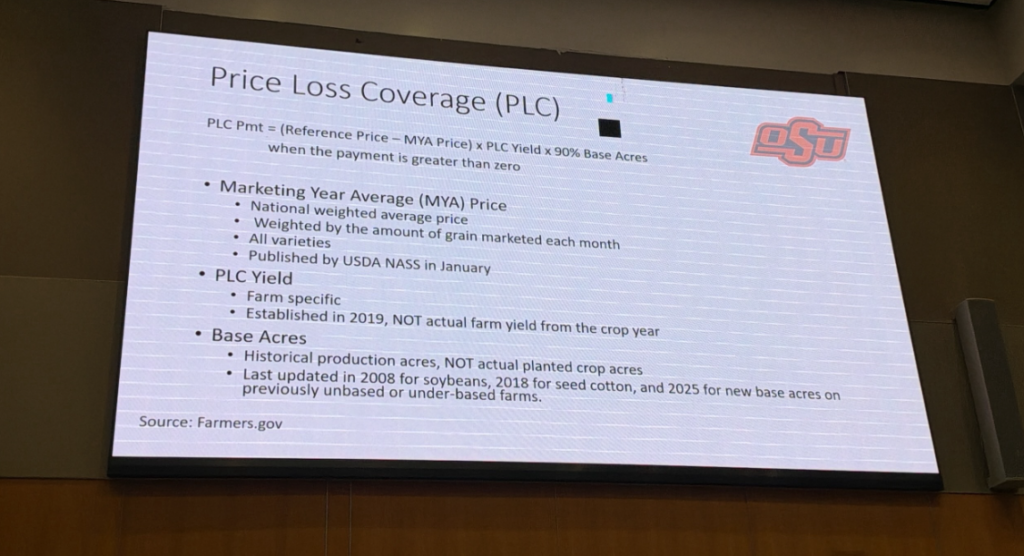
PLC works differently because it is based on the national marketing year average price rather than county-level revenue. “If actual price or actual marketing year average price falls below what we call a reference price, then PLC will pay the difference between those two, and it doesn’t have that 12% cap that ARC has,” Hagerman said.
Delayed Enrollment Creates a Short Window for Decisions
One of the biggest differences producers will notice this year is the timing of enrollment.
Under normal circumstances, the election and enrollment process would begin before harvest. For the 2026 crop, that process would have started in fall 2025 and ended in spring 2026.
However, the addition of new base acres through the One Big Beautiful Bill Act pushed the timeline back. “Because of this additional step of adding new base acres, which is a positive thing for producers who are able to do that, that’s pushed these deadlines for the 2026 crops specifically back into the fall,” Hagerman said.
That delay means producers now have more information available when making their decisions, including a better understanding of county yields and where grain prices are headed.
Hagerman also pointed out that producers received the higher of their ARC and PLC payments for the 2025 crop year as a one-time provision in the One Big Beautiful Bill Act.
Looking ahead, farmers will need to make decisions for two different crop years in a relatively short period. “We’re going to have to make the election for the 2026 crop, the one that’s in the bin that we are currently in the marketing year on, but they’re also going to have to make the decision very shortly after that on their 2027 crop, which is the one that they’re planning for planting right now,” Hagerman said. “So it’s a very tight window of time that a lot of decisions have to be made.”
What Should Farmers Consider Before Choosing ARC or PLC?
When deciding which program makes the most sense for their operation, Hagerman encouraged producers to consider both county yields and current market conditions.
Although USDA’s National Agricultural Statistics Service (NASS) will not release official county yield information until January, farmers can begin gathering information about how their county’s crop performed by talking with neighbors and local cooperatives. “We know a lot just from our neighbors about what that county average is going to be,” Hagerman said. “So talking to the co-op, talking to your neighbors, getting a feel for what that county average would be.”
Market information is another important consideration, especially because producers are further along in the marketing year than they typically are when making these decisions.
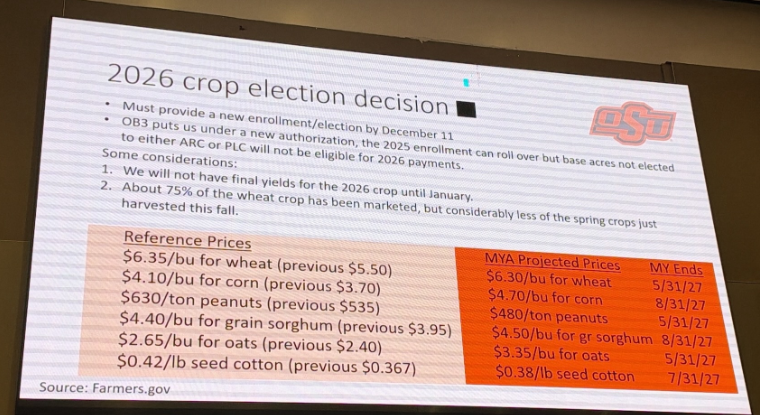
Hagerman used wheat as an example. The marketing year for the 2026 wheat crop ends May 31, 2027. By the December 11 enrollment deadline, producers will have already moved through much of that marketing year, meaning they should have a better understanding of how much grain has been sold and where the national marketing year average price could finish.
“Most of that grain has been sold at this point, and that gives us a lot more information about where we’re at for that price that could trigger PLC and the kinds of movements that we would expect to happen in the next few months,” Hagerman said.
She emphasized that the December deadline is particularly important because of current grain market activity. “There’s just a lot happening in grain markets right now.”
Why Base Acres Matter in ARC and PLC Decisions
Another important consideration for producers is understanding the difference between base acres and planted acres.
Hagerman said base acres represent the historical production acreage associated with an operation, while planted acres reflect what a farmer actually plants in a particular year.
For example, a producer may rotate crops or change what is planted on certain fields from year to year. Those changes affect planted acres, but they do not necessarily change the farm’s historical base acres. “That’s what you’re making your crop insurance decision on, which is another essential piece of your risk management portfolio,” Hagerman said of planted acres. “The other end of that then is this historic acreage, your base acres, and that’s what your ARC and PLC decision is based on is that historic acreage.”
Understanding how many base acres an operation has for each crop is essential before making an election.
New Wheat Reference Prices Could Make PLC More Attractive
Hagerman said producers should also pay close attention to changes in reference prices under the updated legislation. This enrollment period marks the first time producers will be making their ARC and PLC elections using the new reference prices.
For Oklahoma wheat producers, that change could be particularly important because wheat accounts for the majority of the state’s base acres.
Hagerman explained that the previous wheat reference price was $5.50 per bushel, while the new reference price is $6.35 per bushel. “The current reference price is 6.35,” Hagerman said. “We’re really flirting kind of on either side of that 6.35 in the current marketing year, which means PLC could be attractive.”
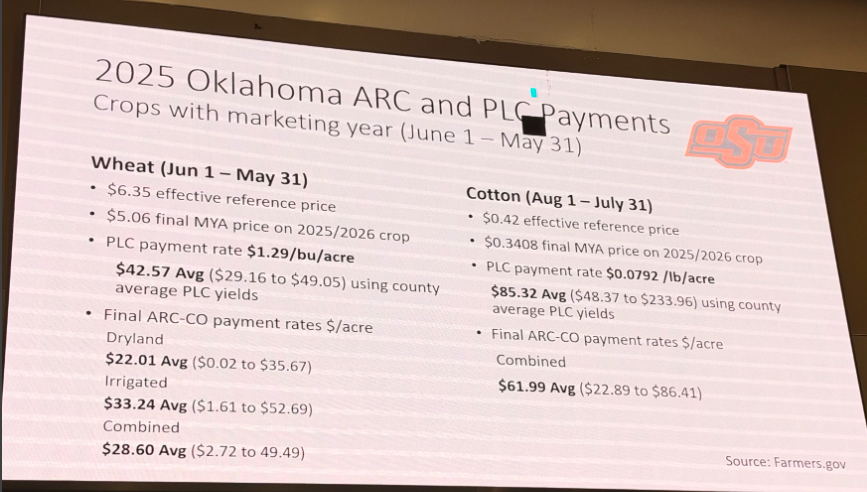
However, she said producers should weigh that price information against what happened with yields in their county, particularly in areas where drought may have affected wheat production.
That means farmers need to consider both sides of the risk equation: the possibility of lower prices and the possibility of reduced yields. Hagerman said understanding the reference prices, knowing the operation’s base acres and paying attention to the marketing year for each crop are among the most important pieces of information producers need before making their decisions.
Key ARC and PLC Enrollment Deadlines for Oklahoma Farmers
Hagerman outlined two important enrollment periods producers need to have on their calendars.
- December 11, 2026: Deadline for ARC and PLC election and enrollment for the 2026 crop year.
- November 2, 2026, through March 2027: Enrollment and election window for the 2027 crop year.
Missing the deadline does not necessarily mean producers who were previously enrolled will lose their existing election. Hagerman said there is an opportunity for an ARC or PLC election to roll over if the operation was enrolled in 2025.
However, enrollment itself remains critical, particularly for producers who have newly allocated base acres. “If you were enrolled in either ARC or PLC, there is an opportunity that that election could roll over into the next year if you were enrolled previously,” Hagerman said. “But the enrollment’s really critical there that you’ve got that farm signed up for ARC or PLC because you don’t have that opportunity for enrollment if you haven’t done all of that paperwork to get it started.”
She added that this is especially important for new base acres because those acres would not have had a 2025 enrollment associated with them.
Hagerman encouraged producers to schedule an appointment with their local Farm Service Agency office and make sure all necessary paperwork is in place. That includes ensuring crop acreage reports have been filed. She noted that it is not too late to file those reports.
Ultimately, Hagerman said producers should not wait until the last minute to begin working through their options. With two crop-year decisions coming in a relatively short window, understanding base acres, county yields, reference prices and marketing year timelines can help farmers make more informed risk management decisions.