Wheat and Corn Markets Give Back Gains; Trading Ranges Persist
Volatility in the agricultural markets continued this week as macroeconomic issues and production speculation drove price movements in both wheat and corn. According to Dr. Todd Hubbs of Oklahoma State University, while prices initially rallied, they subsequently retreated, reinforcing current trading ranges. Prices rallied and fell back over the last week as a weaker dollar and geopolitical uncertainty continue to impact commodity markets. Massive swings in metal
markets and volatility in the oil market overshadowed the price movements in the agricultural markets. Nonetheless, the same macroeconomic and geopolitical issues impacting other commodity markets impacted the agricultural sector.
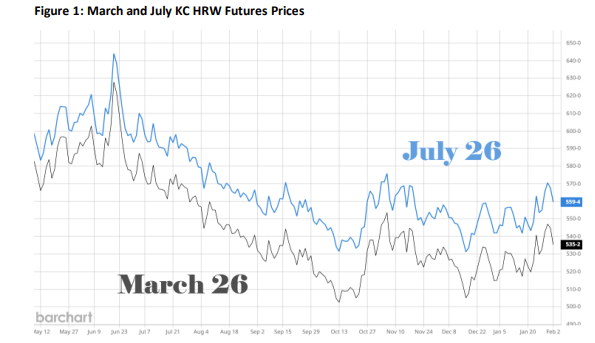
Wheat Market Outlook KC hard red winter wheat futures rallied early in the week, driven by a weakening dollar and speculation regarding crop health in the Southern Plains. However, markets gave those gains back by Friday and Monday.
“The rundown put March futures back near the middle of the $5.00 – $5.55 range that they have been in since late October,” Hubbs stated, noting that the March contract closed at $5.35 on Monday. July harvest contract prices closed at $5.59 under similar dynamics.
Key factors influencing the wheat market include:
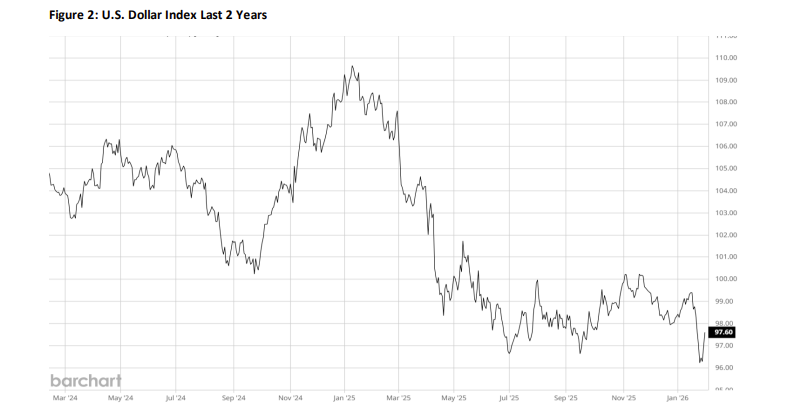
- Currency Fluctuations: The dollar index weakened sharply mid-week but recovered following positive manufacturing data and the announcement of a new Federal Reserve Chairman with a history of being an inflation hawk.
- Crop Conditions: Drought conditions in the Southern Plains have worsened, sitting at 55 percent as of Jan. 26, up from 32.7 percent last year.
- Exports: Export markets remain the main price driver. Total commitments through Jan. 22 stood at 788 million bushels, which is 88 percent of the USDA forecast.
Corn Market Outlook Corn futures followed a similar trajectory, retracing losses incurred after the Jan. 12 USDA reports before giving back gains. March corn futures fell six cents to close at $4.25 on Monday, while December futures closed at $4.54.
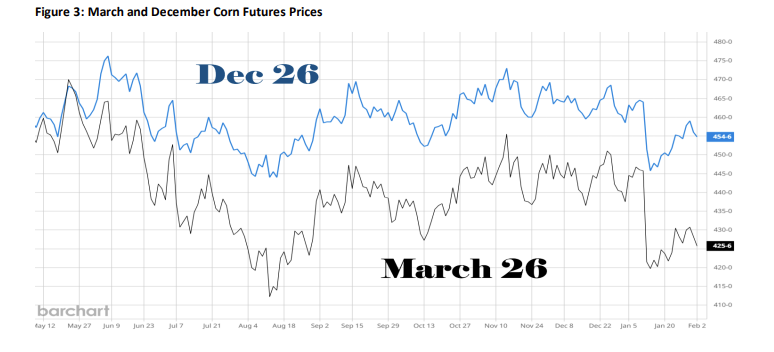
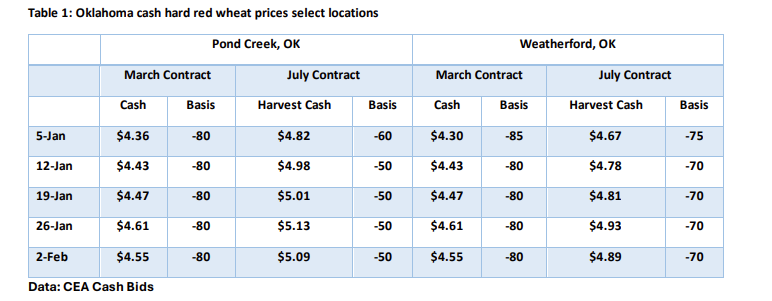
“December prices in the $4.65-$4.75 range seen before the reports remain elusive,” Hubbs noted. Cash prices across Oklahoma locations were reported between $3.75 and $3.85.
Demand highlights for corn include:
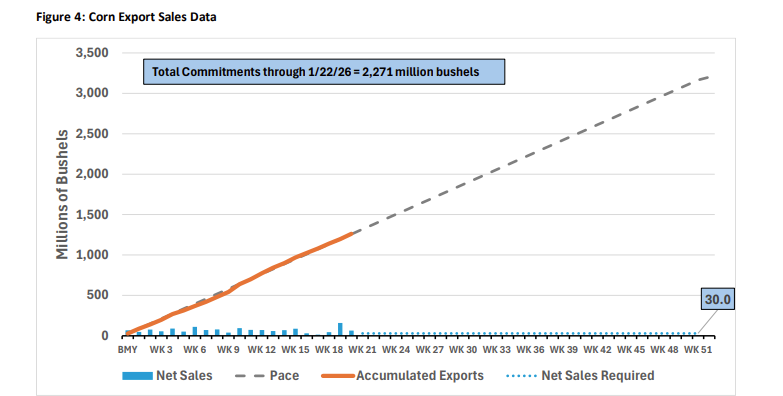
- Exports: Total commitments are at 2.271 billion bushels, representing 71 percent of the USDA forecast. Approximately 30 million bushels of sales per week are needed to meet projections.
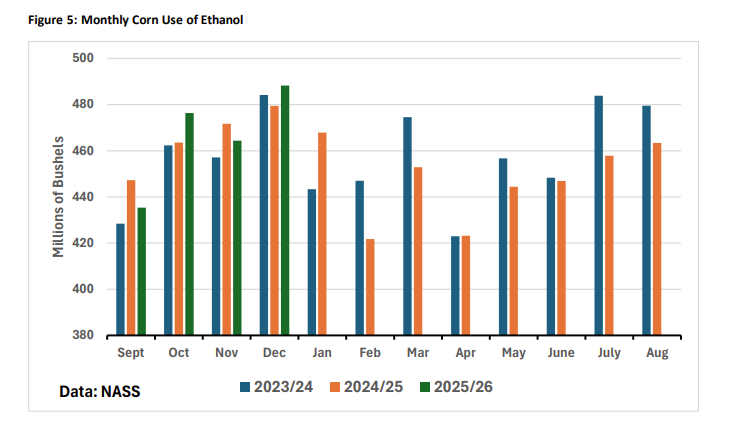
- Ethanol: Demand continues to build. December corn usage for fuel ethanol came in at 488 million bushels, two percent higher than December 2024.
Hubbs indicated that strong ethanol exports are necessary to hit the USDA’s marketing year projection of 5.6 billion bushels, with recent trade negotiations with India potentially opening new discussions for that market.