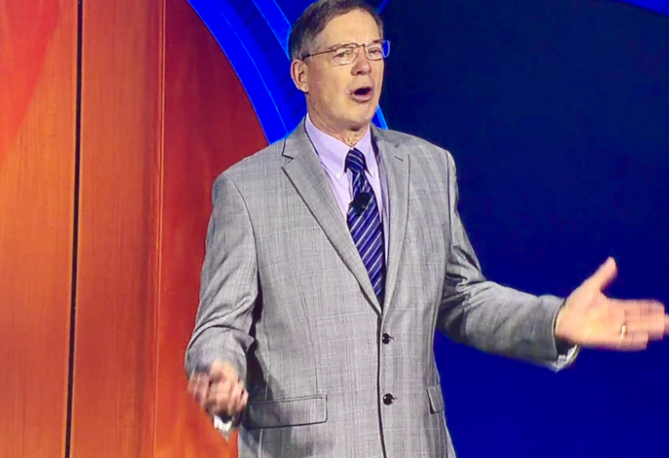
In today’s Beef Buzz, senior farm and ranch broadcaster Ron Hays speaks with Kevin Good of CattleFax, following the CattleFax Industry Outlook seminar at CattleCon 2026, where supply, demand, and global politics were front and center. One of the biggest issues discussed was the continued disruption of Mexican feeder cattle imports tied to New World screwworm concerns. Good emphasized the magnitude of that loss, saying, “In 25 we shorted the market of basically a million head of feeder cattle that would have come in from Mexico… about four and a half to 5% of domestic production.” He noted the industry was already tight on supply when those cattle were removed from the system.
Looking ahead, Good said the beef cow herd is not truly expanding, despite signals that might suggest otherwise. “Heifer retention—no, we’re not [expanding]. So it’s more of a flatter herd,” he explained, adding that dairy cows may help slightly on production down the road. With that in mind, Good said supplies will remain tight through next year, noting, “From a supply standpoint, 26 should be the tightest supplies. We should walk into bigger supplies in 27 with the premise that Mexico opens this year.” However, he was quick to add that reopening the border is “extremely” political rather than purely scientific.
Exports were another major focus, especially China. Good pointed out that while overall exports were down in 2025, it was largely due to China delisting U.S. beef plants. “South Korea and Japan are still our number one and number two destinations,” he said, adding that if China were to relist U.S. facilities, “you get a three, 400 million pound push, and that’s worth quite a bit.” That kind of volume, he said, would be a meaningful boost to the beef complex.
When asked whether renewed Mexican feeder cattle imports could soften fat cattle prices, Good agreed that the market would likely respond—even before cattle physically arrive. “Right away, is there more cattle coming through the feedyards? No, there isn’t. But the psychology changes,” he said. “The market then thinks and realizes there’s bigger supplies in front of you, and that typically means the market’s going to have a tougher time pushing.”
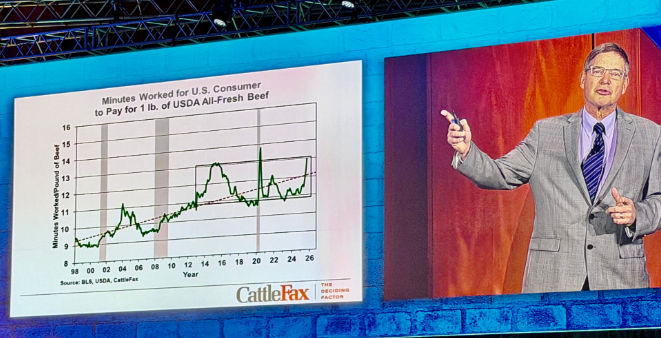
Despite those supply questions, Good said beef demand remains a major bright spot rising since the low of 1998. “Beef demand has gone on for the last 25 years… and it’s accelerated since COVID,” he said, noting that beef prices have risen more than 2% faster than inflation annually over that period. He added, “We’ve got a consumer that is rewarding us for a higher-quality, more consistent product.” With tailwinds from high-protein diets, keto trends, and changing nutrition perceptions, Good said the industry’s focus should stay the course: “We do what brought us to the party—higher quality, better eating experiences, and telling our message.”
Good states the obvious- “yeah, we are expensive compared to pork and poultry- but if you look at minutes worked to buy a pound of beef- we are at 13 minutes. And, that’s basically where we were at the last cycle high- and we’ve got better demand and better prices than we had then.”
Coverage of CattleCon26 is powered by Farm Data Services of Stillwater, Oklahoma.
The Beef Buzz is a regular feature heard on radio stations around the region on the Radio Oklahoma Ag Network and is a regular audio feature found on this website as well. Click on the LISTEN BAR for today’s show and check out our archives for older Beef Buzz shows covering the gamut of the beef cattle industry today.