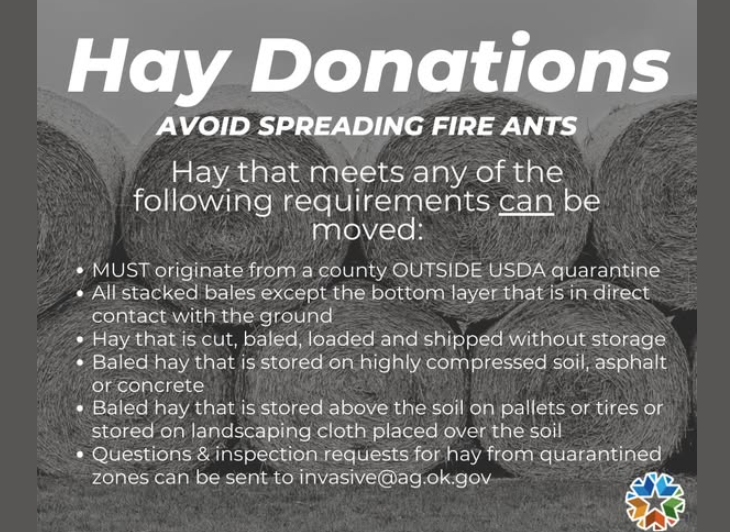
Wanting to donate hay to those impacted by Oklahoma wildfires? Please use caution before moving hay around Oklahoma to help prevent the spread of invasive fire ants!
Learn more: https://tinyurl.com/hzewrkf9
While it may seem like a generous act to donate hay to fellow producers in need, transporting hay infested with Red Imported Fire Ants (RIFA) can turn a short-term solution into a long-term disaster for the recipient.
The primary concern is the rapid and permanent spread of an invasive species. Fire ants are notorious for their aggressive behavior and painful stings, which can cause significant stress, injury, or even death to newborn calves and ground-nesting wildlife. Beyond the physical danger to livestock, an infestation can quickly take over a pasture, damaging equipment like mowers and balers with their hard, alkaline mounds.+1
From a regulatory standpoint, moving infested hay can also trigger strict USDA quarantines. Many states have “biosecurity” laws that prohibit the movement of hay from known fire ant areas without proper inspection or chemical treatment. If a producer unknowingly introduces fire ants to a “clean” county, they may inadvertently subject the entire local industry to new shipping restrictions and increased costs for years to come.
See the counties under USDA fire ant quarantine: https://www.aphis.usda.gov/plant…/ifa/ifa-quarantine-map
To ensure your donation truly helps, it is essential to:
- Inspect the stack: Check the bottom bales in contact with the ground, where colonies are most likely to migrate.
- Store off the ground: Keep hay on pallets or gravel to break the direct soil-to-bale connection.
- Verify quarantine status: Consult with your local county extension office to ensure you aren’t moving hay across restricted “red lines” without the necessary certification.