2026 Crop Outlook: New Tariffs and Biofuel Mandates Shake Wheat and Soybean MarketsThe final week of February 2026 has introduced a wave of volatility across agricultural markets, driven by a landmark Supreme Court ruling and a sudden shift in federal trade policy. According to Dr. Todd Hubbs, crop marketing specialist at Oklahoma State University, the intersection of legal battles, weather speculation, and aggressive biofuel mandates is creating a complex landscape for regional producers.
Trade Policy and Global Uncertainty
The primary catalyst for recent market jitters was a Supreme Court ruling against the administration’s previous tariff policy. In a swift response, the administration levied a new 15 percent tariff on all imports over the weekend, a move that has sparked immediate debate over its legality.
“Overall impacts are difficult to discern at this point but increases in trade policy uncertainty looks like it will impact global trade for the near future,” Hubbs noted. He added that the bilateral trade deals previously negotiated may now be in question under this new regime, leaving the future of these agreements as an “open question” dependent on how the administration reacts to these legal shifts.
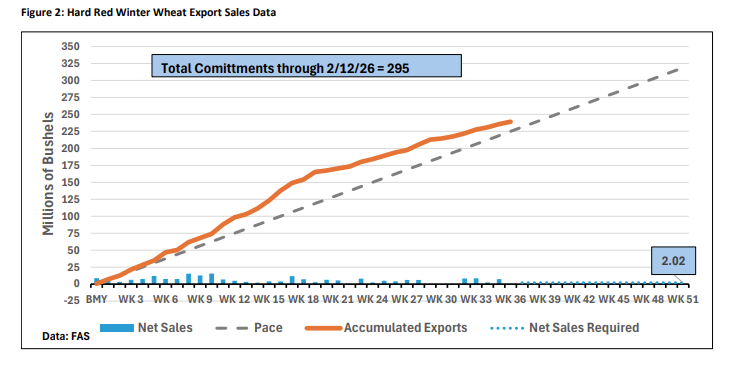
Market observers are now pivoting their focus toward export sales reports. Hubbs emphasized that “sales cancellations or lack of buying will influence prices” as the industry gauges the global reaction to these tariffs.
Wheat Market: Breaking the Range
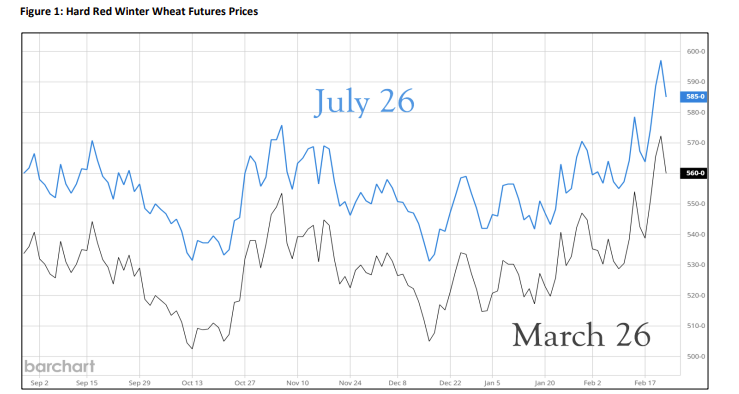
After months of stagnant movement, U.S. wheat prices finally broke out of the range-bound pattern held since November. Hard Red Winter (HRW) wheat futures led the rally, fueled by a combination of technical factors and mounting environmental concerns in the Southern Plains.
Key Drivers for Wheat:
- Weather Speculation: The Climate Prediction Center is forecasting warm temperatures and continued dryness across winter wheat regions through May.
- Technical Momentum: KC HRW futures blew through long-standing resistance levels and held those gains into the weekend.
- Ample Global Supply: Despite the rally, world supplies remain high, meaning the upward trend may rely heavily on sustained weather issues to stay afloat.
While the March contract saw a weekly gain of 21 cents to close at $5.60, the rally faced some pushback on Monday. “Trade policy uncertainty may weigh on prices as the administration levies various tariffs to replicate the previous tariff regime,” Hubbs cautioned.
Soybean Outlook: Biofuels and Crush Demand
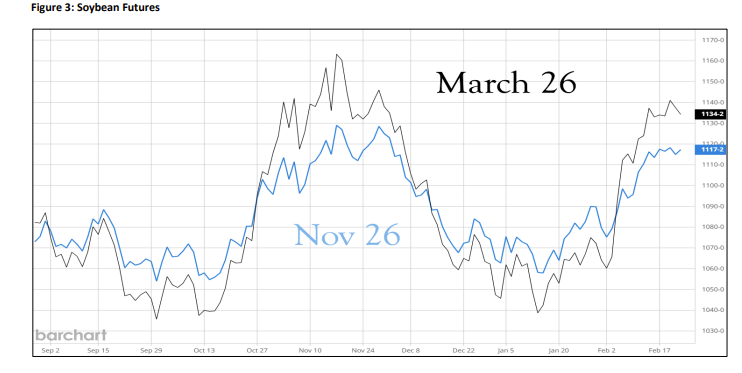
In the soybean complex, the narrative is shifting from international trade to domestic industrial use. While a massive rally was initially sparked by news of potential sales to China, those 8 million metric tons have yet to materialize in the official data.
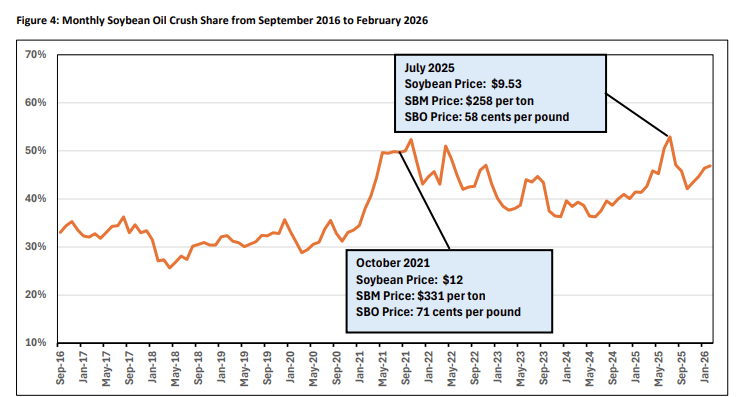
Instead, price strength is currently originating from the domestic crush sector. Soybean oil prices have surged toward 60 cents per pound, driven by rumors of aggressive new Renewable Volume Obligation (RVO) standards for the 2026-2027 cycle.
“Reports indicate the potential for a strong renewable volume obligation standard for biomass-based diesel in the 2026-2027 policy setting,” Hubbs explained. If the EPA finalizes these higher mandates—potentially reaching 7.2 to 7.4 billion gallons—it would create a “very bullish” scenario for fats and vegetable oils.
Oklahoma Soybean Market Snapshot:
- March Futures: Closed at $11.34.
- Oklahoma Cash Price: Trading around $10.30 with a -105 basis.
- Crush Pace: January levels are up 10.5% from the previous year, driven by biofuel demand.
Despite the domestic strength, Hubbs warned that a sustained rally may be limited by international competition. Brazilian production remains high, and their port prices are significantly lower than U.S. export prices. “Soybean exports look unlikely to hit USDA’s 1,575 million bushel forecast unless China does show up to buy the additional 8 million metric tons,” Hubbs stated.