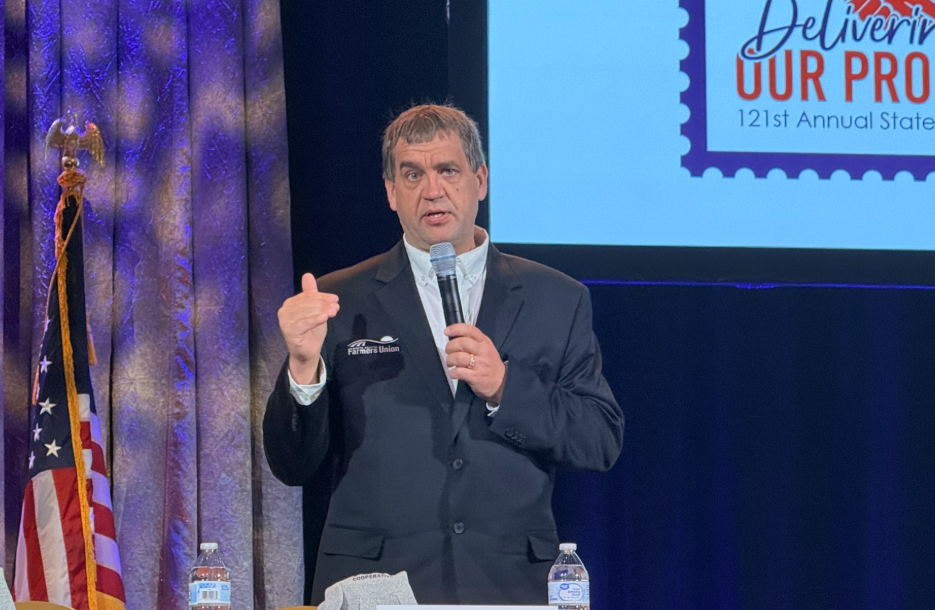
National Farmers Union VP Jeff Kipley Proposes IMSET to Save Small Family Farms in New Farm Bill:
The American agricultural landscape is facing a period of significant instability, leading many in the industry to call for a more robust and predictable safety net. In a recent discussion with Farm Director KC Sheperd, Jeff Kipley, Vice President of the National Farmers Union (NFU), highlighted the failures of the current “fence-row to fence-row” farming model and proposed new tools to protect small and medium-sized family farms.
The Problem with Ad-Hoc Funding
According to Kipley, the traditional safety net for farmers has been insufficient over the last decade. This gap has led to a reliance on ad-hoc government programs, which often come with significant administrative hurdles.
“We’ve had so many ad-hoc programs because the safety net’s just not there for what the farmers need,” Kipley noted. He described these programs as difficult to navigate, often featuring short application windows and confusing rules. “Normally you’re relying on your crop insurance agent to tell you what to say and where to go, and you don’t even know what you really signed up for.”
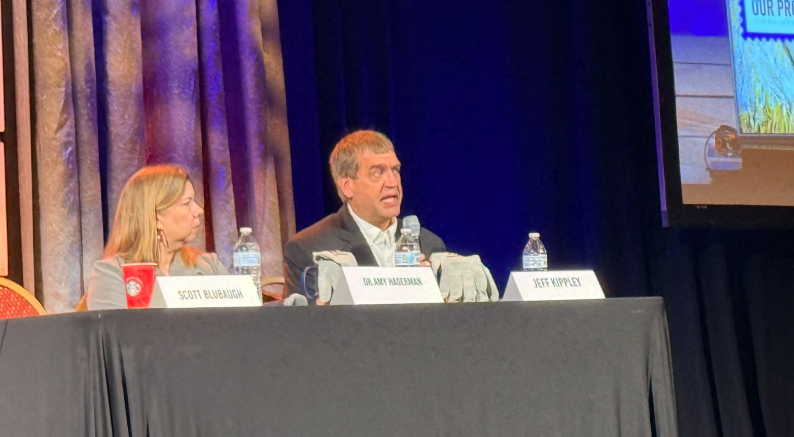
A New Tool: The IMSET Proposal
To address these gaps, the NFU is pushing for the inclusion of a voluntary program called IMSET (Inventory Management Soil Enhancement Tool) in the upcoming Farm Bill.
Under the IMSET proposal:
- Farmers can voluntarily set aside up to 20% of their acres.
- In exchange, they receive an increased reference price on their remaining active acres.
- This mechanism is designed to help guarantee a break-even price for the farm.
Kipley believes this tool is essential for the survival of the rural infrastructure. As farms consolidate into massive operations—some spanning 30,000 acres—smaller family farms are displaced.
“As we see these small towns die, the way that we bring it back is to really focus on our small and medium farmers and helping them survive,” Kipley said. He warned that when family farms vanish, rural communities lose the volunteers for fire departments, members for churches, and students for local schools.
Trade Volatility and Long-Term Planning
The conversation also touched on the volatility of international trade and tariffs. While recent news of China purchasing more soybeans provided a temporary price “bump,” Kipley expressed concern over the lack of a long-term strategy.
“Every day you have to open up your phone to see where do we stand with trade talks because seemingly there’s news daily that somebody else is going to be a trade war,” Kipley explained. He noted that because agriculture is often the first sector targeted when other countries are frustrated with U.S. policy, the lack of permanent trade agreements creates a “scary” environment for producers.