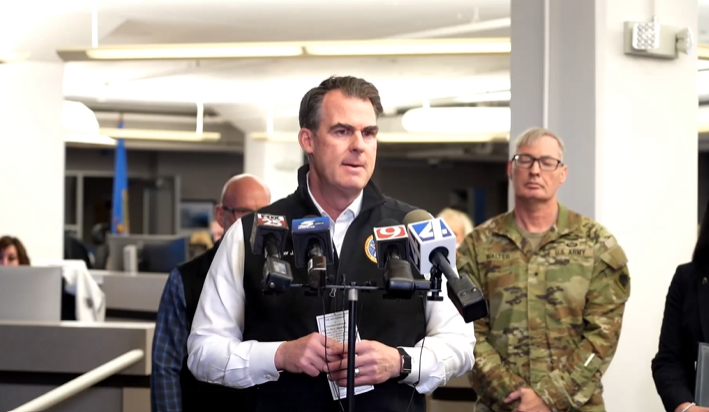
Oklahoma Leaders Highlight Unprecedented Coordination in Wildfire Response:
State officials gathered at the Oklahoma Emergency Management Center to provide updates on the wildfires that impacted the state last week and to outline the strategy for the high-danger conditions expected over the coming month. Governor Kevin Stitt led the briefing, emphasizing that the current level of inter-agency collaboration is a historical peak for the state.
Unprecedented Agency Collaboration
Governor Stitt praised the teams involved for a “better coordinated response” than any he has seen during his tenure. Despite 180,000 acres burning last week, he noted with gratitude that no lives were lost and no homes were destroyed, though several barns and outbuildings were lost.
“Overall, very, very pleased with the coordinated response. We’ve never had a better effort,” said Governor Stitt.
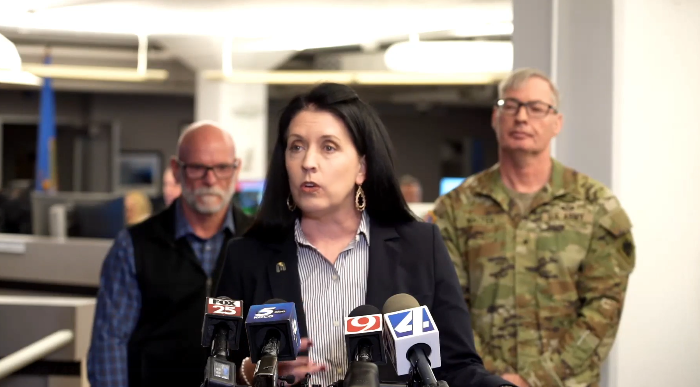
Public Safety Secretary Trish Everest announced the release of the Wildland Task Force Report, which provides 15 recommendations to enhance wildfire readiness. The report focuses on three priority areas:
- Improved Coordination: Establishing a formal statewide fire response plan.
- Stronger Mitigation: Expanding community protection plans and incentivizing wildfire-resistant construction.
- Investment in First Responders: Launching recruitment campaigns and expanding tax exemptions for volunteer firefighters.
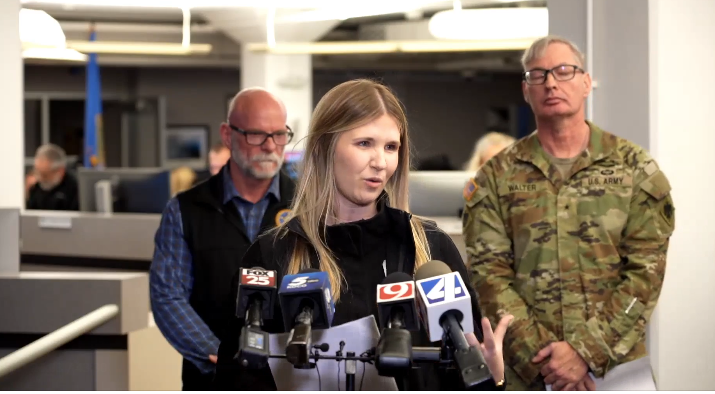
Data-Driven Response and Resource Tracking
Emergency Management Director Annie Vest highlighted the technological advancements that have changed how the state manages these crises. The Emergency Operations Center (EOC) now utilizes a real-time viewer to track every fire suppression resource in the state.
“As of today, [Oklahoma Forestry Services has] 59% of their assets mobilized outside the typical areas where they would be,” Vest stated, adding that the remaining assets are currently battling 14 active fires in the eastern and southeastern parts of the state.
Agriculture Secretary Blayne Arthur emphasized the importance of pre-positioning teams based on weather data. She noted that the high-risk corridor currently stretches from Weatherford to Boise City. Arthur also addressed the human element of these disasters, stating that 95% of Oklahoma’s wildfires are human-caused, urging residents to remain vigilant.
Military and Law Enforcement Support
The Oklahoma National Guard and the Oklahoma Highway Patrol (OHP) remain on high alert to support local fire departments.
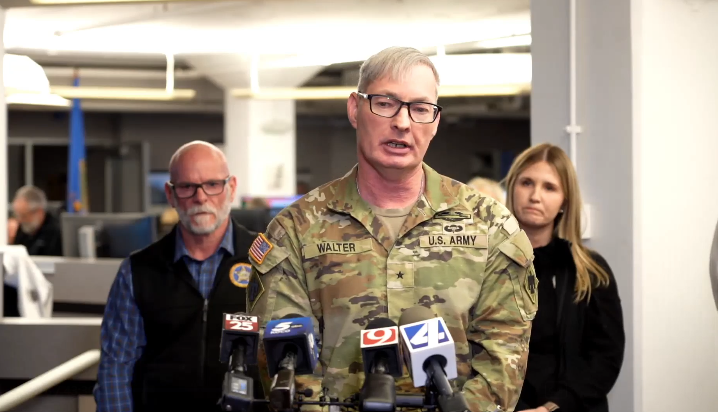
- National Guard: General Walter confirmed two UH-60 Black Hawk helicopters are on standby, each capable of dropping 660-gallon water buckets. Additionally, two “hand crews” of certified wildland firefighters are ready to assist.
- OHP: Commissioner Tipton stressed that life safety is the top priority, focusing on evacuations and road closures. He warned the public against flying drones in fire zones, as they pose a significant danger to low-flying aircraft attempting to drop water on fires.
Financial Assistance for Producers
Secretary Arthur also mentioned that the Emergency Drought Commission is finalizing a $16 million allocation to help farmers and ranchers across all 77 counties “drought-proof” their operations, which serves as a proactive measure against future fire risks.