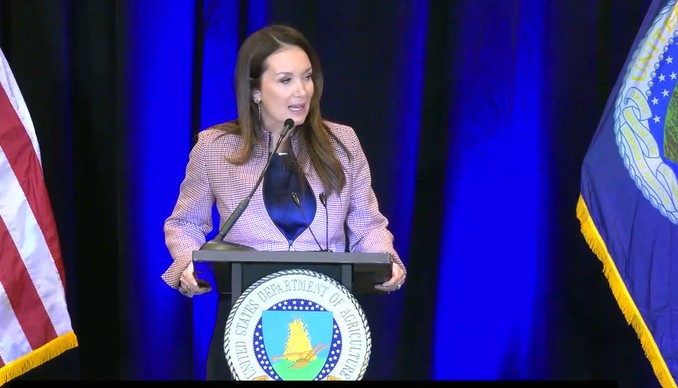
At the 2026 Commodity Classic in San Antonio, Texas, Agriculture Secretary Brooke Rollins announced the rollout of the “One Farmer, One File” initiative. This modernization effort aims to replace the Department’s fractured IT infrastructure with a single, streamlined digital record that follows producers across all agency systems.
The initiative addresses decades of redundant processes. Rollins noted that the USDA has historically managed over 500 custom-built systems and databases involving more than 1,000 contractors, costing taxpayers over $1 billion annually. A past GAO audit revealed that previous upgrade attempts delivered only 15% of promised improvements while exceeding $500 million in budgets.
“Every single day at USDA, our focus is on making life easier, more profitable and more rewarding for the American farmer,” said Secretary Rollins. “Our government for the people by the people should be modern, efficient, and respect taxpayer dollars. This modernization of old, duplicative, wasteful systems has one goal in mind, improve our customer service so the people we serve are able to farm and feed America and the world. ‘One Farmer, One File’ prevents our farmers from duplicating tasks while increases their productivity and time in the field.”
Key Goals and Integration
The primary objective is to unify the systems used by the Farm Service Agency (FSA), the Natural Resources Conservation Service (NRCS), and the Risk Management Agency (RMA). This shift is designed to:
- Eliminate Redundancy: Prevent farmers from having to provide the same information—such as farm numbers or bank details—multiple times to different agencies.
- Improve Efficiency: Allow USDA staff to access a producer’s complete profile without logging into disparate, siloed platforms.
- Enhance Speed: Deliver program payments and assistance with greater precision.
Early Results and Implementation
The initiative’s first live test is the $11 billion Farmer Bridge Assistance (FBA) Program. According to Rollins, the results have been stunning; more than 35,000 producers signed up online within the first few days of the program opening this week. This represented a digital adoption rate 50 times higher than previous programs, with some payments reaching farmers’ accounts in mere days.
Looking ahead, the USDA plans to roll out an advanced acreage reporting platform this spring, utilizing geospatial data to allow farmers to file faster. While the modernization project began in earnest in 2025 with support from the Department of Government Efficiency (DOGE), the USDA anticipates the system will be completely transformed by 2028.
Flexibility for Producers
Despite the push for digital modernization, Rollins emphasized that the new system is an expansion of options rather than a mandate. FSA county offices will remain open, and producers who prefer in-person assistance or traditional paper forms will continue to have those services available.
The “One Farmer, One File” initiative and broader modernization effort are just one example of how the Trump Administration is committed to simplifying and streamlining programs for producers. For example, USDA is using Login.gov to expedite Farmer Bridge Assistance (FBA) payments to producers. The Administration is also streamlining its conservation programs to make it easier for producers to bundle and apply for the practices needed on their farms.
Beyond using One Farmer, One File for program enrollment, FSA also over the next year will use the platform for farmers to file their acreage reports instead of manually certifying acreage by paper. Risk Management Agency (RMA) data will also be included in the single system.
For more details click here: