
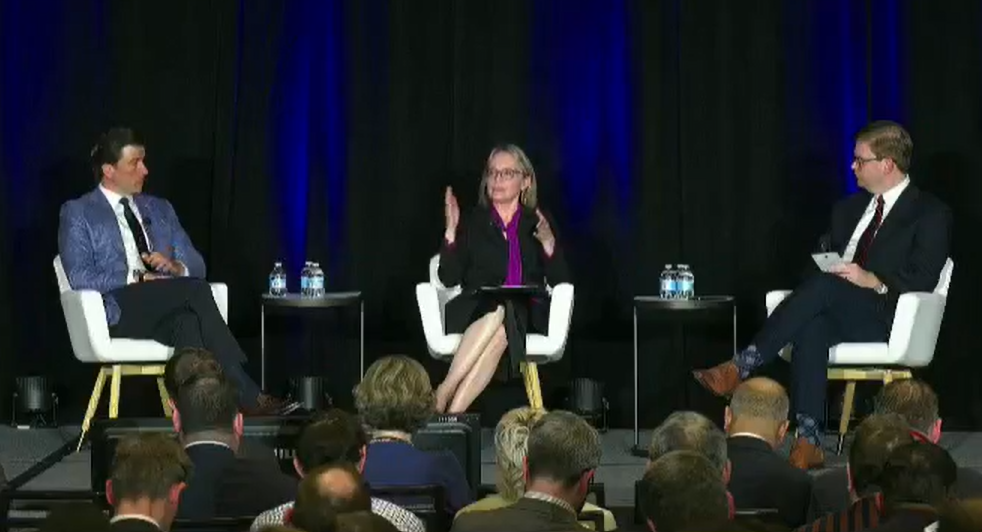
In a featured session at the 2026 Agricultural Outlook Forum, top trade officials detailed a fundamental shift in how the U.S. government secures international market access for American producers. Under Secretary Luke Lindberg of the USDA and USTR Ambassador Julie Callahan outlined an aggressive “wholesale reset” of global trading relationships designed to reverse the national agricultural trade deficit and see market access for U.S. Farmers.
A Unified Front: USTR and USDA Collaboration
The officials highlighted a highly coordinated, “complementary” relationship between their agencies.
- USTR’s Role: A small, specialized team of eight agricultural negotiators focuses on securing reciprocal trade agreements and removing non-tariff barriers.
- USDA’s Role: With a staffing level nearly 100 times larger than the USTR team, the Foreign Agricultural Service (FAS) manages the ground-level execution, turning negotiated “paper wins” into actual sales.
The “Reciprocal Tariff” Game Changer
Ambassador Callahan described the administration’s use of reciprocal tariffs as the primary catalyst for new negotiations.
- This policy challenges the long-standing assumption that trading partners could treat American farmers poorly while maintaining unfettered access to the lucrative U.S. market.
- By “policing” market access, the U.S. has motivated dozens of trading partners to remove unjustified non-tariff barriers to avoid retaliatory rates.
Key Market Access Victories
The forum highlighted several high-priority wins that are already impacting the bottom line for U.S. agriculture:
- Taiwan Agreement: Secured duty-free access for U.S. beef and removed long-standing non-tariff barriers for pork.
- United Kingdom Ethanol: Following a successful trade mission, U.S. ethanol exports to the UK are projected to increase by 50%.
- India Framework: A historic deal to lower Indian tariffs on U.S. energy and ag products in exchange for reduced U.S. rates.
- Geographical Indications (GIs): The USTR has moved from a defensive to an offensive posture, ensuring U.S. dairy producers can export specialty cheeses without being blocked by EU-style naming monopolies.
Operating on “Trump Time”
To ensure these agreements result in immediate revenue, the USDA has implemented “Trump Missions” (Trade Reciprocity for U.S. Manufacturers and Producers).
- These are rapid-response missions that put “guys with dirt under their fingernails”—actual American farmers—in front of international buyers within weeks of a deal being signed.
- This “fast and targeted” approach has already contributed to a projected narrowing of the trade deficit from $50 billion to $36 billion in just one year.