
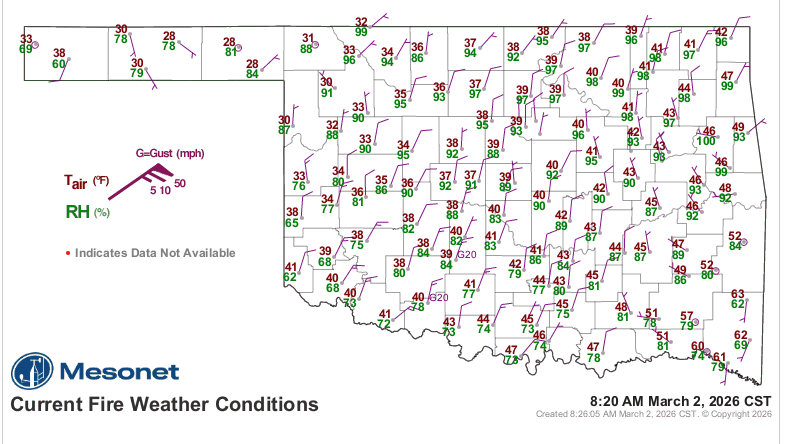
Firefighting crews across Oklahoma are making significant progress on several large wildfires as cooler temperatures and increased moisture provide a much-needed window for suppression efforts. According to the March 2, 2026, Fire Situation Report from the Oklahoma Department of Agriculture, Food & Forestry (ODAFF), fire weather has relaxed for much of the state following recent rainfall in the northeast and elevated humidity elsewhere.
Regional Fire Activity and Statistics
The Oklahoma Forestry Services (OFS) reported active suppression efforts in the northeast, east-central, and southeast areas. In total, 17 fires were documented by OFS across these regions, burning approximately 563.7 acres. A significant portion of these ignitions—11 in total—were attributed to incendiary causes, while two resulted from escaped control burns.
Fire departments across the state reported an additional two fires burning 12 acres. Despite the new starts, initial attack success remains high, and many of the state’s largest blazes are nearing full containment.
Large Fire Status Update
As of Monday morning, several significant fires remain under monitoring or active suppression:
- Doke Two (Atoka County): 2,273 acres, 20% contained.
- Bascom Road Fire (Pittsburg County): 950 acres, 70% contained.
- Postage Fire (Pittsburg County): 376 acres, 100% contained.
- Nofire Hollow (Cherokee County): 352 acres, 100% contained.
- Goats Rock Fire (McCurtain County): 276 acres, 80% contained.
- 428 Fire (LeFlore County): 200 acres, 70% contained.
- Red Oak Peak Fire (Latimer County): 204 acres, 100% contained.
- Dead Frog Fire (Pushmataha County): 177 acres, 100% contained.
- North San Bois Fire (Haskell County): 161 acres, 60% contained.
- Ty Fire (Pushmataha County): 161 acres, 75% contained.
- Rock Creek South Fire (LeFlore County): 104 acres, 100% contained.
Forecast and Fire Danger
While conditions have improved in the eastern half of the state, the Oklahoma Panhandle remains the area of highest concern today. Temperatures in the 70s and relative humidity as low as 17% are expected to create fuel moisture levels near 5%. With southwest winds gusting up to 30 mph, rangeland fuels in the western Panhandle could see head fire spread rates of 140–200 feet per minute.
In contrast, central and southern Oklahoma will benefit from cloud cover and humidity levels above 45–50%, which will significantly mute fire behavior and aid in successful initial attacks on any new starts.
Looking Ahead
A dynamic weather pattern is expected to emerge Tuesday. A dryline intrusion across the Panhandle and northwest Oklahoma will bring warm, breezy conditions and elevated fire danger back to those regions. Meanwhile, western and central Oklahoma may see severe weather risks develop Tuesday evening.
State officials are looking toward the end of the week for more widespread relief. A forecast for rainfall between Thursday and Saturday offers optimism for much of the state, though beneficial amounts for the Panhandle and northwestern counties remain less certain.
OFS suppression groups, including engines, dozers, and overhead personnel, remain positioned in Guymon and Woodward, with additional resources available from eastern OFS areas to respond to new activity.