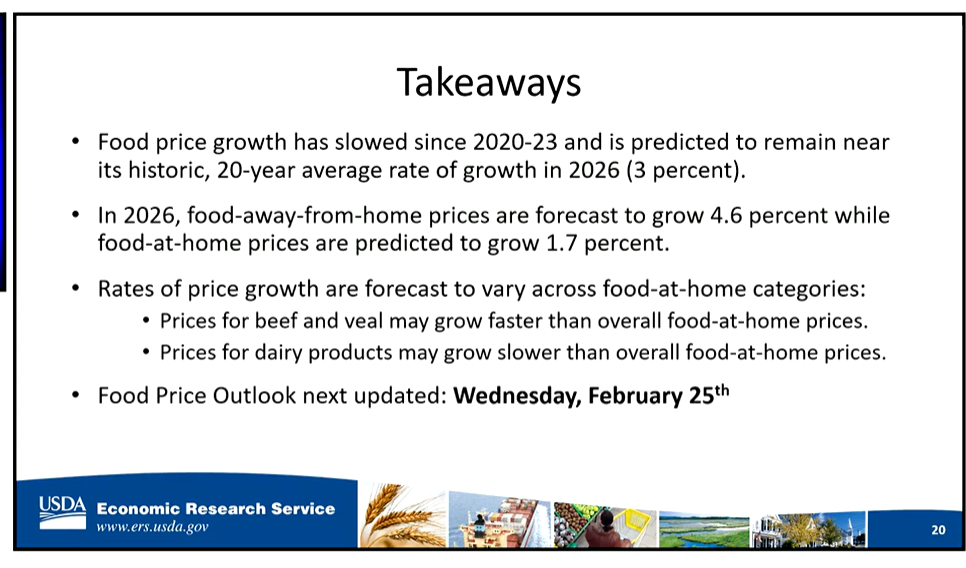
During the 2026 USDA Agricultural Outlook Forum, Hayden Steward, a senior economist with the USDA’s Economic Research Service (ERS), provided a comprehensive look at the food price outlook for the coming year. Steward, who specializes in how food prices and consumer packaging affect purchasing patterns, shared data suggesting a return to historical norms in food inflation after several years of volatility.
A Return to the Historical Norm
According to Steward, the USDA model predicts that food prices in the United States will increase by approximately 3% in 2026. This figure aligns closely with the 20-year historical average for food price changes.
“Our model predicts… about another 3%—a continuation of current moderate food price growth,” Steward noted, adding that this follows a period of higher-than-average inflation between 2020 and 2023.
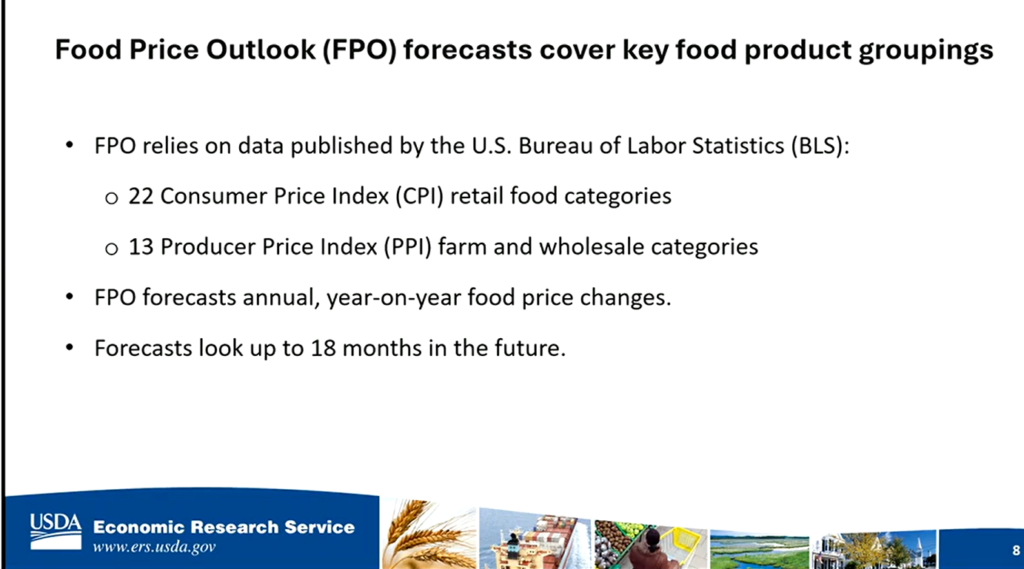
The ERS updates its data tables and summary findings monthly, typically around the 25th, incorporating the latest Consumer Price Index (CPI) and Producer Price Index (PPI) data from the Bureau of Labor Statistics.
Understanding US Household Expenditures
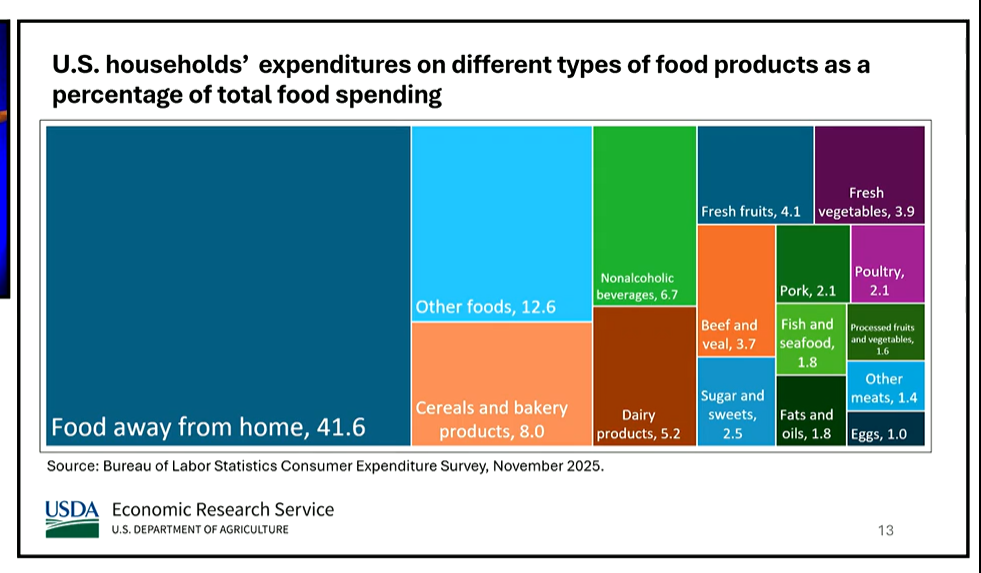
To provide context for these forecasts, Steward highlighted how American households allocate their food budgets across various categories. The USDA uses these weights to understand the overall impact of price changes on consumers.
- Food Away From Home: Represents 41.6% of the average household’s food budget, including meals at restaurants and school cafeterias.
- Cereal and Bakery Products: Accounts for 8% of total food spending.
- Dairy Products: Makes up 5.2% of the budget.
- Fresh Vegetables: Accounts for 3.9% of spending.
- Beef and Veal: Represents 3.7% of the total food budget.
Steward emphasized that consumers do not buy “a food,” but rather a “basket of foods,” meaning that while individual items may see sharp price spikes, the overall impact is determined by the movement of the entire basket.
Diverging Trends: Food At Home vs. Food Away From Home
A key takeaway from the 2026 outlook is the widening gap between the cost of eating out versus eating at home.
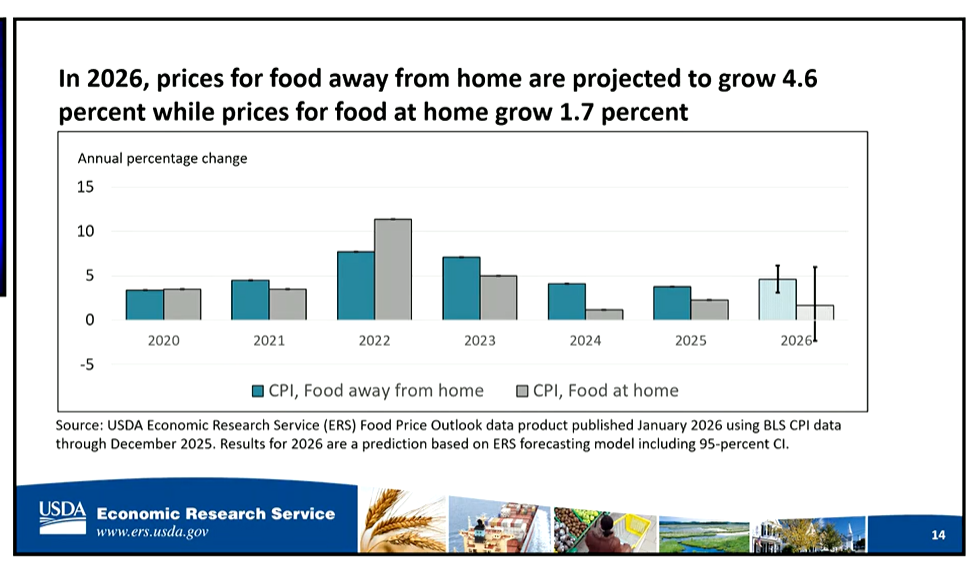
- Food Away From Home: Prices are forecasted to rise by 4.6% in 2026.
- Food At Home: Grocery store prices are predicted to see a more modest increase of 1.7%.
“It’s becoming relatively more expensive for us to eat out, or conversely, relatively less expensive for us to eat at home,” Steward explained.
Specific Category Forecasts for 2026
The ERS provided detailed breakdowns for several key food categories at the retail level:
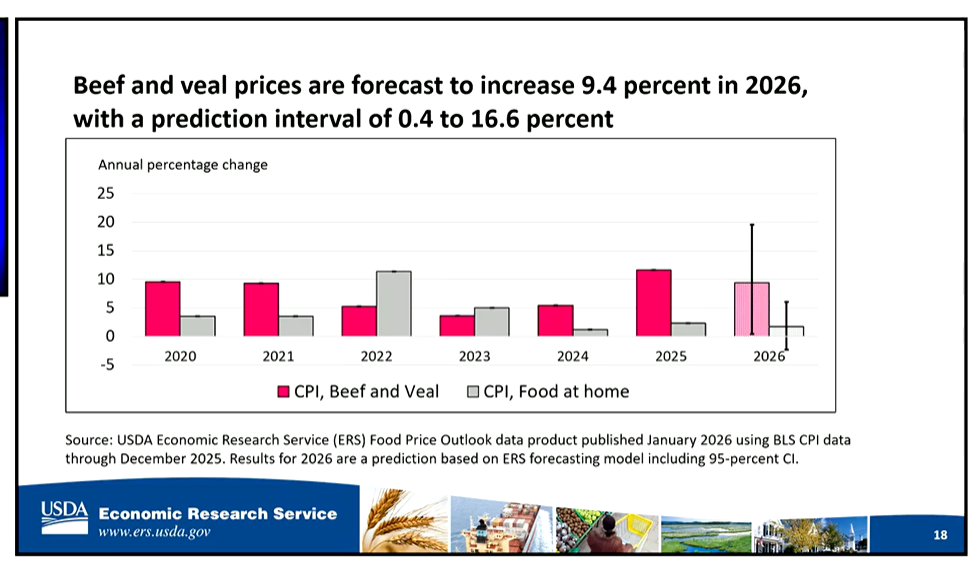
- Beef and Veal: This category continues to outpace general food inflation, with a projected price increase of 9.4% in 2026.
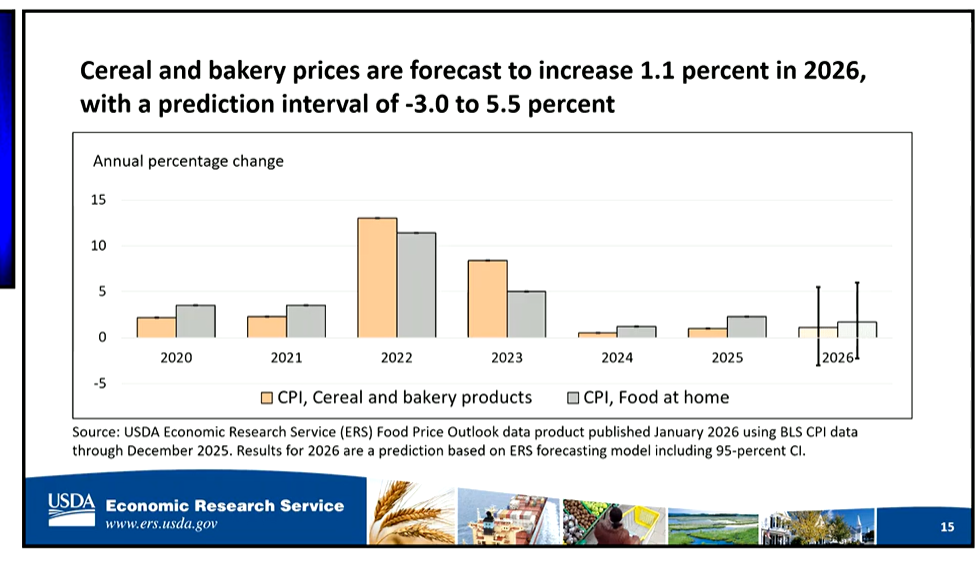
- Cereal and Bakery Products: Expected to grow at a moderate rate of 1.1%.
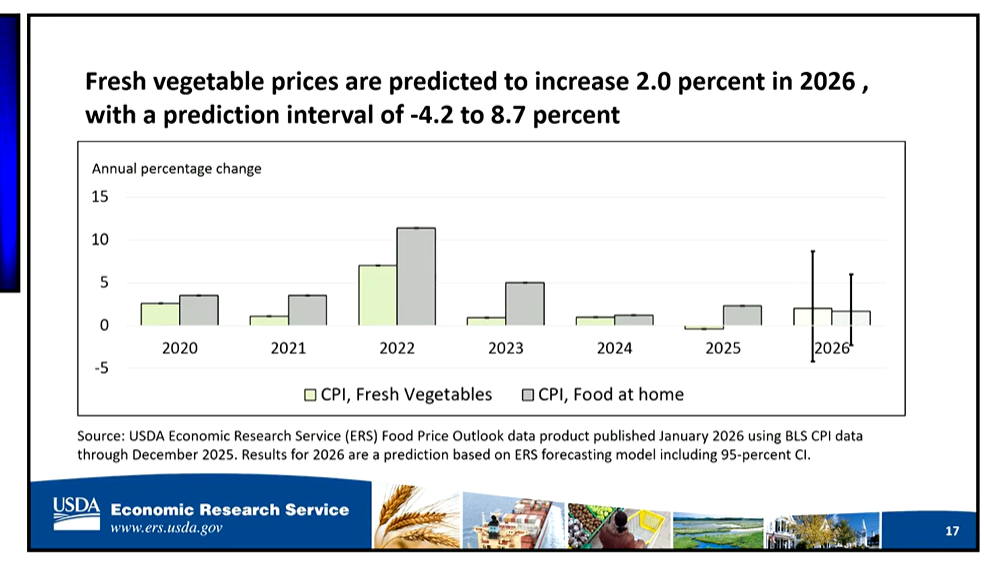
- Fresh Vegetables: Prices are forecasted to increase by roughly 2%.
- Dairy Products: In a rare move, the model actually predicts a decrease in retail dairy prices for the coming year.
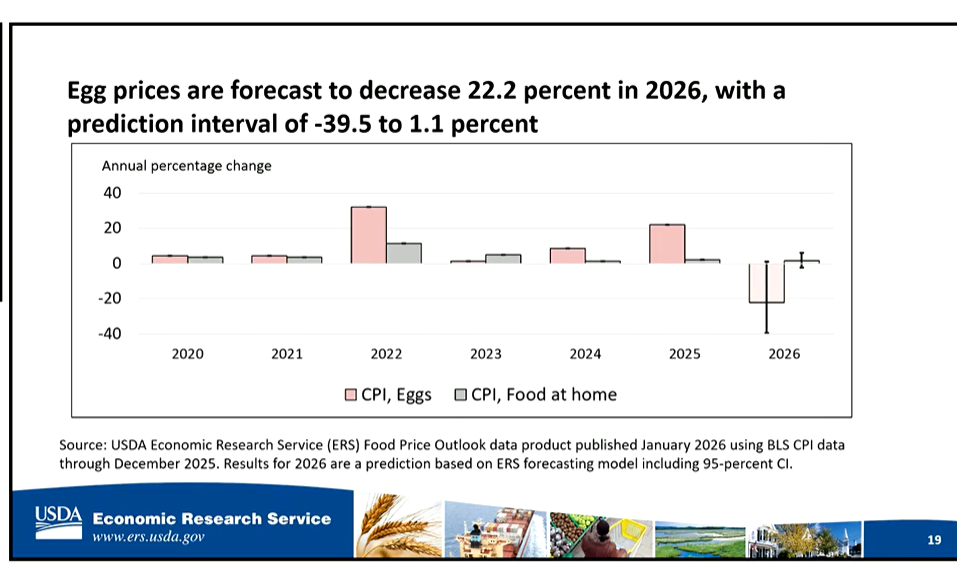
- Eggs: After significant price surges in recent years, egg prices have been declining since April 2025. The USDA model predicts a sharp drop in egg prices for 2026.
Steward concluded by encouraging stakeholders to utilize the ERS website and social media channels for the most current data products and methodology reports.