
Today is part two in our Beef Buzz series on Regenerative Ranching with Hugh Aljoe, Director of Ranches Outreach and Partnerships at the Noble Research Institute, as he and Senior Farm and Ranch Broadcaster Ron Hays explore the transformative potential of adaptive grazing and the critical importance of strategic ranch management. You can listen to Part One of this conversation by clicking here.
Aljoe defines adaptive grazing as a dynamic management strategy that adjusts grazing periods, durations, and forage utilization based on specific goals and environmental contexts. Unlike static systems, adaptive grazing allows producers to respond to real-time conditions to improve soil health and ecosystem processes.
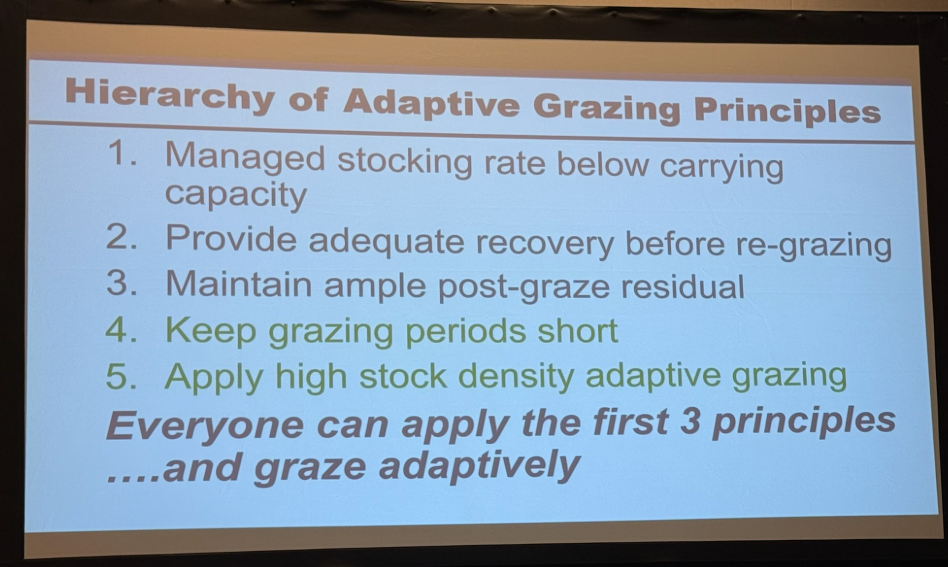
In his conversation with Ron Hays, Hugh Aljoe offered deeper insights into the philosophy behind the Noble Research Institute’s management strategies- for example:
On Management Techniques
“It may be that we take some pastures and we rest them an entire growing season and then come back in here and then we’ll graze them more intensively.”
“We can be moving cattle all the way up to multiple times a day… we’re trying to top the grass and stimulate the forages to tiller out a little bit, create more leaves, more total production, and leverage what we call the power of lower utilization.”
On the Importance of Planning
Aljoe emphasized that a rancher’s mindset must always be looking toward the next season:
“The time to plan for a drought is when it’s raining and a time to plan for rain is when you’re in a drought. You’ve always got to be planning.”
“I can get to a new location if I have a map or a GPS to show me where I’m at, but I still like seeing the map… well, this is what that grazing chart does is it gives you the whole view of what you’re trying to achieve knowing that you’re going to have to adapt.”
On the Value of Records
“As you capture all the actual events that do occur, now you’ve got a written record. And those are more important than any of us might imagine… it explains some of the things you couldn’t explain otherwise.”
Aljoe says that as Noble has reinvented itself over the last few years- there are several key soil health principles they have learned to help benefit ranchers in their efforts to become better stewards of the land:
- Improved Soil Health: The overarching goal of adaptive grazing is to continuously enhance the soil health of the land through managed utilization.
- Stimulated Forage Production: By “topping” the grass during the spring flush, grazing stimulates the plants to “tiller out,” which creates more leaves and increases total forage production.
- Enhanced Ecosystem Processes: Strategic grazing and rest periods allow for advancements in fundamental ecosystem processes, such as the water and nutrient cycles.
- Increased Forage Diversity: The management of “rest and recovery” periods, sometimes lasting an entire growing season, allows the plant community to recover and thrive.
- Strategic Land Recovery: Resting pastures specifically targets the improvement of the soil’s productive capacity over time.
Learn more about the educational opportunities that Noble Research Institute has developed and continues to work on by clicking here.
The Beef Buzz is a regular feature heard on radio stations around the region on the Radio Oklahoma Ag Network and is a regular audio feature found on this website as well. Click on the LISTEN BAR above for today’s show and check out our archives for older Beef Buzz shows covering the gamut of the beef cattle industry today.