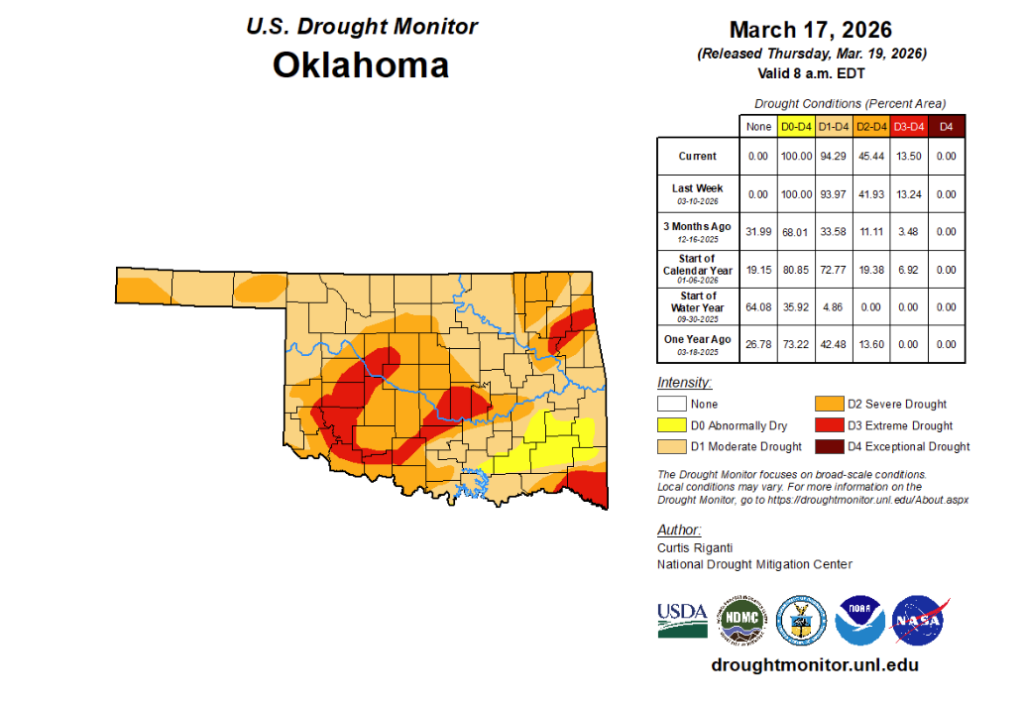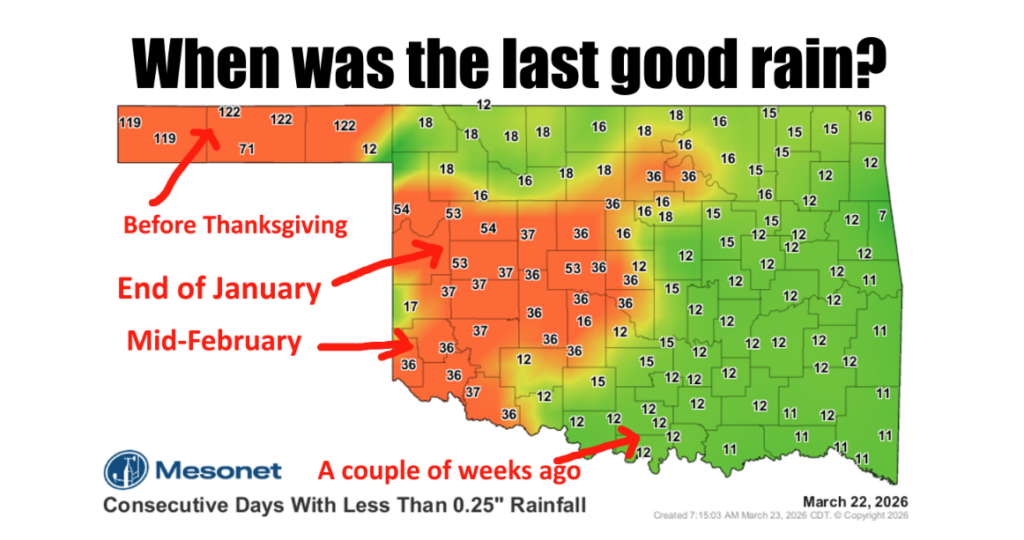
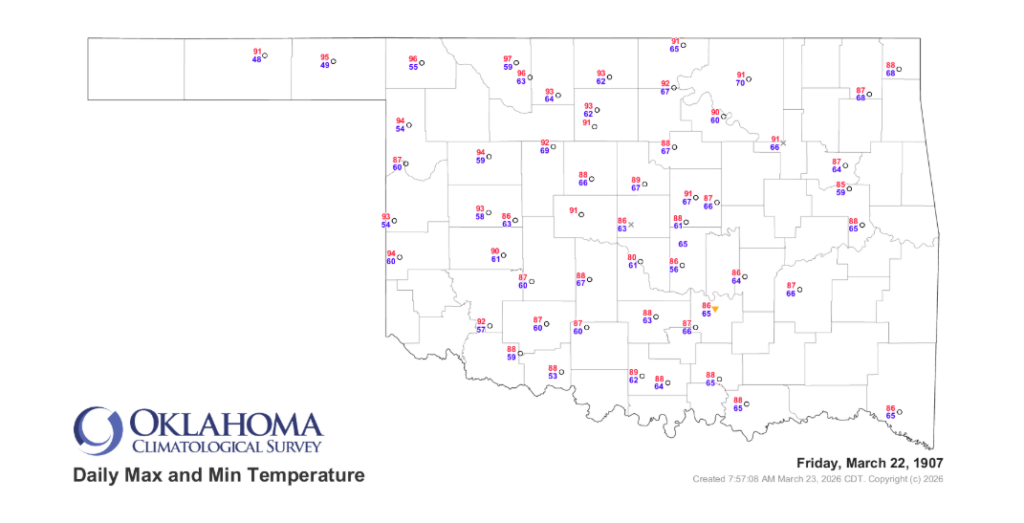
Oklahoma State Climatologist Gary McManus reports that while the recent stretch of extreme temperatures was significant, it fell just short of the most intense March heat wave in state history. Despite wind chills dipping into the single digits and teens earlier in the week, the state quickly transitioned into a record-breaking environment that saw temperatures soaring well above seasonal norms.
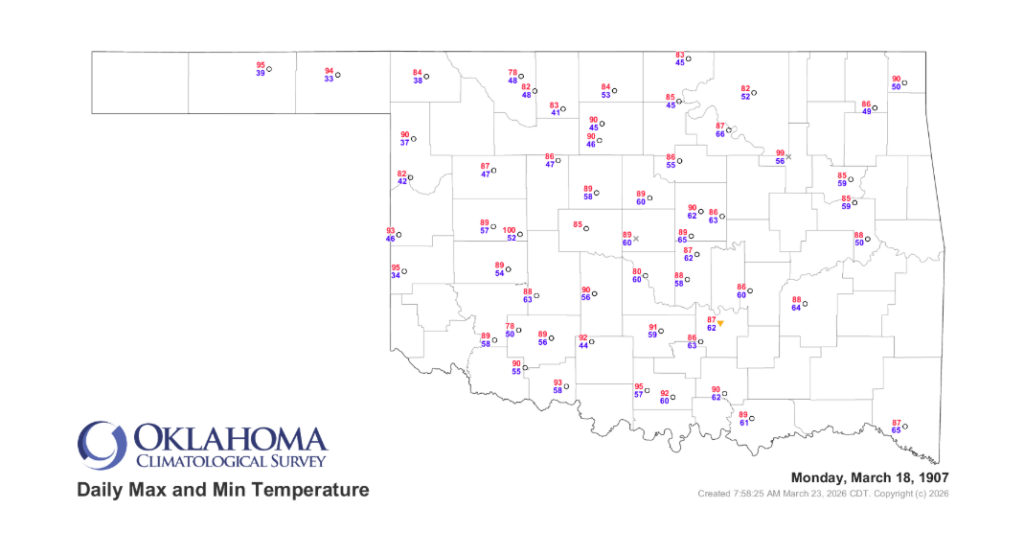
Historical Context: 1907 and 1971
While the March 2026 heat wave was historic in its own right, it remains second to the extreme heat event of March 1907. That year still holds the record for the earliest 100°F temperature in state history, recorded in Weatherford on March 18. The 1907 event also featured several instances of 102°F and 103°F across the region.
The absolute highest temperature ever recorded in Oklahoma during the month of March remains 104°F, set in Frederick on March 27, 1971.
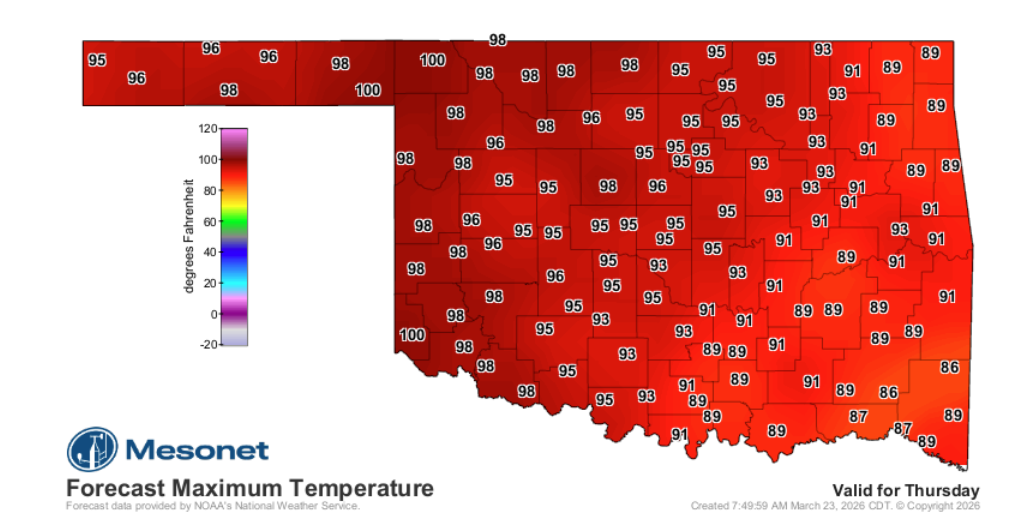
The Forecast: A Returning Heat Wave
Although the recent peak has passed, the heat is expected to return later this week. This oscillating weather pattern—moving from freezing conditions to intense heat—has characterized the month so far.
Regarding the potential for future freezes, McManus notes that while the most recent freeze may have concluded today in the Panhandle, historical climatology suggests caution.
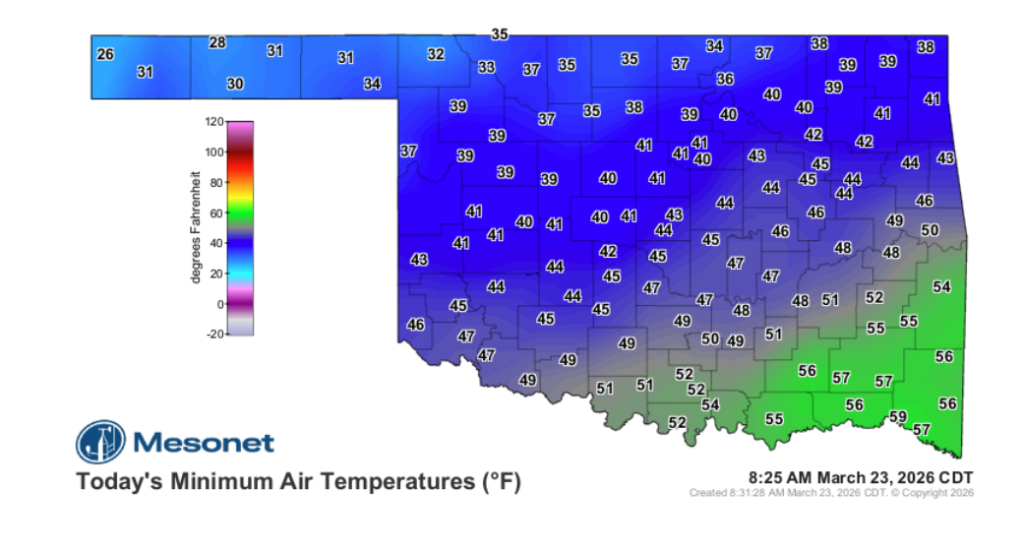
- April Risks: Historically, Oklahoma remains vulnerable to freezes throughout April.
- Planting Advice: Traditional wisdom suggests waiting until after Easter to plant gardens. Planting too early in the current environment may lead to loss from a late freeze or excessive water requirements due to the heat.
Drought and Precipitation Needs
Oklahoma is currently in significant need of moisture. The combination of high temperatures and lack of rainfall has exacerbated dry conditions across many parts of the state.
“We need rain, especially given the heat we’ve had, and lots of it,” says McManus.
While long-range forecasts suggest potential rainfall 10 or more days out, such projections are common during droughts and often fail to materialize where the moisture is needed most. As of now, the drought remains a primary concern for the state as it moves further into the spring season.