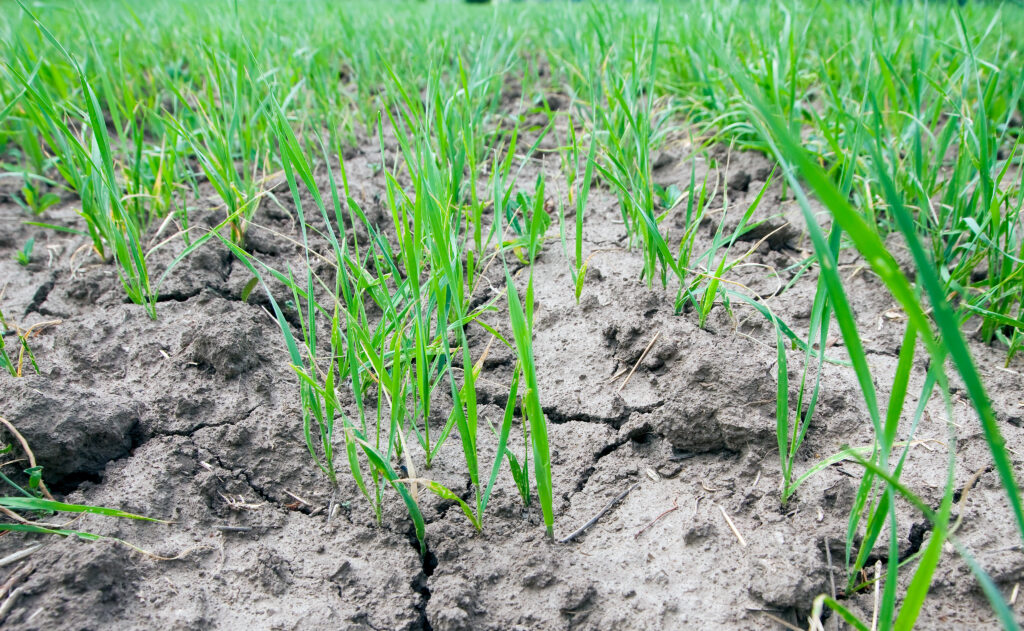
Recent data from the USDA indicates a sharp increase in drought coverage across major U.S. agricultural regions, posing a potential challenge as farmers prepare for the spring planting season. USDA meteorologist Brad Rippey noted that while recent rainfall in some dry areas may offer some relief, significant soil dryness and drought conditions remains a concern for several key crops.
Drought Impact on Major Row Crops
The percentage of corn and soybean production areas experiencing drought has risen significantly over the past five weeks. As of early March, more than half of the typical acreage for these crops is under drought conditions:
- Corn: 51% of production areas are in drought, up from 29% five weeks ago.
- Soybeans: 53% of production areas are in drought, compared to 34% five weeks ago.
Southern and Specialty Crops Face Severe Dryness
Southern crops, which are also nearing their planting windows, are seeing even higher levels of drought exposure. The lack of moisture is particularly pronounced in regions stretching from the Southwest through the Southern Great Plains and the Southeast.
| Crop | Current Area in Drought |
| Peanuts | 94% |
| Cotton | 89% |
| Rice | 80% |
Winter Wheat and Livestock Concerns
In the Great Plains, meteorologists are closely monitoring deteriorating conditions for winter wheat. Currently, 56% of the production area is in drought, with notable dryness in Oklahoma, Texas, Nebraska, South Dakota, and Montana. While Kansas and Eastern Colorado have also seen drying trends, they currently report less significant drought coverage than neighboring states.
The livestock sector is also feeling the impact, as drought affects both forage and water availability:
- Hay Production: 54% of the U.S. hay area is in drought, an increase from 39% five weeks ago.
- Cattle Inventory: 57% of the U.S. cattle inventory is currently experiencing drought, rising from 34% in the same five-week period.
Outlook
The outlook for the upcoming season will depend heavily on whether the rainfall patterns established in early March continue. Consistent moisture over the next few weeks would be necessary to alleviate concerns and improve the prospects for fall-harvested crops as planting begins later this month and continues through April.