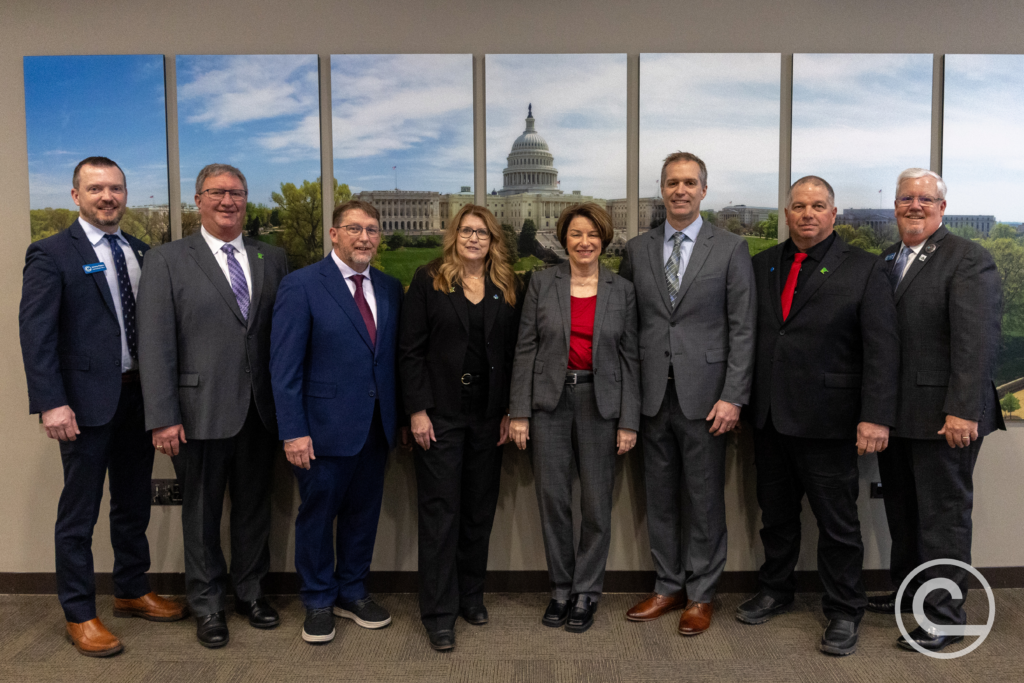
Yesterday, National Association of Conservation Districts (NACD) leadership and over one hundred locally elected conservation district officials from nearly 30 states and territories across the country convened in Washington, D.C., for NACD’s annual Spring Fly-In. Conservation district officials and their associations engaged directly with members of Congress and federal agencies to advance priorities that strengthen America’s voluntary, locally led conservation delivery system.
NACD leaders met with congressional offices and key federal partners, including the U.S. Department of Agriculture’s (USDA) Natural Resources Conservation Service and Forest Service, the U.S. Environmental Protection Agency (EPA), and the Department of the Interior’s (DOI) Bureau of Land Management (BLM) and U.S. Fish and Wildlife Service (USFWS). These discussions focused on ensuring federal programs are responsive to the needs of farmers, ranchers, and forest stewards, while keeping conservation delivery grounded in locally led decision-making.
As part of their advocacy, conservation leaders underscored the importance of:
- Passing a bipartisan Farm Bill that supports producers and strengthens locally led conservation
- Maintaining strong Fiscal Year 2027 funding for NRCS Conservation Operations, Watershed Protection & Flood Prevention and Watershed Rehabilitation Programs; Forest Service’s State and Private Forestry and Forest Stewardship programs; and EPA’s Section 319 Nonpoint Source Management Program.
- Investing in the conservation workforce and local delivery infrastructure
- Ensuring federal programs remain flexible and responsive to local priorities
“Thank you to our congressional and agency partners for engaging in productive conversations on the essential role of locally led conservation,” said NACD President Gary Blair. “For nearly 90 years, conservation districts have worked hand in hand with landowners to address priority natural resource concerns within their communities. This model works because it is locally led, partnership-driven, and grounded in trust. It depends on strong, sustained investment to continue delivering results.”
Yesterday morning, leaders of the U.S. Senate Committee on Agriculture, Nutrition, & Forestry, Senator John Boozman and Senator Amy Klobuchar, spoke to Fly-In participants about the importance of passing a bipartisan Farm Bill, conservation districts’ essential role in delivering technical assistance, and NACD members advocating for locally led, voluntary conservation programs.
“The success of the voluntary programs depends on making sure we have the resources there, and elevating the critical partnership with the USDA and local conservation districts is one key way to increase access,” said Senator Klobuchar. “Fewer staff in local USDA offices and disruptions to technical assistance underscores why NACD members are critical to helping farmers improve their operations.”
“There’s no substitute for you all being here and talking to the people who represent you and explaining your priorities and why they are important not only for you, but the people you serve,” said Senator Boozman. “I’m proud to work with you to strengthen conservation programs, and I remain committed to ensuring Farm Bill 2.0 continues to empower producers to make the decisions that best support their operations.”
In meetings throughout the day, NACD leaders emphasized that this partnership not only delivers results but maximizes the impact of federal investment. By leveraging state and local contributions, conservation districts help stretch federal dollars further while ensuring conservation solutions are effective, efficient, and locally led. Investments in conservation operations and technical assistance are investments in communities, local jobs, farm viability, and the long-term health of working lands and natural resources.
Across the country, conservation districts play a critical role in addressing a wide range of natural resource priorities on working lands. From improving soil health and water quality to advancing watershed planning, wildfire mitigation, habitat restoration, and urban and community conservation, conservation districts translate national priorities into practical, locally relevant solutions. Governed by locally elected officials with deep roots within their communities, conservation districts serve as trusted partners to farmers, ranchers, and forest stewards. They provide technical assistance, develop conservation plans, and connect landowners and producers to the tools and resources needed to succeed.
America’s locally led conservation delivery system is a unique partnership across local, state, and federal government. Conservation districts, state agencies, and federal partners work together to deliver conservation in a way that addresses local priorities while advancing landscape scale and national goals. This partnership ensures that landowners and producers can access trusted, locally relevant technical assistance whether or not they participate in federal financial assistance programs.
NACD’s Spring Fly-In brings together conservation leaders from across the country to build relationships with policymakers, elevate locally led success stories, and advocate for policies that support producers, communities, and natural resources.