Hydro, Oklahoma, farmer Aaron Schantz and Farm Director KC Sheperd recently discussed the current state of Oklahoma agriculture, covering everything from the impact of the ongoing drought to the complexities of farm succession planning. The conversation highlighted the resilience required in the industry and the strategic shifts farmers are making to adapt to a changing economic and environmental landscape.
Drought’s Impact on Wheat and Cattle
The lack of moisture has been a primary concern for farmers in the Hydro area. Schantz noted that the region has been exceptionally dry throughout the winter, with minimal snowfall providing the only significant moisture. This has placed the wheat crop in a precarious position.
“The wheat is struggling… a lot of the wheat is almost at the point of no return,” Schantz said. “There’s some of the early wheat that wasn’t too heavily grazed that had the root structures to be more drought tolerant, but a lot of the late planted stuff just did not have the structure to survive this.”
The timing of planting has proven critical this year due to the moisture situation. Fields with moisture at the time of planting have shown better stands, as there has been no significant rainfall since. The drought is also affecting cattle operations, forcing many to rely on supplemental feeding.
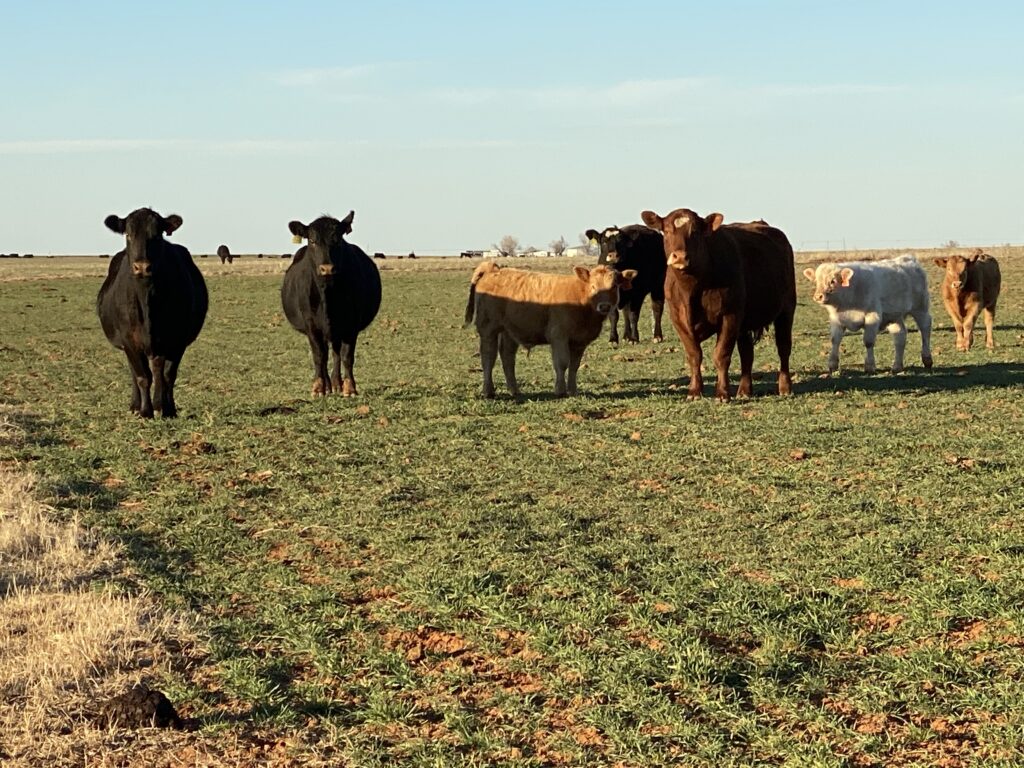
“We’re hoping for that rain; we’ve got grass coming up, but the grass really needs a drink,” Schantz explained. “Right now, I’m feeding hay to my cows.”
Despite the challenges, Schantz mentioned that putting stocker calves on wheat pasture earlier in the year was a successful investment. However, the prospect of harvesting a viable wheat crop remains uncertain for many in the area.
Diversification and Input Costs
To mitigate risks and navigate the current farm economy, Schantz Farms is focusing on crop diversification. Their rotation includes wheat, cotton, soybeans (both single- and double-crop), and peanuts.
“We are trying to be diverse this year with the farm economy and just the way the world is,” Schantz stated. “We’re trying to be diverse to not rely too much on one crop.”
This strategy has required adjustments, such as increasing soybean acreage when peanut contracts were unavailable. Rising input costs, particularly for fertilizer, are also influencing planting decisions.
“We’ve seen those fertilizer prices really jump up, and it makes it hard to want to get too excited about high nitrogen crops such as corn,” Schantz noted. “That’s one of the benefits of going to say soybeans or other legumes that don’t need that high nitrogen input.”
The Realities of Farm Succession
Succession planning is a vital but often difficult process for family farms. Schantz shared insights into his family’s experience, which began in 2018 and has evolved over time.
“Family business, working with family members, is always difficult. There’s always additional emotions involved with it,” Schantz admitted. “You can have a plan, but at the end of the day, you have to be able to adjust. It’s not easy; you need to have those conversations early and continuously.”
The process involves balancing the needs of multiple households supported by a single operation. For Schantz, the decision to stay on the farm was driven by a preference for the farming lifestyle, despite the financial uncertainties.
“A lot of it comes to lifestyle. I do enjoy the lifestyle of farming,” he said. “The income is not always the best… but I enjoy the lifestyle it provides me and my family.”
While the current year presents significant challenges, Schantz remains hopeful for the summer crops, which are the primary “money makers” for his operation.
“We still have time for the summer to change,” Schantz concluded. “If we start getting moisture, we could still have a really good year.”