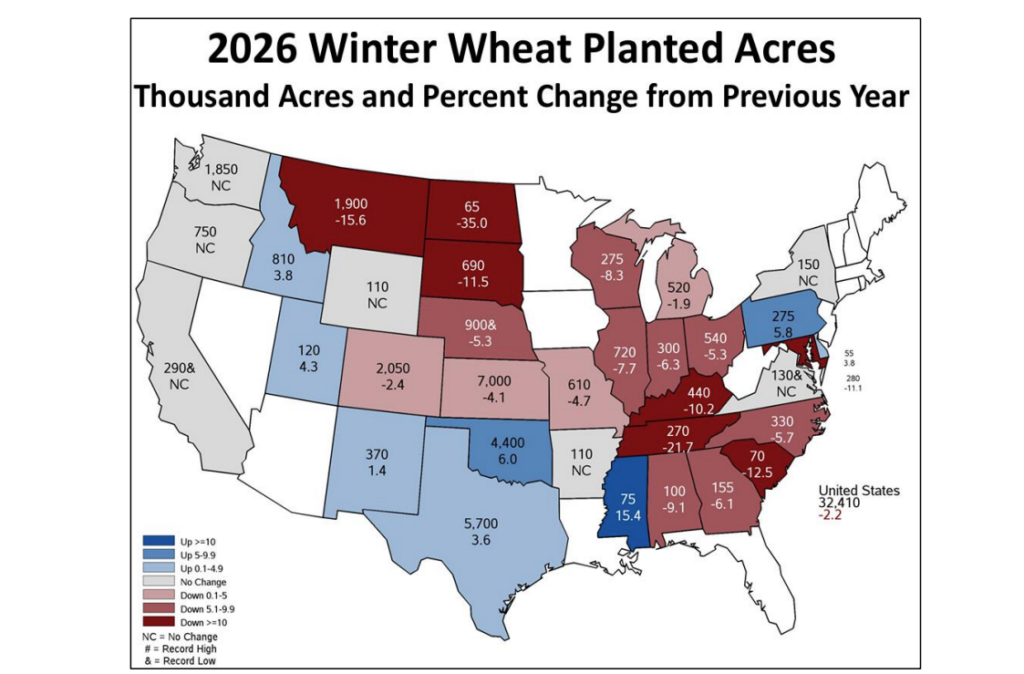
Winter wheat acreage hits a historic low amid market volatility as geopolitical tensions and shifting planting intentions continue to dominate the agricultural landscape. Farm Director KC Sheperd recently sat down with OSU Crop Marketing Specialist Dr. Todd Hubbs to break down the latest USDA reports and what these shifting numbers mean for producers heading into the 2026 spring season.
Wheat Acreage Sees Notable Decline
One of the most striking revelations in the recent reports is the state of wheat production. Total wheat acreage has fallen to $43.8 million acres, marking a 3% decrease from 2025 and the lowest level recorded in over a century.
Winter wheat specifically dropped to 32.4 million acres. In Oklahoma, the numbers showed a slight contraction from earlier in the year.
“We took another 400,000 out of Oklahoma, so we’re at $4.4 million acres,” Dr. Hubbs noted. “Still up 6% year-over-year for Oklahoma, but… given how dry it’s been this winter, I think winter wheat supply-side here domestically, that acreage report was pretty supportive overall.”
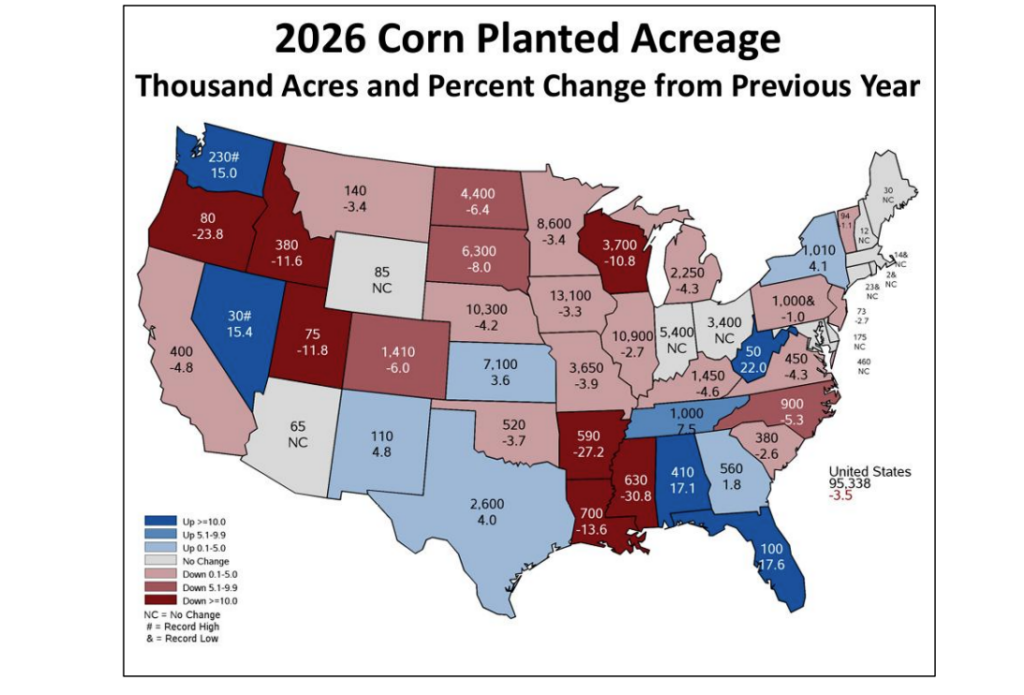
Corn and Soybeans: A Tale of Two Crops
While wheat acreage is shrinking, the corn market is navigating a massive existing supply. Despite a high stocks number, the rate of consumption remains a positive signal for the industry.
“We got a little over 9 billion bushels—now that’s a lot of corn in stocks. But it signaled second-quarter disappearance of almost 4.3 billion bushels, and it really in my opinion supported USDA’s feed residual number… so that stocks report was supportive for corn.”
Acreage for corn is projected at 95.3 million acres, down over 3 million from last year. Meanwhile, soybean intentions are on the rise, particularly in Oklahoma, where acreage is up 15% to 420,000 acres.
“All across the country, we’re seeing a bit of a shift out of corn into soybeans. We also saw strength in canola acreage, particularly up in North Dakota… anything associated with biomass-based diesel production, we saw more acreage this year.”
Sorghum and Future Outlook
Sorghum acreage also saw a decline, landing at 6.1 million acres, a 7.8% drop. Dr. Hubbs attributed much of this to the current price environment and basis levels in key areas like Oklahoma and Texas.
As the industry looks toward the May WASDE report, Dr. Hubbs warned that global factors, particularly nitrogen fertilizer supply out of the Gulf and tensions in the Strait of Hormuz, could create further ripples.
“The southern hemisphere and Southeast Asia, East Asia crops and demand can move quite a bit over the next few months.”