
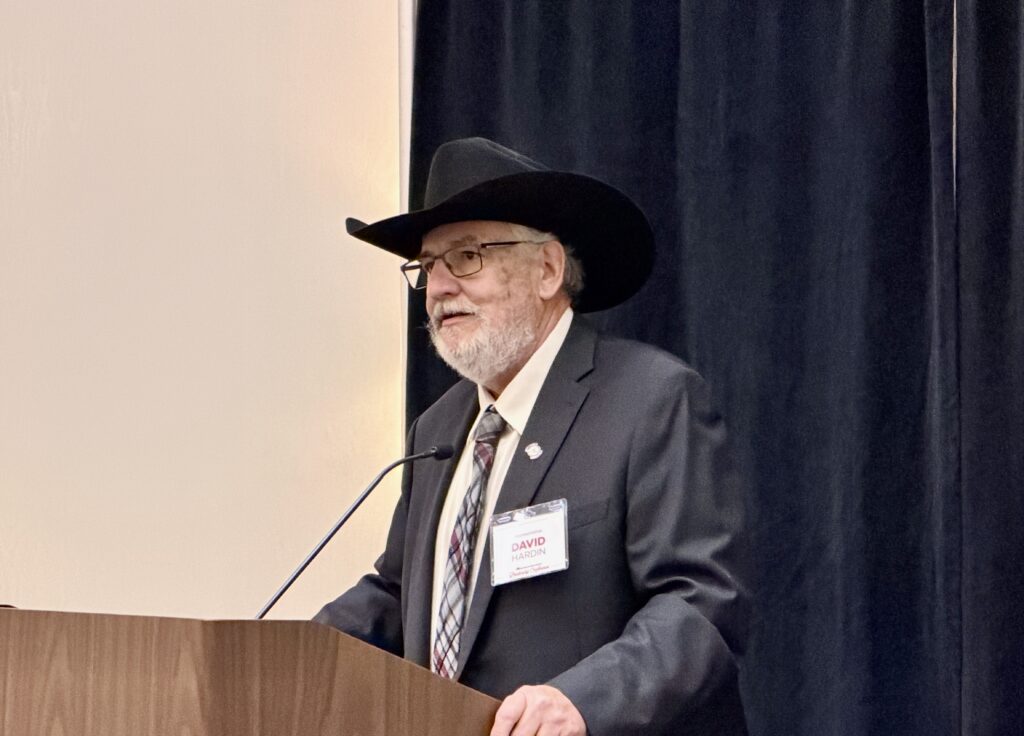
The long-standing battle over the Illinois River Watershed took a dramatic turn on Wednesday as Oklahoma state leaders and poultry producers face a new wave of uncertainty. In an interview on Wednesday afternoon with senior farm broadcaster Ron Hays, State Republican Representative David Hardin of Sallisaw detailed the fallout from a federal court’s decision to reject hard-won settlement agreements. Click here for the Wednesday morning ruling from Gregory Frizzell.
A Decades-Old Shadow
The “poultry lawsuit,” originally filed in 2005, has loomed over eastern Oklahoma for more than 20 years. For local farmers, it hasn’t just been a legal battle; it’s been a constant threat to their family legacies. Representative Hardin, who represents many of these producers, noted that the uncertainty has left families in “limbo,” unsure if they can continue operating from one season to the next. In fact, it’s more than limbo for several poultry growers- as Rep Hardin says he has been told that 17 contracts have been cancelled by poultry companies on Thursday after the latest ruling from the judge.
The Rejected Settlements
Earlier this year, Attorney General Gentner Drummond reached settlement agreements with major poultry integrators, including Tyson Foods and Cargill. These agreements, totaling over $25.5 million, were designed to provide:
- A Remediation Fund: Financial resources for conservation and water quality improvements.
- Stability for Growers: A framework that allowed integrators to remain in Oklahoma, ensuring contract poultry farmers could keep their jobs.
- Environmental Oversight: Clear rules for the removal and management of poultry litter.
However, the U.S. District Court for the Northern District of Oklahoma recently rejected these settlements. The court’s decision effectively keeps the decades-old litigation alive, much to the frustration of the agricultural community.
The “Lose-Lose” Scenario
During his interview with Hays, Representative Hardin emphasized the high stakes of this legal stalemate. He warned that without these settlements, the risk of bankruptcy for local producers is no longer a “possible” outcome—it is happening now.
“These lawsuits can take a generational farm or somebody starting out and bankrupt them in just a matter of months,” Hardin said. He pointed out that the ripple effect extends far beyond the farm gate:
- Loss of Tax Revenue: Countless counties depend on ad valorem taxes from these operations.
- Funding Cuts: Schools, sheriffs’ departments, and local infrastructure rely on the economic stability provided by the poultry industry.
- Job Losses: If integrators pull out of Oklahoma due to the legal climate, the associated jobs in feed mills, hatcheries, and processing plants could vanish.
A Call for Legislative Action
Faced with the court’s rejection, Representative Hardin is urging the Attorney General to consider withdrawing the lawsuit entirely to prevent further economic devastation.
“I realize the Attorney General’s Office has a job to do,” Hardin noted, “but some of these lawsuits need to be looked at by the legislature and look at the possible effects.” He is currently working on drafting language for next year’s legislative session to place “guardrails” on such litigation, ensuring that future legal actions don’t inadvertently dismantle the state’s rural economy.
Looking Ahead
For the families in the Illinois River Watershed, the fight continues. While environmental stewardship remains a priority, Representative Hardin insists it must be balanced with the economic reality of raising food. As he told Ron Hays, the goal is to find a path that protects Oklahoma’s water without sacrificing the very people who have followed every rule and regulation to keep their farms alive.
SB722- All About Making a Point
Earlier this week, Hays also talked with Rep Hardin about SB722 that he introduced in the House Ag Committee meeting held on Monday. Listen to this conversation by clicking on the audio bar below:
Hardin explained the proposal he offered to the House Ag Committee on Monday aimed to highlight a growing concern tied to litigation brought by the Oklahoma Attorney General’s Office. “The original what I ran yesterday basically said that if the Department of Agriculture has to enforce rules or regulations that were imposed by a court in a lawsuit that was filed for the state of Oklahoma by the Attorney General, and that they as a result of enforcing those rules or regulations, any agriculture entity that would have to file bankruptcy, the Oklahoma State Department of Ag would have to make them whole,” he said.
Lawsuits and Their Ripple Effects
Hardin emphasized that the goal was to draw attention to the broader consequences of legal action against agricultural companies—especially the ongoing poultry-related case.
“So the point of the bill was to bring attention to what’s going on with our ag community, and with this lawsuit in particular, but others that may be coming down the line,” he said.
He warned that the fallout from such lawsuits could be severe and far-reaching.
“These lawsuits…can take a generational farm, or somebody that’s starting a farm and put their life into it and bankrupt them, you know, in just a matter of months, which is what’s happening right now,” Hardin said.
Importantly, he stressed that producers often bear the burden despite following the rules.
“Absolutely, you know, they followed the rules that state of Oklahoma makes, they follow them as strictly as possible that they can,” he said. “And as of no fault of theirs…you put these producers, these farmers, you put them into bankruptcy.”
Rural Communities at Risk
Hardin outlined the cascading economic impact that could follow if farms are forced out of business.
“The counties are going to lose that valorem tax, the commissioners are going to lose funding in their county. The sheriff’s going to lose funding. The schools are going to lose funding,” he said. “The jobs that are associated with that industry could very well perish too. So it’s a lose, lose situation for everybody in that case, except the attorney.”
Looking Ahead to Legislative Solutions
After discussion in committee, Hardin chose to hold the bill for further work rather than push it forward.
“as we went on there were a lot of questions,” he said. “The last thing I wanted to do was to put our Oklahoma Department of Agriculture in jeopardy…trying to make some of these entities whole probably would exceed the state budget.”
Still, he made it clear this issue is far from over.
“Absolutely, we do need to look at this and try to put some guardrails,” Hardin said. “I realize the Attorney General’s Office has a job to do and I want them to do that job. But…some of these lawsuits need to be looked at by the legislature and look at the possible effects.”
Hardin says work is already underway on future legislation.
“So yeah, we are looking at putting some language together for next year,” he said.
As discussions continue, the focus remains on balancing legal accountability with the long-term sustainability of Oklahoma agriculture.