
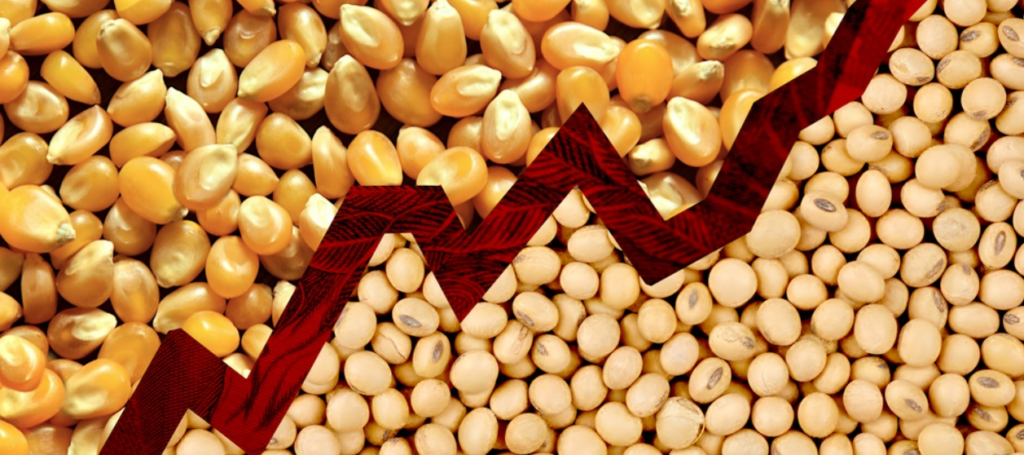
In a recent discussion between Oklahoma State University’s Dr. Todd Hubbs and Farm Director KC Sheperd, the focus centered on the current state of grain markets and how international instability is driving commodity prices. Dr. Hubbs noted that the markets have been characterized by an “up and down” trajectory, largely driven by shifting news about international conflicts and global economic developments. This volatility is expected to persist as long as geopolitical uncertainties remain unresolved.
Geopolitical Tension and Market Volatility
Dr. Hubbs emphasized that grain markets for commodities like corn and wheat have been trending higher, acting as an inflation hedge amid energy shocks that are rippling through the global economy. He observed that investment funds are reacting rapidly to the news cycle.
“It’s just a lot of geopolitical volatility, which I think is probably going to be the norm,” Dr. Hubbs said. “How this turns out is anybody’s guess. I’m not optimistic, but I hope I’m wrong”.
He further explained that until these conflicts are resolved in a concrete way, the market will remain reactive. “Most of our ag commodity prices like corn, wheat, soybeans were already up there a little bit—but all of them moved higher, sort of like an inflation hedge,” Dr. Hubbs noted. “Energy prices create inflation across the board because everything’s linked to energy, and I think you see funds moving in and out depending on how they think this war’s going to turn out”.
The WASDE Report and International Impacts
The conversation also touched upon the latest World Agricultural Supply and Demand Estimates (WASDE) report. While Dr. Hubbs described the domestic side as relatively “boring,” the international numbers told a different story regarding global stocks.
“Internationally, it looked really bad because ending stocks went up over 6 million metric tons, but most of that was from India,” Dr. Hubbs explained. “They had a lot more stocks than people thought. That’s a 226 million bushel increase in ending stocks, but 177 of that’s India. I don’t expect India’s wheat to hit the world market”.
Regarding Russia, he noted a slight bearish trend. “Russia’s crop got raised slightly—not even 36 million bushels—and their exports are up a little bit. I think they might have to push that a little higher before it’s all said and done”.
Weather Patterns and Winter Wheat Outlook
As an avid watcher of weather models, Dr. Hubbs shared his concerns regarding the Oklahoma wheat crop and the transition into a strong El Niño pattern.
“We’ve had a rough winter here in Oklahoma on our wheat,” Dr. Hubbs said. “I think we’ve probably lost some acres. For the 26-27 crop on winter wheat, I think the gap from planting to harvest will be a little higher than normal. I think we’ve probably lost some yield, which is going to come out as it iterates forward”.
He added that while some fields in Oklahoma may already be past the point of recovery, the broader market will soon shift its focus to spring planting. “A spring rally is going to center on what the weather is like here and the planting of the spring crops, in particular corn,” Dr. Hubbs noted. “If it looks like corn’s going to go in timely and we’re going to hit maybe 95-plus million acres, another big corn crop on the horizon… I think that caps rallies in the grains”.
Strategic Marketing for Producers
For producers navigating these volatile grain markets, Dr. Hubbs recommends a disciplined approach to marketing rather than trying to time the market’s absolute peak.
“As always, you need to set up your marketing plan,” Dr. Hubbs advised. “It’s going to be volatile, and this is why it’s so hard to do this right now. Down 12 cents one day, up 10 cents the next day; you’ll see these major up-and-down rallies and the volatility is off the charts”.
He concluded by suggesting that producers keep their targets realistic. “If you know a price that you think is profitable, set your target, keep your bids in. Start thinking about what bid I could take and how much I would be willing to sell right now, and keep your bids current is what I would recommend,” Dr. Hubbs said.