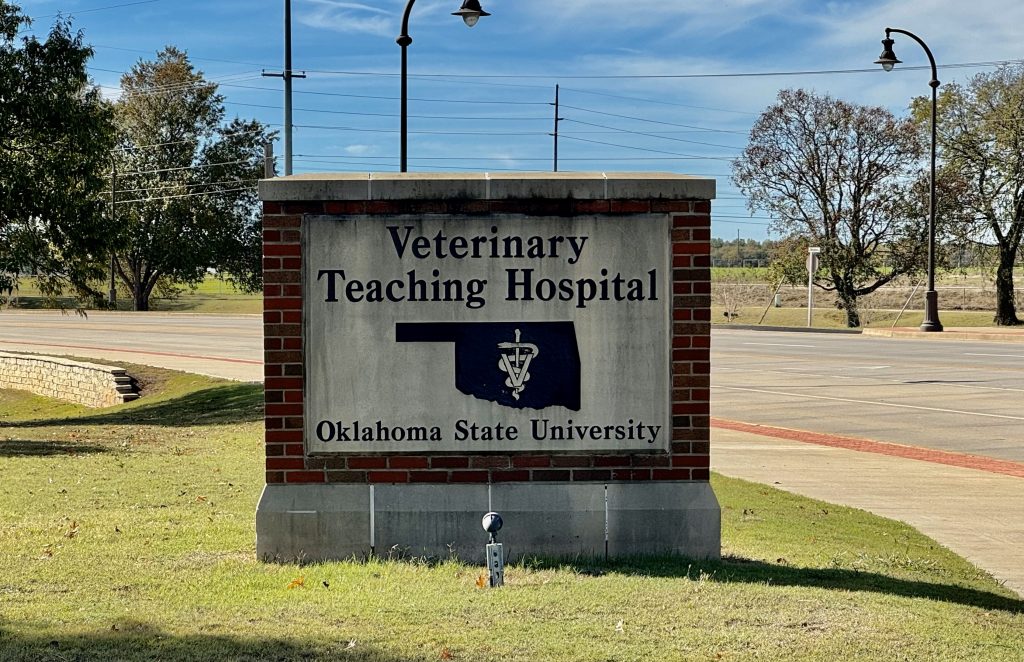
For the second time since 2017, the OSU College of Vet Medicine is back on probationary accreditation. At that time, the American Veterinary Medical Association placed the CVM on probationary accreditation after a site visit. OSU was successful then in fixing the problems cited by the AVMA and regained full accreditation.
However- after a review this past month- the OSU-CVM is back in the same position it found itself in 2017. Senior Farm and Ranch Broadcaster Ron Hays spoke with Dr. Johnny Stephens, President of Oklahoma State University’s Center for Health Sciences which oversees OSU’s College of Veterinary Medicine, about the status of the school and the vision of where it is headed.
“The thing about that status is that our students and our graduates are coming from a fully accredited veterinary program, but we do have two years to come off of that probation from the deficiencies that were found in the latest review by the accrediting board,” Dr. Stephens explained.
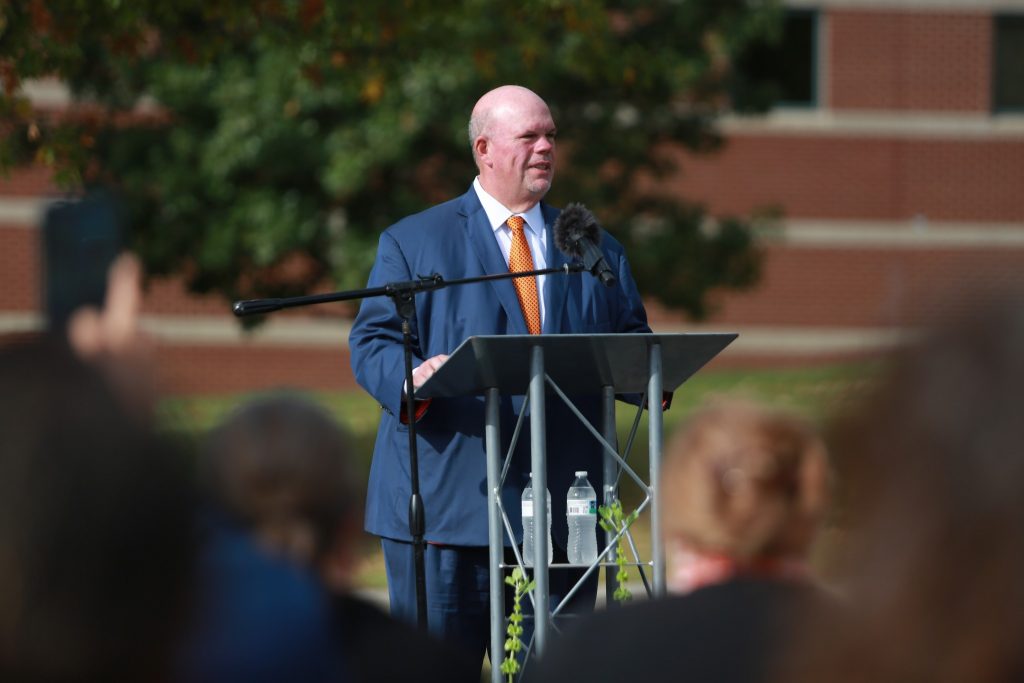
He said further that the deficiencies they were cited for were broken down into major and minor categories: the major being clinical education, meaning the number of cases that students were seeing.
“I scratched my head just a little bit over this because the North American Veterinarian Licensure Examination is the test that students come out and pass to go on and become licensed veterinarians,” he said. “Our students are performing at a very high level. In 2023, ninety-six percent of our students passed that test their first time, and in 2024, it was ninety-four percent. That is compared to an 88% average across the nation.”
Dr. Stephens tells Hays that it boils down to the administration not documenting the full extent of the cases that their students were exposed to. That problem has been corrected, so now, they must work with the accrediting body to prove that those cases are improving.
The minor deficiencies were to do with the facility itself and funding is already in place to make those improvements.
Dr. Stephens said that none of their deficiencies are a reflection of the quality of education veterinary medicine students receive in the program. “We have complete confidence in the faculty and staff and those who are providing the education, and the students are coming out confident in their education. We are turning out great graduates today, just like we were six months ago.”
Dr. Carlos Risco stepped down in his role as dean on Oct. 31, and Dr. Jerry Ritchey has been appointed interim dean. A leadership transition team from across the OSU System is directing efforts to ensure swift action is taken to address deficiencies identified by the AVMA. When asked about the role of Oklahoma State University’s Center for Health Sciences in the oversight of the College of Veterinary Medicine, Dr. Stephens says he is not responsible for the day to day operation of the College.
“My oversight is more at a macro level,” he said. “I help with accreditation. The Center for Health Sciences started working with the Veterinary School about three years ago when it was identified that there are a lot of similarities between what we have worked with in our OSU Medical Center in Tulsa and what we were seeing from OSU’s Veterinary Hospital in Stillwater.
“We started working together largely around the funding aspect. The school has long been funded around the academic programs that were happening with veterinary medicine, but what was identified by President Kayse Shrum and her leadership team was that the Veterinary Hospital had been underfunded for a number of years.”
Three years ago, Dr. Stephens began working with the Oklahoma Legislature to create a program to fund the third teaching hospital in the state of Oklahoma – the OSU Veterinary Hospital. A year later, the OSU Vet Med Authority was created to provide funding.
There are recurring funds through the OSU Vet Med Authority that will be used for the maintenance and expansion of the OSU teaching hospital. These and some one-time funding options will be used to remodel the teaching hospital and address the minor deficiencies affecting its accreditation.
“There are opportunities to build a new teaching hospital as well,” Dr. Stephens stated. “We will have time over the next six months to a year to discuss the outlook for a remodel versus a new hospital. There are pluses to both of those options. We will work with all stakeholders to be able to make that determination.”
An area of focus in the decision-making process will be addressing the shortage of large animal veterinarians in rural areas. Hays and Dr. Stephens further discussed what this might look like. Click the soundbar above to listen to the entire conversation.
OSU President Shrum has long stated that she wants to make OSU the preeminent Land Grant University in the Nation, and there is no reason why the Veterinary Medicine program shouldn’t also be a top-notch option.
“We have excellent faculty, and excellent students in the program,” Dr. Stephens said. “How do we grow those facilities to national prominence in different areas? ‘Large animal’ is a very broad term. What are other animals underneath that heading that we can be preeminent for in the country? We are searching for where we can help in the state of Oklahoma and across the country or even worldwide.”