

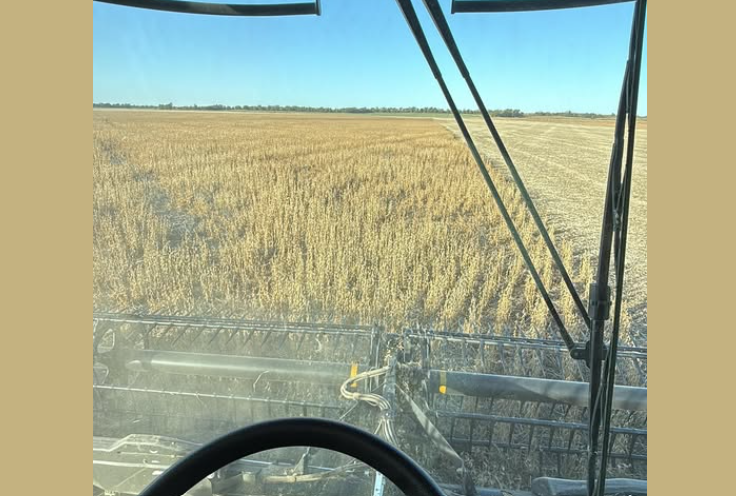
Oklahoma Producer Aaron Schantz Gives Peanut, Cotton, and Soybean Harvest Update. For diversified producers in western Oklahoma, harvest is a time of juggling crops, monitoring the weather, and managing complex rotations. For Aaron Schantz, an ag producer from Hydro, this year is a mixed bag, defined by high yields but tough commodity prices.
Speaking with Farm Director KC Sheperd, Schantz provided an update on his operation, which has just wrapped up the peanut and soybean harvest and is now transitioning into cotton.
Peanut Harvest “Looked Really Well”
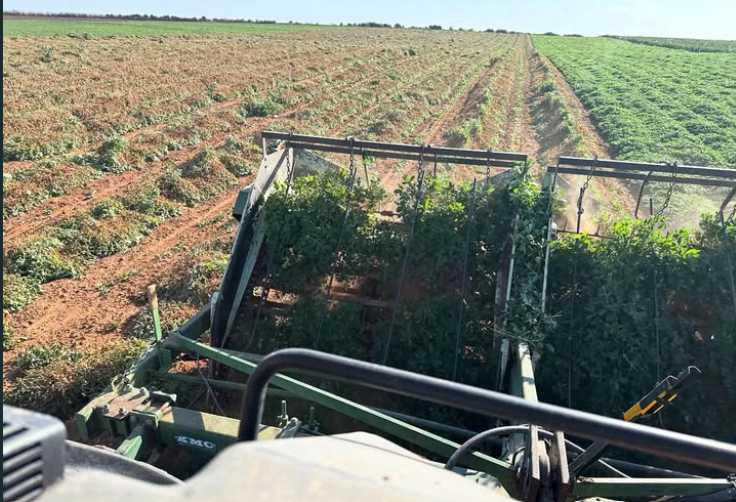
The peanut harvest was a clear bright spot for the farm. “We had a great growing season for peanuts specifically,” Schantz said. “I think we saw some really good yield.”
He noted this year’s yields were “better than last year,” and the crop was harvested in a “really timely manner,” successfully beating the first freeze.
While peanuts aren’t a dominant crop in Oklahoma, Schantz continues to grow them due to the “great power in rotation.” It’s the only crop on his farm that utilizes a moldboard plow, which provides soil benefits. Furthermore, peanuts offer market stability. “We usually have contracted [peanuts] before we plant, and that helps our budget,” he explained.
Cotton: A Red Letter Yield vs. Hurting Price
With peanuts in the barn, the focus now shifts to cotton. Schantz said the recent freeze came in a “very good timely manner” after the crop was sprayed and ready.
“I think that we had good rains all throughout the summer,” he said, noting good potential for the crop. “We would have liked our fall to have stayed warmer a little bit longer… but I still think we’re looking at good potential.”
While many in Oklahoma are calling it a “red letter year for cotton” in terms of production, Schantz points to a painful reality. “The price is hurting,” he said. “At the moment, we’re looking like we’re trading a good yield for poor price. So economics are probably going to be about the same as last year.”
The “Hit and Miss” Nature of Double-Cropped Soybeans
Schantz also just finished harvesting his soybeans, which were part of a complex, multi-year rotation. “We actually finished up soybeans Saturday night,” he said. “Our soybeans were double-cropped… We had harvested our wheat crop off of it, and our soybeans got thrown in late.”
The results were “mixed,” which Schantz attributes to the “nature of double crop.” One field performed well, while the other “just didn’t make it.”
This rotation, developed by his father (a wheat seed dealer), is a cornerstone of their operation:
- Year 1: Peanuts
- Year 2: Seed Wheat, followed by Double-Cropped Soybeans
- Year 3: Cotton
The double-cropped soybeans help make the seed wheat crop “more profitable” and are “good for the soil,” but Schantz admits the economics “are just always questionable” due to the late planting date. He added that, in general, Oklahoma producers who planted soybeans early “overall had a good soybean crop.”
What’s Next on the Farm
Even with three harvests complete, the work doesn’t stop. Schantz said the operation will be managing its wheat ground through the winter, working in the shop to prepare for next year, and getting ready for calving season.
“I’ll be calving January, February, March, with my cattle,” he said. “There’s always plenty to do, but it’s a good life, so I’ll keep doing it.”







