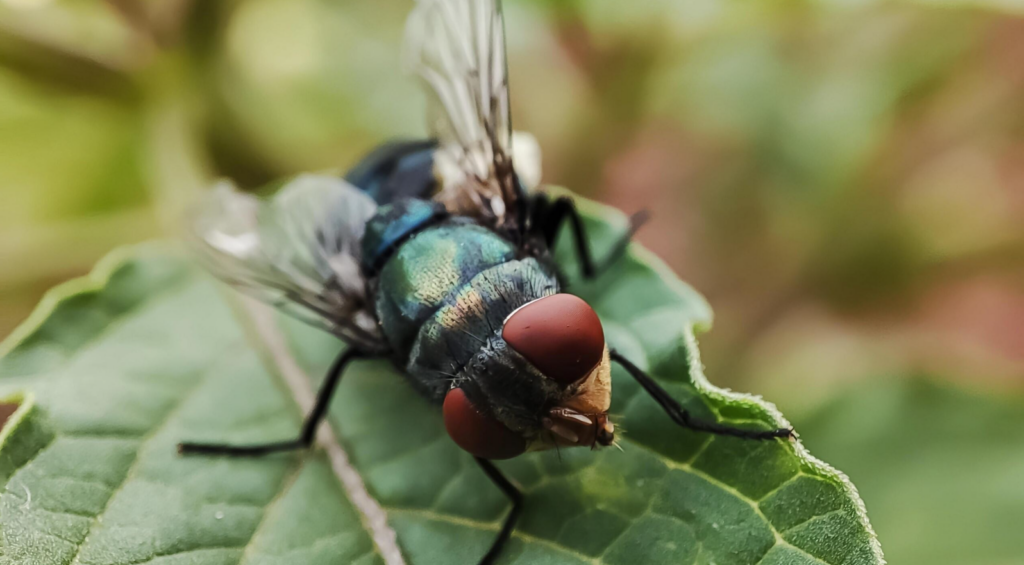
New World screwworm (NWS), Cochliomyia hominivorax, was eradicated from the continental United States decades ago through a coordinated effort that pushed the pest into Central America, and for years a biological barrier was maintained in Panama. The fly resurfaced in southern Mexico in late 2024. While the U.S. remains free of an established NWS population, recent developments, including sterile fly release in Texas, expanded treatment options, and new infrastructure investments, highlight continued concern among animal health officials.
NWS larvae infest open wounds and feed on living tissue, causing pain, swelling, foul odor, and rapid tissue damage that can be fatal in less than two weeks if untreated. Female flies lay eggs in wounds, mucous membranes, and body openings. In cattle, risk is highest after branding, tagging, dehorning, castration, and at newborn navels, though even minor injuries can be targeted. Because females mate only once, control has relied on releasing sterile males to disrupt reproduction.
The sterile insect technique has historically been the hallmark of screwworm control and eradication. Sterile fly release has expanded into areas of northern Mexico and strategic locations up to 50 miles north into Texas. The goal is to create a preventive buffer zone inside the U.S., not just in Mexico, to intercept any flies that might move north. Movement controls have also been part of the response, and southern border ports between the U.S. and Mexico remain closed to live ruminants.
Treatment options for control and prevention have also expanded, including emergency approval for macrocyclic lactone products including Ivomec® (ivermectin) and Dectomax® (doramectin). ExZolt Cattle-CA1® (fluralaner) has also been conditionally approved as a topical solution for prevention and treatment. Use of these products in response protocols may occur under veterinary guidance and, in some cases, extra-label drug use provisions.
The opening of the sterile fly dispersal facility in Edinburg, Texas, in mid-February marked a major step forward. This facility will allow USDA to distribute millions of sterile male flies, strengthening the biological barrier designed to prevent establishment of the pest. USDA also announced plans for a domestic sterile fly production facility nearby. The production plant represents an investment of roughly $750 million and is expected to eventually produce up to 300 million sterile flies per week, reducing reliance on international production and significantly expanding preparedness and response capacity.
In parallel, the USDA NWS Grand Challenge was announced to provide up to $100 million in funding to support research, surveillance, and improved control tools aimed at preventing NWS.
Additional information about NWS may be found at the following websites:
All information is accurate as of February 13, 2026.