

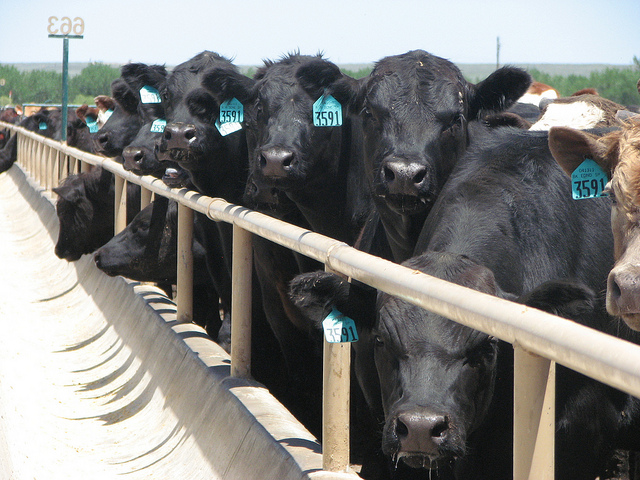
The February USDA Cattle on Feed Report confirms a continuation of tight cattle supplies across the United States, reflecting ongoing pressure on both feedlot inventories and beef production capacity. Oklahoma Farm Report’s Ron Hays sat down via telephone with Extension Livestock Market Economist Dr. Darrell Peel of Oklahoma State University, who says total cattle on feed for feedlots with 1,000 head or more stood at 11.5 million head as of February 1 — down 1.8% from a year ago.
Placements in feedlots during January were down 4.7% from the same month in 2023, while marketings were sharply lower — off 13% year-over-year. Peel attributed much of the marketing decline to severe winter weather.
“The winter storm at the end of January disrupted movement of cattle for several days,” Peel explained. “I suspect we just pushed some cattle that would have been marketed in January into February.” He expects the March report will provide a clearer picture once February data are available. Peel adds that we probably will need to average this report and the next one to get a clearer picture of marketings in this first quarter of 2026.
This report continues a long-term trend of shrinking feedlot inventories. Peel noted that on-feed numbers have declined for 15 consecutive months, representing a total drop of roughly 460,000 head since the downtrend began. “We’re really starting to see cumulative effects,” he said, emphasizing that the decline reflects tight feeder cattle supplies across the country and a slower flow of animals through feedlots and packing plants. The lower numbers in recent reports are off from a lower number of a year ago- so the losses are compounding in fewer on feed numbers.
Regionally, the numbers also tell an evolving story. Texas feedlot inventories are now just 93% of last year’s levels, while Nebraska — recently surpassing Texas as the nation’s largest feeding state — is running 103% of year-ago totals. Peel said the lack of Mexican cattle imports continues to affect Texas feedlots disproportionately. “They’re struggling for numbers,” he said. “There’s not much chance of regaining that top spot any time soon.”
With fewer cattle available, both feedlots and meat packers are operating below optimal capacity. Peel expects U.S. beef production to fall 3 to 3.5% in 2024. As spring approaches, competition is expected to heat up between feedlots and grazing operations for lightweight cattle.
Still, the economist sees strong conditions for cow-calf operators. “The market is heavily focused on the cow-calf level,” Peel noted. “If you’ve got forage, it’s best used to produce calves — that’s what the market is telling us to do.”
Peel adds ” The market’s trying to figure out who can put on weight the cheapest. So, it’ll be a battle between cheaper summer grass, green grass, assuming that happens, against the feedlots that have a fairly favorable cost of gain right now.”
The Beef Buzz is a regular feature heard on radio stations around the region on the Radio Oklahoma Ag Network and is a regular audio feature found on this website as well. Click on the LISTEN BAR for today’s show and check out our archives for older Beef Buzz shows covering the gamut of the beef cattle industry today.







