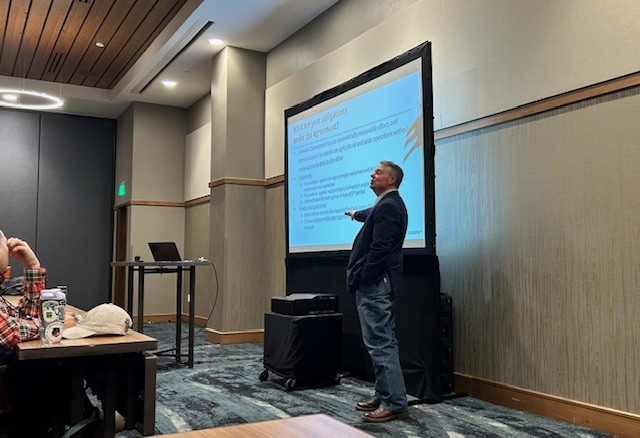
Shannon Ferrell, an agricultural economics professor at Oklahoma State University, joined associate farm reporter Carli Davenport to discuss the rapid expansion of renewable energy across Oklahoma and what it means for landowners. Ferrell explained that the biggest driver behind the surge is economics, noting that “first and foremost, it’s price.” He added that advances in technology have pushed costs down to the point where, “if you look at a levelized cost of energy, wind and solar are even cheaper than natural gas in terms of generation,” making renewables increasingly attractive in the Oklahoma market.
As interest grows, Ferrell stressed the importance of landowners asking the right questions before signing wind or solar leases. He said the first issue should always be land use: “How is this going to impact my use of the land?” Ferrell pointed out that wind projects typically occupy only a small portion of acreage, while solar facilities can take up much more space. Another critical question is contract length, since “for most wind and solar projects in Oklahoma [agreements] are probably between 30 and 50 years,” a long-term commitment that landowners need to weigh carefully.
Ferrell said landowners also need to fully understand their responsibilities under an energy lease. “What are your obligations?” he asked, explaining that these can range from keeping property taxes current to protecting the developer’s equipment from damage. Payment structure is another key consideration. Landowners should know “how are you going to get paid, and how much are you going to get paid,” and ensure they can verify and audit those payments over time.
When it comes to solar development specifically, Ferrell encouraged producers not to assume all agricultural use is lost. He advised landowners to think in terms of scale, saying developers typically need “a range of five acres per megawatt to 10 acres per megawatt,” with trends moving toward the lower end. He added that many projects don’t fully occupy fenced areas, creating opportunities for grazing sheep or cattle, planting shade-tolerant crops, or even spacing panels wide enough for equipment. “That’s a conversation you want to have with a developer,” he emphasized.
Finally, Ferrell addressed how solar lease income compares to traditional crop returns. Drawing on a recent study, he noted that several common Oklahoma cropping systems were already producing “negative per acre returns without solar.” When a typical solar payment of about $750 per acre was added, the results changed dramatically. Ferrell said returns increased “from a net increase of $450 or so per acre for alfalfa all the way up to…900 or so dollars for canola,” showing that renewable energy leases can provide stable, risk-independent cash flow for agricultural landowners.