Enhanced Severe Weather Threat Brings Baseball-Sized Hail and Tornado Risk to Oklahoma
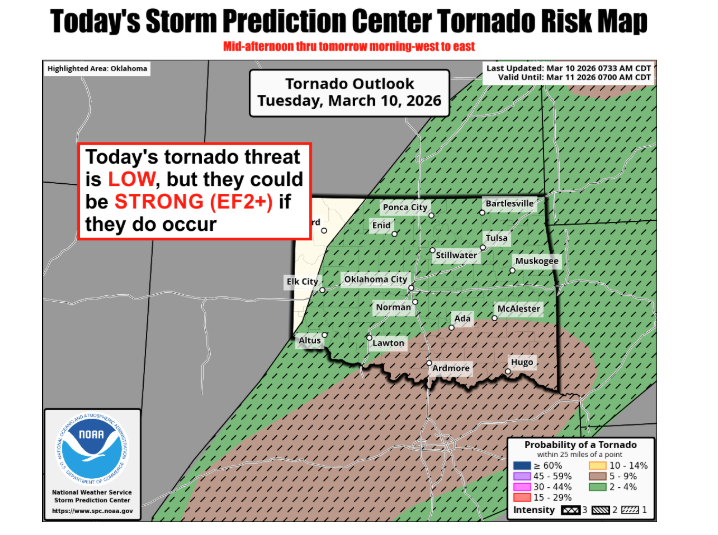
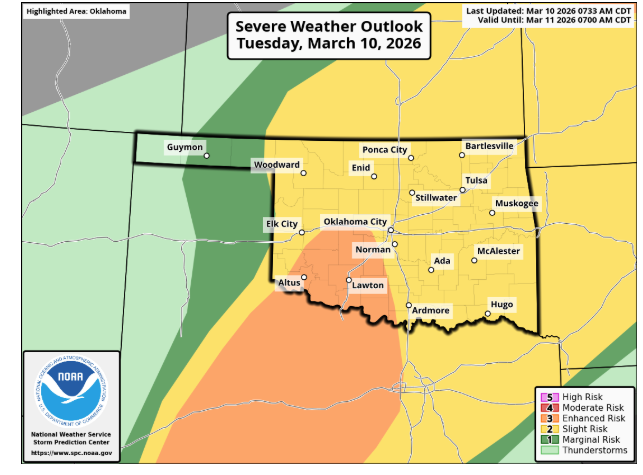
Oklahoma is facing a significant severe weather setup today as atmospheric conditions continue to “over-perform,” according to State Climatologist Gary McManus. The primary concerns involve an enhanced threat of very large hail, damaging winds, and the potential for additional tornadoes as the state nears a historical record for the month of March.
Significant Hail and Wind Threats
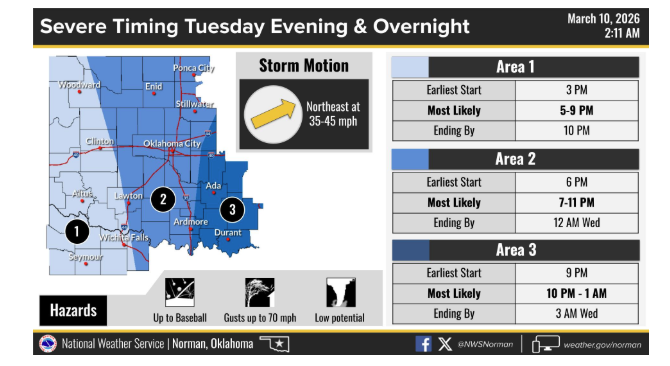
Residents, particularly in Southwest Oklahoma, should prepare for an enhanced risk of baseball-sized hail. McManus describes these storms as “windshield eaters” that can cause significant damage to vehicles and property in a matter of seconds.
In addition to the hail threat, severe straight-line winds are a major concern. Wind gusts exceeding 70 mph are possible within the more intense storm cells. While the overall storm coverage is expected to be scattered, the intensity of individual cells remains a high priority for safety officials.
Approaching a Historical Tornado Record
The state has already seen a prolific start to the month, with 12 confirmed tornadoes as of early March. With damage investigations still ongoing from previous events, that number is expected to rise.
The current activity puts Oklahoma’s all-time March record of 17 tornadoes, set in 1991, in serious jeopardy.
“Our record March total of 17 from 1991 is definitely at risk, and we’re not even to the Ides of March yet!” says McManus.
Ongoing Fire Danger
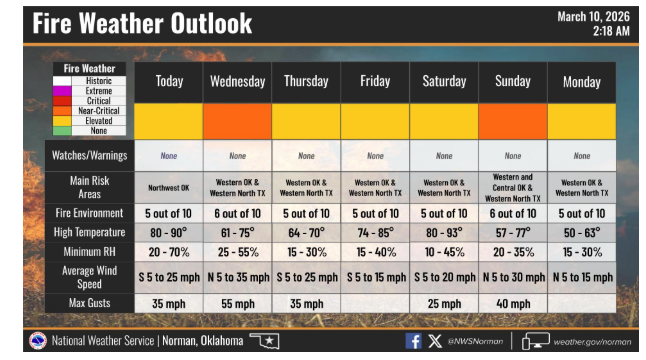
Despite the focus on severe storms, the National Weather Service in Norman reminds Oklahomans that fire danger remains a critical threat. The combination of ongoing drought, low humidity following the storm systems, and a lack of seasonal “green up” has left the landscape vulnerable. High winds associated with these systems can quickly turn a small spark into a dangerous wildfire.
Severe Weather Safety Reminders
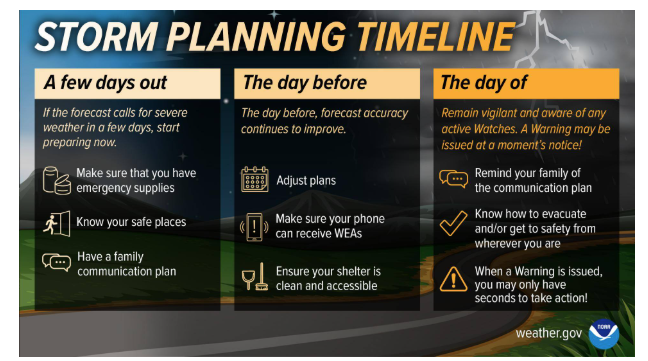
With the atmosphere consistently exceeding forecast expectations this season, emergency officials urge all residents to have their severe weather safety plans fine-tuned and ready to execute.
Identify your shelter: Know exactly where you will go if a warning is issued.
Stay Informed: Have multiple ways to receive weather alerts, including a weather radio and local news apps.
Prepare for Power Outages: Ensure your devices are charged and you have a flashlight and fresh batteries.