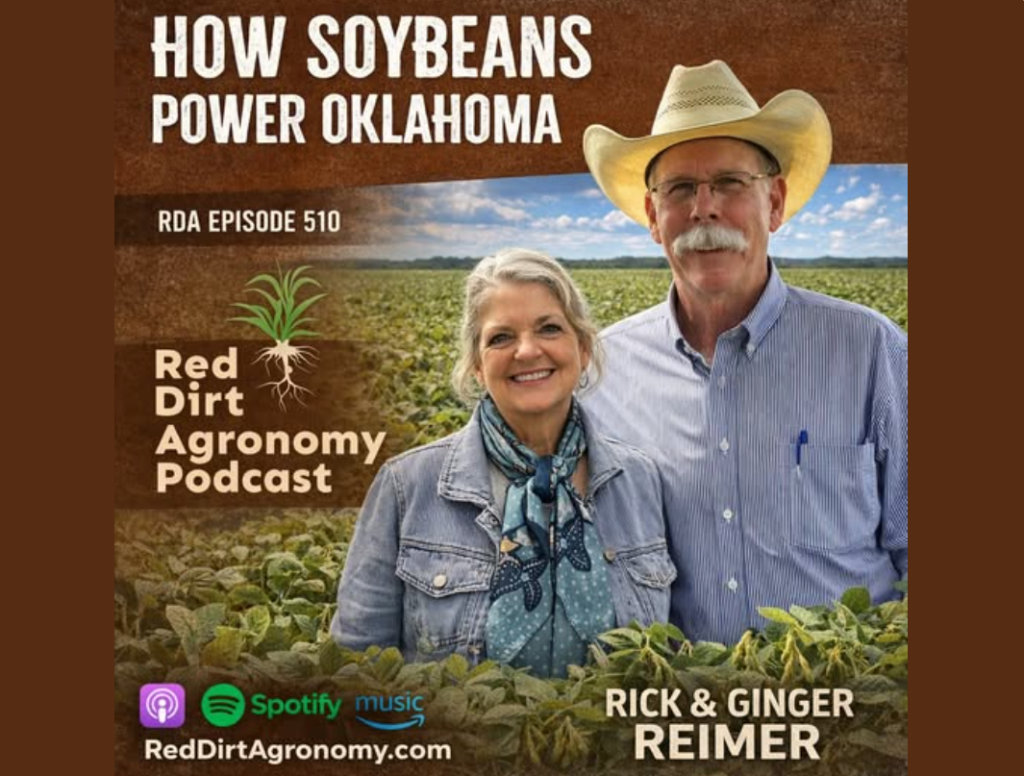
Soybeans are a lot more than a crop in the field, and this episode proves it. Dave Deken and Brian Arnall visit with Rick and Ginger Reimer of the Oklahoma Soybean Board about how soybean checkoff dollars are being invested in research, producer outreach, education, and consumer awareness across Oklahoma. From Red Dirt Soy and production research to classroom workshops and virtual reality tools, the Reimers share how the board is helping connect agriculture to both producers and the public.
The conversation also digs into soybean rotations, the crop’s spread into new parts of Oklahoma, why soybeans are so important to livestock agriculture, and how the board has even supported feral hog control because of the damage those animals cause to crops and pasture. It’s a wide-ranging look at how soybean leadership, Extension partnerships, and strategic outreach are helping strengthen agriculture from the farm gate to the classroom
Top 10 Takeaways
- This episode reframes soybeans as much more than a crop. The Oklahoma Soybean Board is investing not only in production research, but also in education, livestock-connected outreach, and public understanding of agriculture.
- Teacher training is one of the board’s biggest multiplier strategies. Ginger says the board has worked with nearly 800 teachers and is reaching around 20,000 students annually through workshops and classroom-ready materials.
- The soybean checkoff is tightly accountable. Rick emphasizes audits, compliance reviews, and documentation because every dollar being spent belongs to soybean producers.
- Research is still the budget anchor. Rick estimates about 60% of retained board funds go toward research, with another 20% to 30% supporting education and outreach.
- Soybeans and livestock are directly linked. Rick says most domestically used soybeans go into animal agriculture, which explains why the board supports pork, poultry, and related educational programming.
- Soybean production geography in Oklahoma has shifted. Counties once dominant in eastern Oklahoma are no longer the only leaders; major soybean production now includes north-central Oklahoma, and the crop is pushing even farther west.
- Western Oklahoma soybeans bring new management questions. Brian points to irrigated production and iron deficiency issues in high-pH soils as examples of why region-specific research matters.
- Digital outreach is becoming a bigger part of the mission. The board is expanding through social media, recorded workshop content, YouTube, and online education platforms.
- Feral hog control is a serious agricultural issue. The board’s support for control efforts shows how soybean leadership is responding to broader on-farm threats, not just soybean-only problems.
- Agricultural literacy is long-term risk management. Ginger makes the strongest public-facing point of the episode: informed teachers become informed communities, and informed communities shape the future of agriculture.
click here or below to Listen to the full podcast: