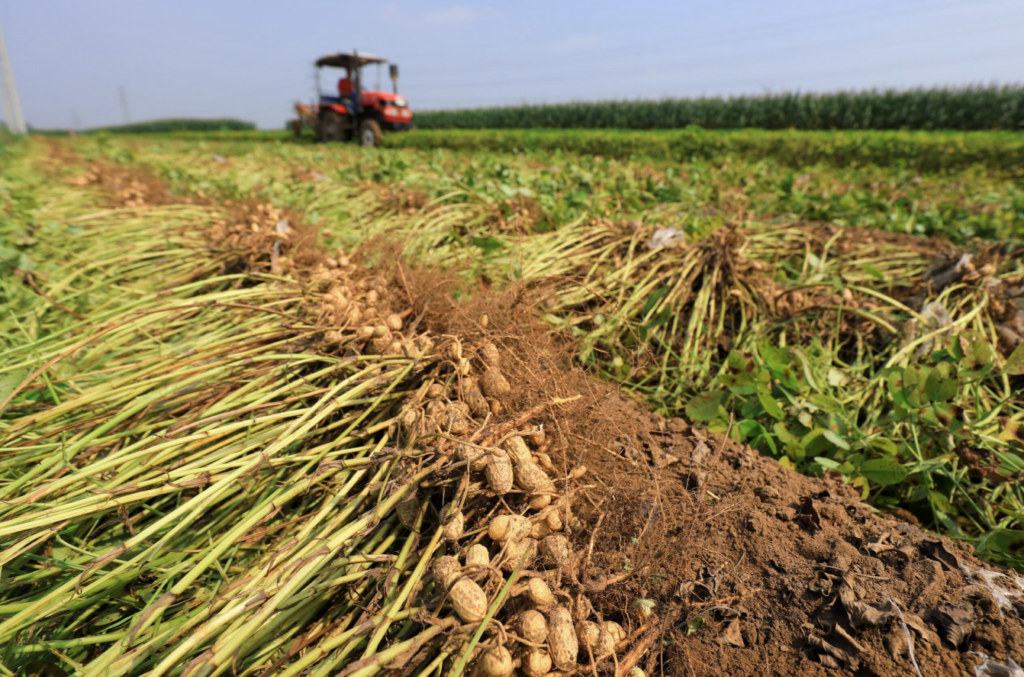
The spring planting season is officially underway, setting the foundation for the year’s peanut crop. In a recent interview with associate farm reporter Carli Davenport, BASF representative Adam Hixon emphasized that this year’s unusual weather patterns make early planning and proactive management more important than ever for growers across the region. “It’s really a good time to just start thinking about a plan for the year,” he said, noting that “this year in particular has been kind of a crazy spring because of the temperature swings.” Those fluctuations, he added, are “really not ideal for even plants,” making timely planting and early management decisions critical.
As the crop begins to emerge, Hixon emphasized that growers must take a broad approach to management. “We really need to start thinking about a lot of different things, meaning weeds, diseases, just pests in general,” he said. That early-season mindset is key to protecting yield potential before problems have a chance to take hold.
When it comes to potential yield loss, the stakes are high if action is delayed. “It could be significant, especially if you don’t really stay on top of scouting,” Hixon explained. He pointed to leaf spot as “probably the number one disease that growers deal with,” adding that peanut producers often rely on a scheduled, preventative approach because “we know it’s going to happen.” Typically, those risks begin “40 to 60 days after planting,” reinforcing the need for timely fungicide applications.
Hixon stressed that understanding environmental conditions and early symptoms can help growers stay ahead. Warm, wet conditions create an ideal environment for disease, and for leaf spot, “what you start to notice is a spotting on the leaf…very round…brown with maybe a yellow halo.” For soilborne diseases like white mold, growers should watch for “a white, fuzzy appearance on the stem,” which he warned is “extremely devastating” and requires quick action.
Distinguishing between diseases is also critical for proper management. Hixon explained that leaf spot appears on foliage with “that round spot, brown center, yellow halo,” while white mold develops lower in the canopy, where “you have to really peel back the canopy because it can really sneak up on you.” If left unchecked, he warned, the disease can lead to “a lot of foliar loss,” and ultimately, “losing quite a bit of yield.”