

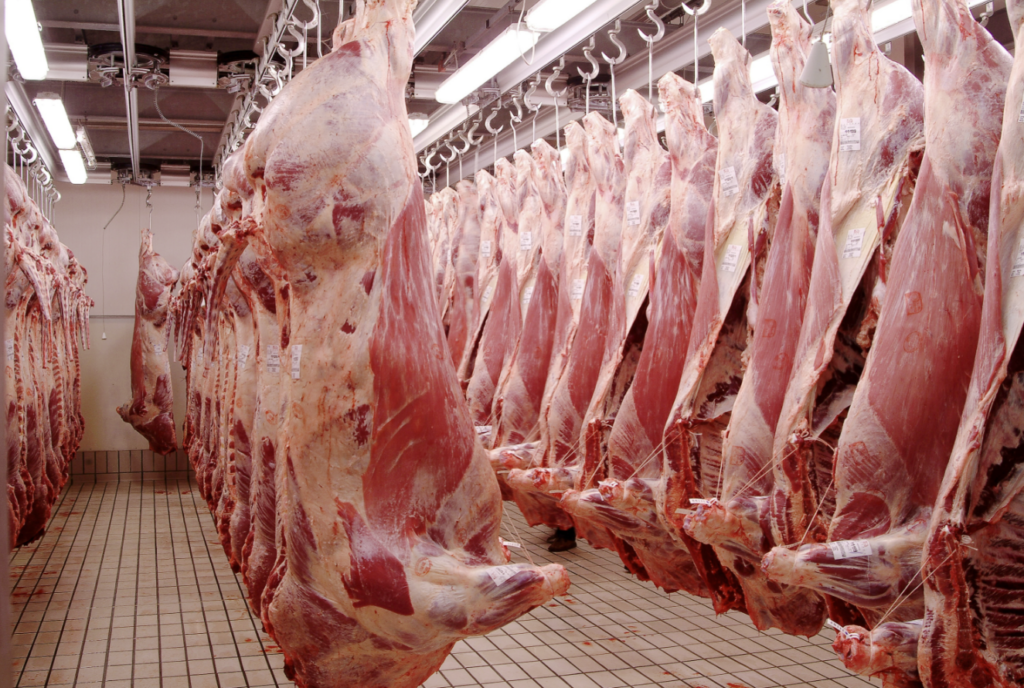
The beef industry is currently experiencing a tug-of-war between biological efficiency and market signals that reward heavier carcass weights. Recent Rancher’s Thursday webinar sessions (https://extension.okstate.edu/programs/beef-extension/ranchers-thursday-lunchtime-series/tug-of-war-in-the-cattle-industry) highlighted the growing tension in the beef industry between the market driven feeding for heavier carcass weights, selection for increased growth and efficiency, and the economic realities of maintaining larger cows.
Carcass weights are increasing largely because feedyards are keeping cattle on feed longer and marketing systems reward pounds of carcass weight. At the same time, cow size has increased in turn raising maintenance requirements and forage demand.
Speakers also discussed the biological factors behind heavier carcasses. Growth in finishing cattle remains relatively linear even at heavier weights, and modern marketing systems favor carcass-based pricing. There are market incentives that encourage feeding cattle to heavier endpoints, including low cattle numbers, relatively inexpensive feed, and reduced discounts for heavy weight and yield grade 4 carcasses. These conditions can improve gross revenue at the feed lot but also increase days on feed and reduce feed efficiency.
Bigger cows are not necessarily more efficient cows. Cow size is closely related to feed intake, so selecting for larger mature size without considering forage resources can reduce stocking flexibility and increase production risk, particularly during drought or periods of high feed costs. Matching cow type to the ranch environment remains one of the most important management decisions producers make.
Ultimately, long-term profitability of beef production depends on balancing genetics, nutrition, and available resources across the entire production system. Producers who align cow size, stocking rate, and marketing strategy with their forage base are better positioned to remain resilient in volatile markets and challenging weather conditions.
Efficiency should drive replacement and management decisions. The most profitable cowherds are those that fit their environment and optimize performance from pasture to packer.