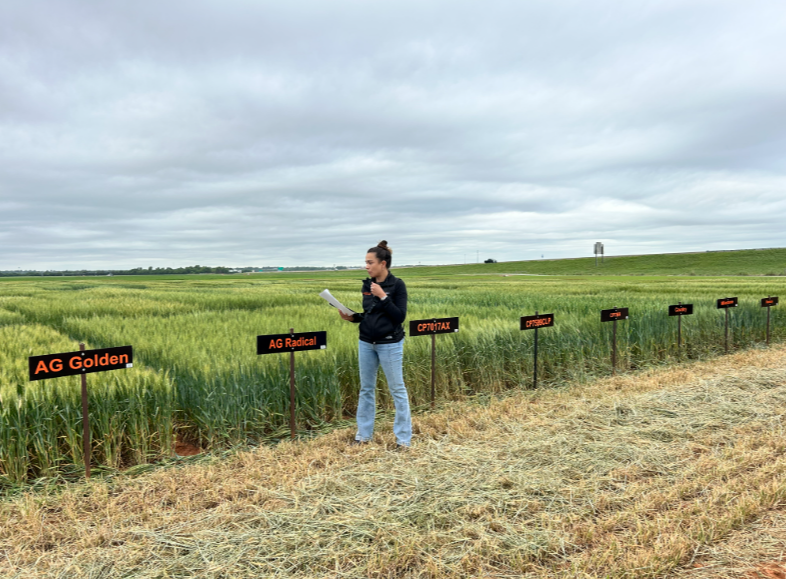
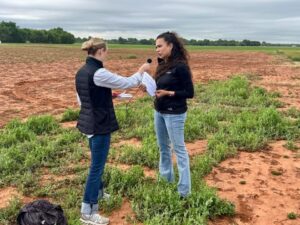
At the recent Chickasha Field Day, producers gathered to evaluate the performance of various wheat varieties and discuss the significant disease pressure impacting Oklahoma’s wheat crop this season. Associate Farm Reporter, Carli Davenport, spoke with Dr. Amanda Silva, Associate Professor and Extension Specialist at Oklahoma State University, about the current state of the crop and the challenges facing growers as they head toward harvest.
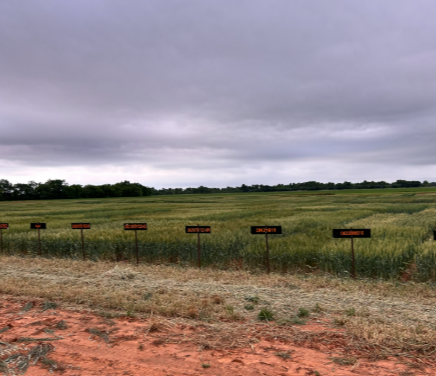
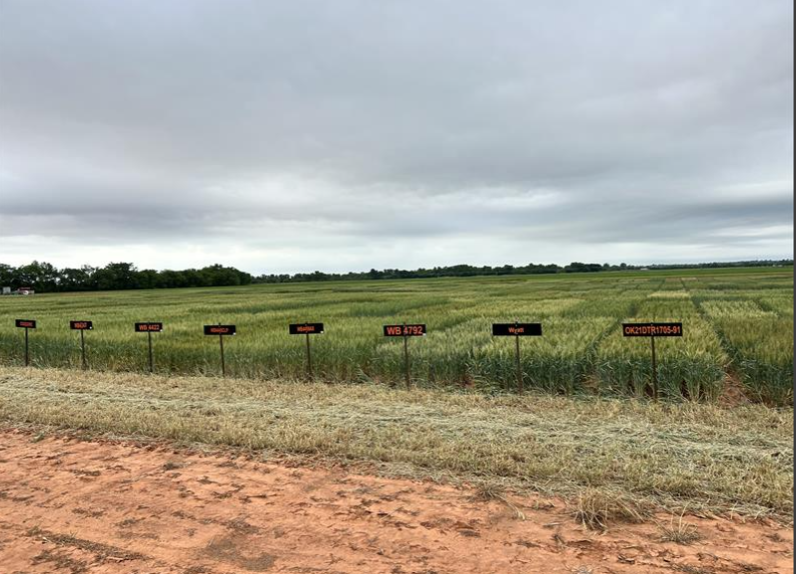
While a wide variety of varieties are showing promise at the Chickasha Field Day location, Dr. Silva noted that final performance remains to be seen.
“We have many varieties looking really good here today,” Dr. Silva said. “It’s hard to know how they are going to do until the end of the season, but we can definitely see here today how they are doing, especially against leaf rust.”
Identifying Disease and Environmental Stress
The 2026 season has brought a complex mix of viral and fungal issues to the forefront. Dr. Silva highlighted a severe leaf rust infestation at the research site and noted that producers across the state are dealing with multiple symptoms that can often be difficult to distinguish without careful scouting.
“This year, we are having a lot of viral diseases out there,” Dr. Silva explained. “Wheat streak mosaic is out there, barley yellow dwarf—now moving up with all these conditions, all this dew in the crop, we are seeing some leaf rust.”
She cautioned that yellowing in the fields might not always point to a single cause, making management a challenge at this stage of the growing season.
“If they’re seeing yellowing in their fields, it could be wheat streak mosaic, barley yellow dwarf, it could be coming from drought, it could be coming from some mite infestations that we had early on,” Dr. Silva said.
Crop Progress and Outlook
The latest crop progress reports indicate a difficult year for Oklahoma wheat, with 45 percent of the crop ranked as poor to very poor. Dr. Silva observed that the crop in many areas is ahead of its typical schedule due to early-season conditions.
“In some varieties, we are already at soft dough,” Dr. Silva said. “It’s ahead of schedule. It was so dry.”
While recent moisture has provided some relief, Dr. Silva noted that it may be too late for a dramatic turnaround in yield potential, though the rain is vital for maintaining the current stand and aiding grain fill.
“I think this moisture is just going to help us to keep what we have,” Dr. Silva said. Hopefully, it helps us to fill in the grain in those spikelets that are already out there. But turning around dramatically, it would be very hard at this point, but hopefully, we have the moisture that to hold up things that are looking good so far.”