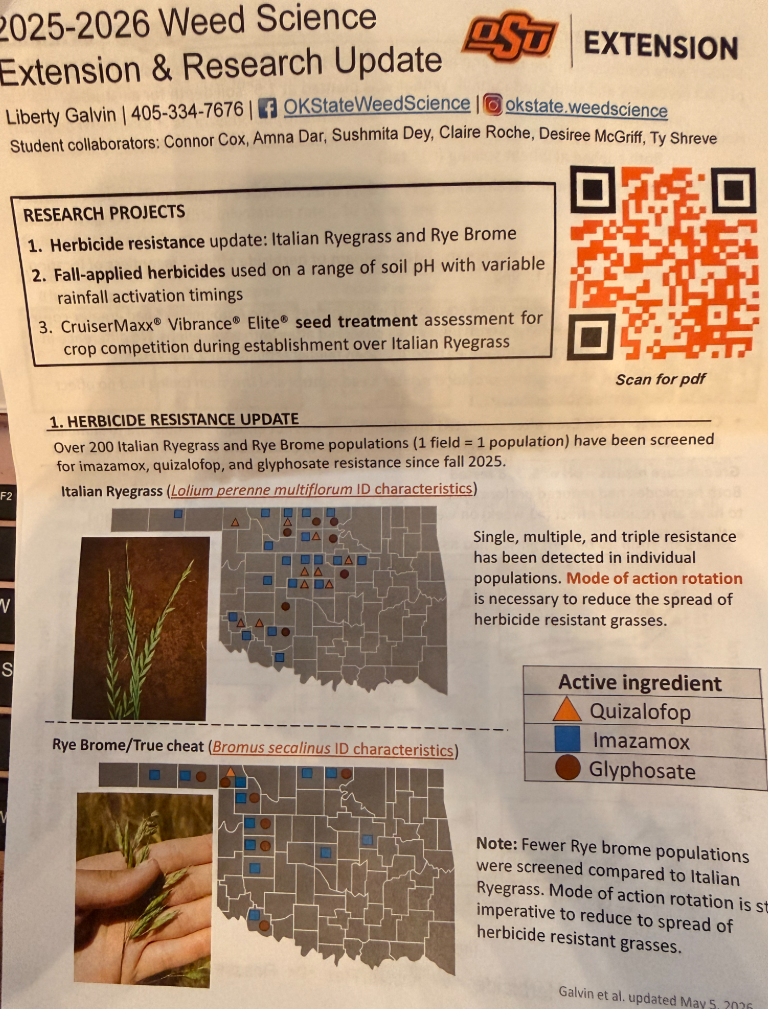

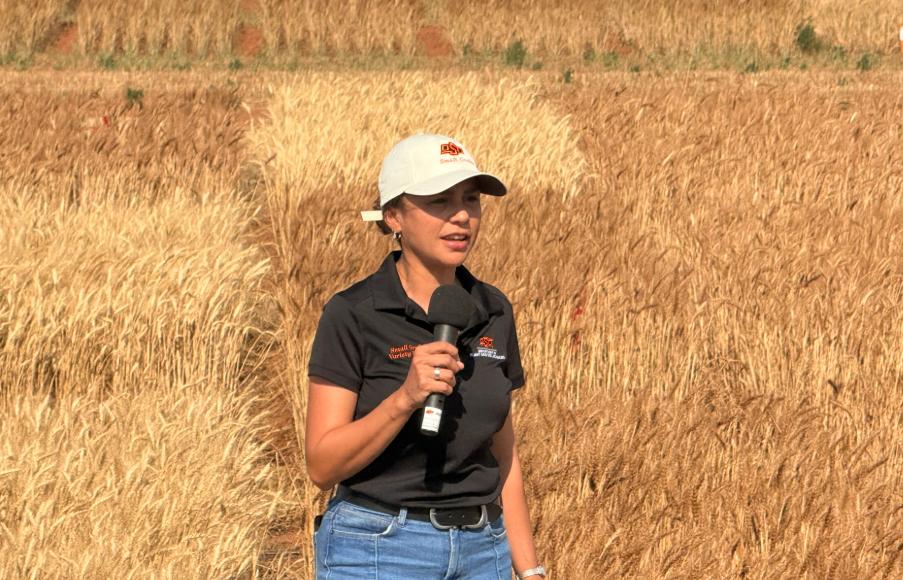
An uncommonly accelerated growing season has wheat harvest already underway across parts of Oklahoma. To check on the crop’s status and review the findings from recent field days, Farm Director KC Sheperd sat down with Dr. Amanda Silva, Oklahoma State University Extension Small Grains Specialist. Dr. Silva shared critical data on variety performance across diverse management systems, updates on advanced field-testing technology, and a look ahead to the final leg of the state’s wheat plot tours.
Dr. Silva recently interacted with producers at the Lahoma Wheat Field Day, where OSU showcased extensive research trials. The station evaluates standard versus intensive crop management, various seeding rates, and shifting planting dates across multiple varieties.
“With the weather this year, it’s been really tough for the wheat as a whole, and for research,” Dr. Silva noted. “But it’s also a good year for us to get information on variety drought tolerance and management practices to see what works best under these conditions.”
Intensive vs. Standard Management Outcomes
One of the primary focuses at Lahoma was contrasting standard regional practices with intensive management. Standard management represents typical area practices, which omit fungicide applications and utilize a nitrogen rate tailored to a 70-bushel yield goal. Conversely, intensive management pushes the crop further by adding an extra 40 pounds of nitrogen and executing two targeted fungicide passes.
This year’s observations revealed distinct benefits from increased inputs due to late-season disease pressure. Dr. Silva reported severe infestations of wheat streak mosaic virus alongside late-emerging leaf rust.
“What we are really learning is just how advantageous it is to have varieties resistant to rust or how beneficial a fungicide can be when rust comes in late,” Dr. Silva explained. However, she noted that timing remains a challenge for producers, as late-arriving rust can sometimes appear past the window for effective management. The OSU team expects the final harvest data to reveal significant performance differences between the standard and intensive plots due to these fungicide applications.
Rethinking Late-Season Seeding Rates
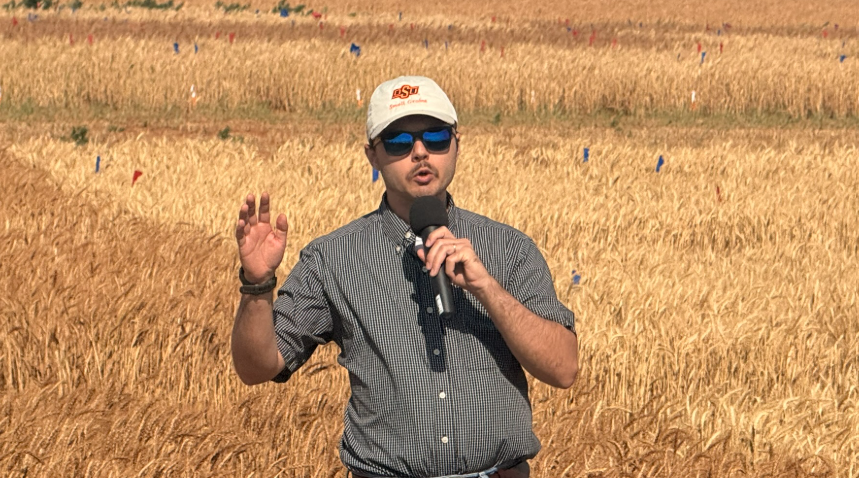
The field day also highlighted research conducted by one of Dr. Silva’s graduate students, Israel Molina Cyrineu. His work reinvestigates established assumptions surrounding late-planting seeding rates. Historical data typically suggested that producers must increase their seeding rate when planting is delayed to compensate for reduced tillering and slower canopy closure.
Israel’s research indicates that modern wheat varieties may not require this adjustment. Testing a wide range of seeding rates—both well below and well above standard state recommendations—showed no significant yield improvement from elevated seeding rates in late-planted fields.
“Modern varieties seem to compensate more for that lack of time for growth,” Dr. Silva said. This finding has prompted the OSU wheat team to launch new research initiatives to determine if current standard seeding rates are higher than necessary during optimal planting windows.
Real-Time Updates via Wheat Text Group
To improve communication with growers, the OSU wheat team continues to utilize its dedicated group text platform. Producers can join the loop by scanning an extension QR code, allowing them to receive immediate wheat updates directly on their mobile phones without downloading an external application.
Technology Spotlight: The ‘Wheat Rover’ Phenotyping Cart
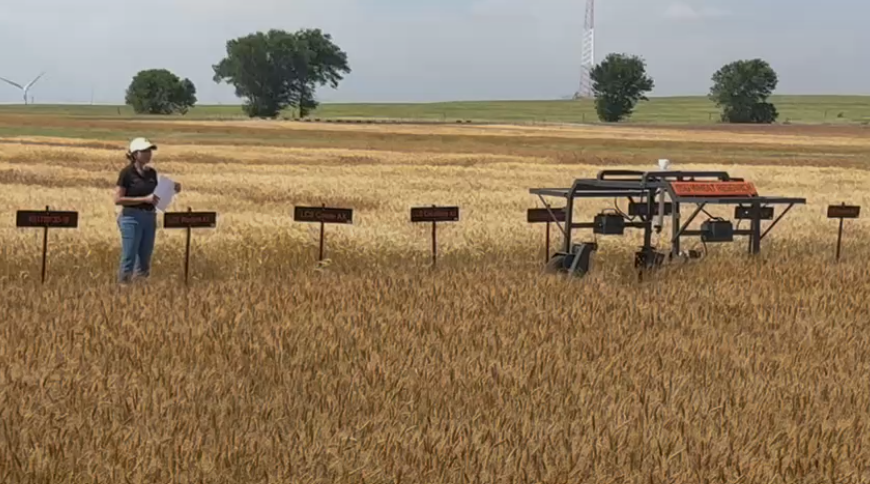
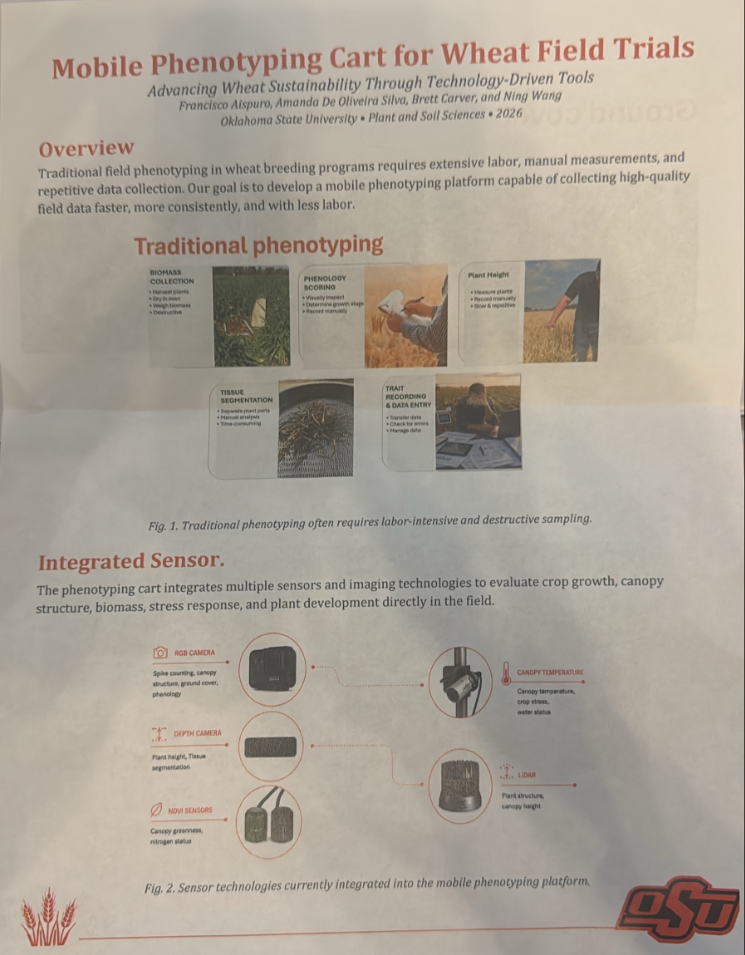
On the technology front, OSU debuted its new high-throughput phenotyping cart, nicknamed the “Wheat Rover.” Developed in collaboration with the OSU Department of Biosystems and Agricultural Engineering, the remote-controlled cart is equipped with specialized sensors and cameras designed to capture detailed crop images throughout the season.
The goal of the Wheat Rover project is to replace time-consuming visual ratings and manual fieldwork with efficient digital data collection. The cart gathers data on:
Biomass accumulation
Plant architecture
Specific crop growth stages
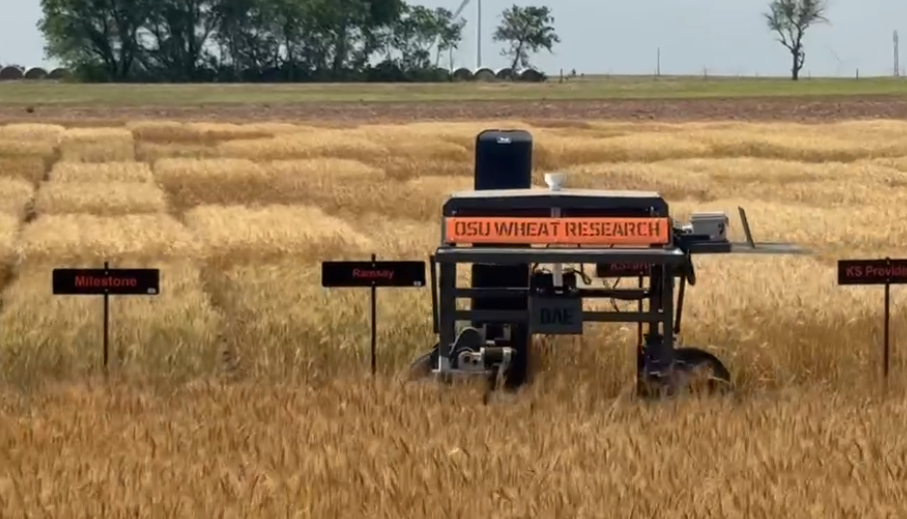
While the technology is still undergoing validation to calibrate its sensors against actual field performance, Dr. Silva emphasizes that the project represents a major step forward. OSU intends to utilize the Wheat Rover for both academic research and future extension demonstrations.
The system operates as a private, direct line to the OSU wheat extension team. Growers receive timely management alerts and can text back questions or field observations. Because replies are only visible to the university team, subscriber inboxes remain free from group chat clutter.

Historical Harvest Pace and Upcoming Plot Tours
Warm temperatures and high winds over the past weeks pushed the state’s wheat crop to maturity much faster than normal. Dr. Silva confirmed that combine harvesters began rolling in some areas over the weekend. Despite scattered rain and cloud cover briefly slowing fieldwork in certain regions, the crop is widely ready for harvest.
“Being at Lahoma last week, the wheat was ready to be cut,” Dr. Silva observed. “It was impressive. This will be one of the earliest harvests and the shortest growing season in history for us.”
As harvest gains momentum, the OSU wheat team is wrapping up its annual plot tour schedule. The final tours give producers a final opportunity to view regional performance firsthand:
Balko: Tuesday at 4:00 PM
Hooker: Wednesday
Miami: Friday (Northeast Oklahoma tour)
Following the conclusion of these regional meetings, the OSU extension team will transition fully to operating its own harvest machinery to collect final data from the state research stations.