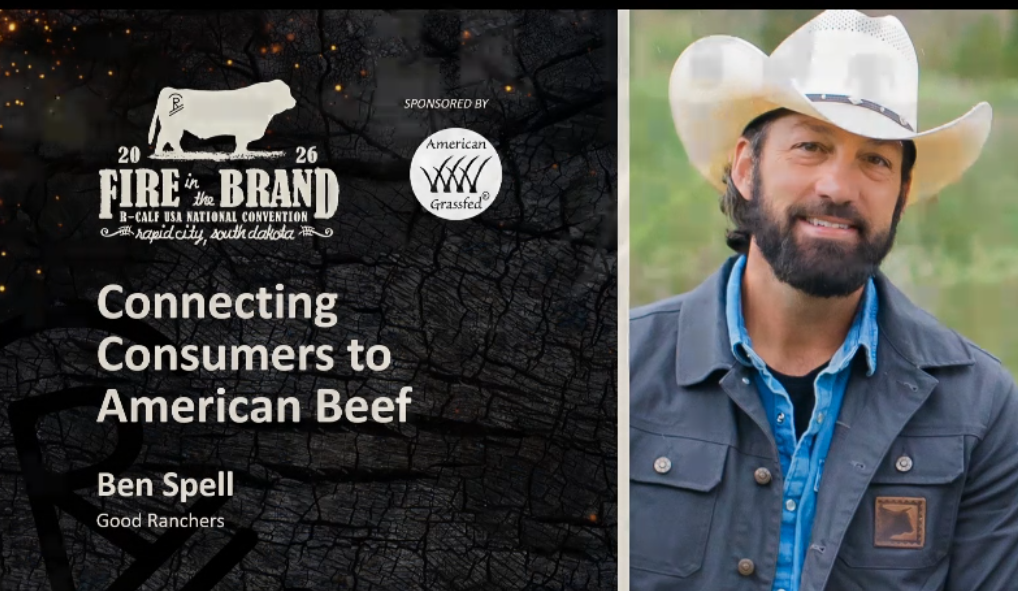
For many modern consumers, the connection to the food on their plate has been entirely severed. Speaking at the R-CALF USA National Convention, Ben Spell, Founder and CEO of Good Ranchers, addressed a room of cattle producers to discuss the vital importance of connecting consumers to American beef. Spell, who manages a direct-to-consumer meat company that delivers 100% American-born, raised, and harvested meat to families nationwide, shared insights on the consumer mindset and how producers can bridge the gap between the pasture and the dinner table.
Spell, who does not come from a traditional ranching background, noted that his perspective uniquely positions him as a translator between producers and the public. “The average consumer does not spend their life thinking about cattle,” Spell said. “Most Americans have become so disconnected from their food source. They know way more about the phone in their pocket than they do about where their food comes from.”
Finding Hope in the Consumer Appetite
Despite the disconnect, Spell offered a very encouraging message to the independent cattle ranchers in attendance: the American public is not abandoning beef. In fact, they are actively looking for reasons to trust the product they buy.
- High Demand for Protein: Record meat sales and a growing emphasis on health mean that families want simple ingredients, transparency, and confidence in what they feed their children.
- Younger Generations Stepping Up: Younger demographics are eating more protein today than they did a decade ago.
- A Search for Authenticity: Consumers have an inherent craving for something real, authentic stories, and real families.
Spell explained that the real issue facing the industry isn’t a lack of desire for beef, but a massive lack of clarity surrounding where that beef comes from.
The Trust Factor and the Problem with Current Labeling
At the core of connecting consumers to American beef, Spell emphasizes that the industry is facing a trust problem rather than a product problem. While the average consumer may not understand the complexities of country-of-origin labeling or the intricacies of the cattle market, they do understand honesty.
“Consumers aren’t actively choosing imported beef,” Spell explained. “It’s that they don’t know they’re buying imported beef. When people become disconnected from the source of their food, someone else fills the gap.”
Currently, social media is saturated with voices dictating how cattle should be raised from individuals who have never set foot on a working ranch. Spell noted that the only way to combat this misinformation is for actual producers to become the loudest storytellers in the room. What seems completely ordinary or everyday to a cattle producer—such as calving in the snow or working through intense drought—is fascinating and deeply respectable to a consumer working in a city cubicle.
Cattle Producers Take the Floor
Following his address, Spell opened the floor to questions from the R-CALF USA membership, addressing specific regional concerns regarding marketing, labeling, and consumer transparency.
A question was raised about the difficulty of sharing ranching stories online, as everyday management practices can sometimes shock insulated consumers. The producer noted that the realities of animal husbandry and dealing with predators are tough, and the American public has become “soft.”
Spell acknowledged the challenge but argued it makes authentic storytelling even more vital. He explained that a softer culture craves reality and truth. Showing the genuine hardship, the resilience required, and the care provided during brutal weather conditions is exactly what builds long-term respect and connection with the public.
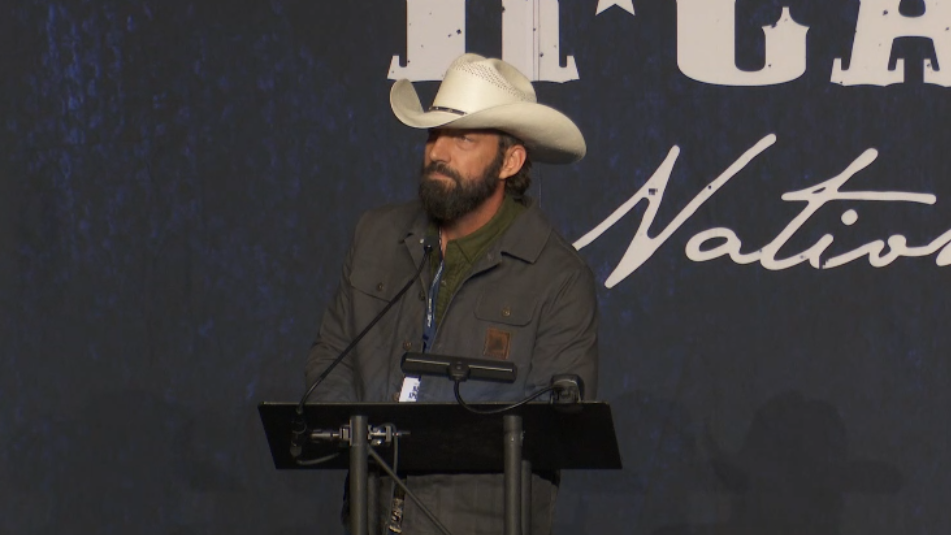
The final question came from a producer who has run a pasture-to-plate meat business for 13 years. He questioned how the industry can move past infighting among various production niches—such as grass-fed versus grain-fed—and instead unify around a message that encourages consumers to eat more domestic beef.
“We can absolutely lead ourselves into a famine if we aren’t careful by attacking different safe production methods,” Spell answered. He emphasized that grain-fed beef has a long, healthy history in the United States and yields an exceptional, flavorful product that consumers love. Spell concluded that rather than dividing the industry into opposing camps, the focus must remain on educating the public about the hard work required across all sectors of American ranching to keep families fed with high-quality protein.