

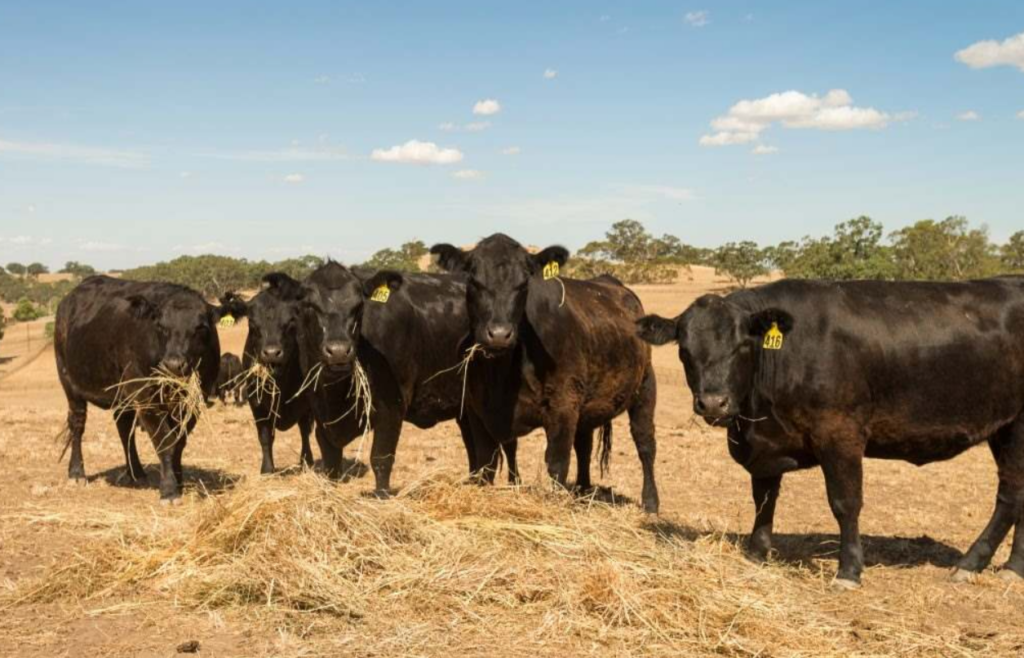
As we move through July and August, forage quality across Oklahoma’s tallgrass and midgrass prairie rangelands and bermudagrass pastures decline. Assuming adequate forage availability, forage quality becomes the primary factor limiting cattle performance.
Grazing studies have documented substantial declines in both crude protein concentration and digestibility as summer progresses. Native range crude protein commonly falls from approximately 15% in the spring to 7% by late summer and continues declining into fall. Consider that a 650 lb. steer gaining 2 lbs. per day requires a diet with about 11% protein.
When forage quality declines, cattle performance becomes limited by protein, energy, or both. In many late-summer grazing situations, protein is the first limiting nutrient. Rumen microbes require adequate protein to efficiently digest forage fiber. When protein becomes deficient, forage digestion slows, forage intake declines, and animal performance suffers. Therefore, in Oklahoma grazing systems when dietary protein drops below 11%, protein intake is the primary factor limiting the animals’ rate of gain.
Fertilized bermudagrass follows a similar pattern, although the protein concentration is higher initially, and remains higher throughout the grazing season. The point in time that protein becomes the limiting dietary factor is certainly influenced by stocking rate and grazing management. While both forage species can be expected to fall below growing cattle’s protein requirement, that point in time may occur as much as 60 days later in bermudagrass grazing systems.
Numerous Oklahoma studies have demonstrated that relatively small amounts of protein supplement can substantially improve performance of growing cattle grazing native pasture during late summer. Across several trials, stocker cattle receiving approximately one pound per day of a high-protein (30 to 38%) supplement gained an average of 0.37 lb more per day than unsupplemented cattle. These responses occurred because forage protein concentration was the first limiting nutrient and filling the gap between protein supply and the animal’s requirement increased forage intake and digestibility.
Research has consistently shown additional improvements in rate of gain by including an ionophore; a feed additive such as Rumensin® (monensin) or Bovatec® (lasalocid). Ionophores alter rumen fermentation in ways that improve feed efficiency and increase the amount of useful energy cattle obtain from forage. Research conducted in Oklahoma and summarized in recent meta-analyses indicates ionophores typically increase gains by an additional 0.13 to 0.28 lb per day. Combined with protein supplementation, total improvements in average daily gain commonly range from 0.5 to 0.6 lb per day.
These responses are especially attractive because supplement efficiency is generally favorable. In many Oklahoma grazing trials, less than two pounds of supplement were required to generate one pound of additional gain. Few management practices consistently provide that level of return on investment.
The benefits of ionophores extend beyond weight gain. A recent meta-analysis conducted at Oklahoma State University evaluated results from 18 studies involving replacement heifers and 21 studies involving mature beef cows. Across studies, ionophore supplementation improved average daily gain while reducing feed intake, indicating improved efficiency of forage utilization.
For replacement heifers, the ionophore Rumensin increased the proportion of females cycling before the breeding season by nearly 16 percentage units and reduced age at puberty by approximately nine days. In mature cows, monensin reduced the interval to first estrus by approximately 18 days and increased the percentage of cows exhibiting estrus before the breeding season by 19 percentage units.
Interestingly, these improvements in reproductive readiness occurred despite little evidence for increased pregnancy rates. Nevertheless, earlier puberty and a greater proportion of females cycling at the start of the breeding season are generally considered favorable outcomes because they increase opportunities for conception early in the breeding season.
Taken together, available research suggests that a modest amount of protein supplement combined with an ionophore can improve forage utilization, increase average daily gain by approximately one-half pound per day, and enhance reproductive preparedness in both developing heifers and mature cows. Few nutritional technologies have demonstrated such consistent benefits across a wide range of forage-based production systems.







