
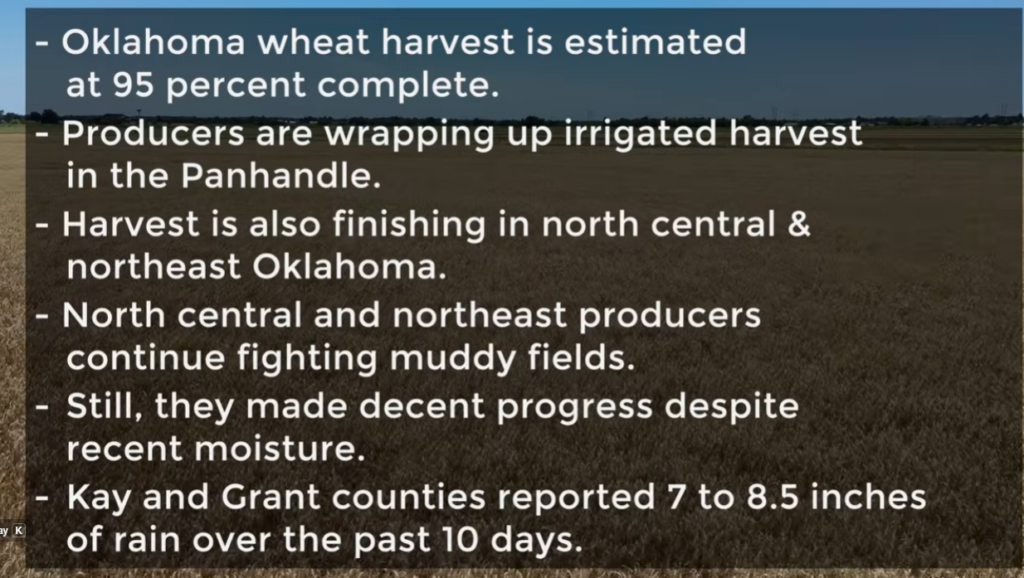
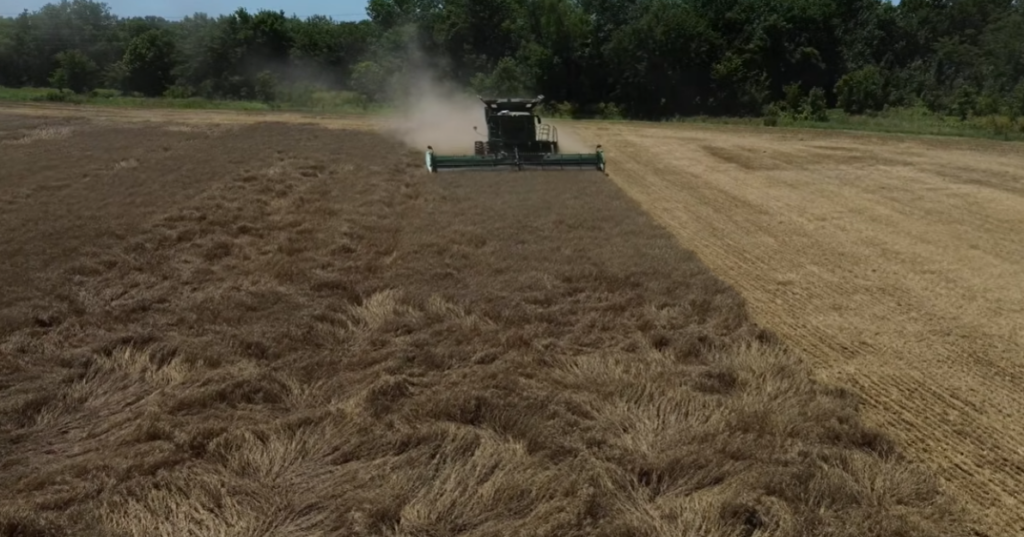
The 2026 Oklahoma wheat harvest is rapidly drawing to a close, with operations estimated at 95% complete. While producers are pushing to finish the remaining irrigated acres in the Panhandle and final fields in north-central and northeastern portions of the state, recent heavy rainfall has forced them to contend with incredibly muddy field conditions.
Despite late-season moisture slowing machinery, statewide progress remains well ahead of schedule. Typical years see harvest stretching past the Fourth of July, but officials expect the 2026 harvest to wrap up entirely by the end of the week.
Late-Season Rains Battle Harvest Progress
The sudden influx of significant moisture over the past week has turned many fields into mud pits. Parts of Kay and Grant counties reported receiving between 7 to 8.5 inches of rain over a 10-day period, drastically changing the landscape for final cutting.
This heavy moisture is impacting test weights in the north-central and northeastern regions. Up until last weekend, north-central Oklahoma maintained steady test weights around 60 pounds per bushel. However, recent downpours have caused more noticeable drops in northeastern Oklahoma across both soft red winter and hard red winter wheat classes, pulling weights down to a range of 56 to 59 pounds per bushel, depending on variety and management.
Regional Yield and Production Disparities
The Panhandle is seeing similarly lowered test weights of 56 to 59 pounds per bushel on its irrigated acres. Yields in the Panhandle are notably lower than in previous years, running between 40 to 60 bushels per acre for irrigated wheat, while certain dryland trials hit devastatingly low numbers. At the Oklahoma State University trial location in Balko—which looked like one of the best locations earlier in the season—the average yield is expected to fall below 10 bushels per acre due to the prolonged weather extremes.
Conversely, north-central Oklahoma fields yielded much higher than anticipated. A majority of the harvested wheat in that area landed in the mid-40 bushel range, with standout fields reaching into the low 60s.
While these stronger north-central pockets will bolster the state’s final numbers, they are not expected to drastically shift overall production estimates. Current projection comparisons show varied outlooks:
- NASS Production Estimate: 64 million bushels
- Oklahoma Grain and Feed Pre-Harvest Estimate: 48 million bushels
- Oklahoma Wheat Commission Final Projection: Low to mid-50 million bushel range
The final statewide test weight average is projected to sit between 58 to 60 pounds per bushel. Crop stress throughout the growing season did yield one positive attribute: higher protein levels. The Oklahoma Wheat Commission estimates the statewide average will be between 12% and 13% protein, drawing strong interest from millers seeking high-quality grain.
A Year Marked by Extreme Climate Shift
Agronomists and agricultural officials will ultimately remember 2026 as a severe drought year. The crop struggled from the start, experiencing a highly dry planting season, followed by an unusually warm winter and a hot, dry stretch through February and March.
Though timely spring moisture saved part of the crop, it was not enough to overcome the deep deficit, resulting in abandoned fields in several areas. Because of these distinct challenges, upcoming Oklahoma State University variety trial reports will incorporate economic analyses alongside standard agronomic comparisons, allowing producers to evaluate how specific varieties handle extreme volatility over multiple years.
Shifting Dynamics in the Global Market
On the global stage, market trends are showing a significant shift from production to consumption. Last year at this time, global wheat production outpaced consumption by 20 million metric tons. Current trends indicate a complete reversal, with consumption now outpacing production by approximately 5 million metric tons.
Large expected crops in Russia, Ukraine, and Turkey are anticipated to outweigh production losses in the United States, Pakistan, and Australia. However, because wheat offers a highly cost-effective source of calories amid tight global financial conditions, international buyers are actively moving grain, opening up strong marketing opportunities for Oklahoma’s newly harvested crop.
To watch the full video, click below
This report brought to you by Dave Deken and the Oklahoma Wheat Commission