American Farm Bureau Federation (AFBF) leaders, alongside a diverse group of producers from across the country, gathered to strongly endorse the newly introduced Securing Agriculture’s Workforce Act of 2026. The legislation aims to address severe, ongoing labor shortages in the agricultural sector by modernizing and stabilizing the federal H-2A visa program.
AFBF President Zippy Duvall opened the discussion by framing the situation as a critical workforce crisis. He highlighted that despite continuous job postings within the industry, domestic interest remains virtually nonexistent.
“In 2025, 415,000 job positions were posted… and there were only 182 applications,” Duvall said. “People in America don’t want to do this work anymore… Farmers, in that situation, have to turn to the H-2A visa program to try to fill these jobs.”
Duvall expressed gratitude to House Agriculture Committee Chairman G.T. Thompson for listening to producers and introducing the reform bill. Key provisions of the act include allowing temporary workers to remain on a job for up to 350 days—granting year-round industries like dairy access to the program for the first time—permitting staggered worker entry, limiting federal fees, and improving wage methodologies to prevent unpredictable fluctuations.
Direct Insights from the Farm Gate
Producers representing various regions and agricultural sectors shared testimony on how labor scarcity impacts their daily operations, animal welfare, and long-term viability.
John Boelts, Arizona (Fresh Vegetables, Melons, Wheat, Cotton, Forage) Operating in Yuma County along the border, Boelts explained that his 3,000-acre operation requires intense hand labor, as every crop is hand-harvested. He noted that local labor pools dried up decades ago, forcing a total reliance on the H-2A program. Delays in the program carry a heavy financial toll.
“This last spring, when we started our cantaloupe harvest, the first four days of harvest we had not received our H-2A workers,” Boelts shared, noting that a strong initial market evaporated by the time labor arrived. “We saw about 15,000 cartons of cantaloupes go to waste because we just simply didn’t have the hands to harvest them… We ended the season at a loss on that crop.”
Linda Pryor, North Carolina (Apples, Corn, Hay, Beef Cattle) Pryor, a third-generation apple grower in western North Carolina, oversees the production of over 6 million pounds of apples annually. Because every apple must be hand-picked, the H-2A program is vital. She expressed strong support for the bill’s focus on streamlining communication and reducing administrative delays.
“It makes me anxious as a farmer. Every August, I am not relaxed until those employees actually arrive,” Pryor said. She emphasized that delays also hurt the workers themselves, who often travel long distances for appointments only to be left stranded in hotels if processing stalls. “Anything that we can do to make communication between the agencies that are involved easier and better… will be a welcome change.”
Phillip Hunter, Alabama (Evergreen and Ornamental Nursery Trees), Hunter, who co-operates a nursery and chairs the AFBF Labor Issue Advisory Committee, noted that over 100,000 trees on his farm must be touched by hand multiple times a year for pruning and staking. After struggling to retain domestic workers, his operation built state-of-the-art housing to transition to the H-2A program. Hunter stressed that guest workers actually secure local employment.
“We realized we needed these workers to keep our domestic workers employed,” Hunter said. “They complement each other. Our domestic workers enjoy seeing our H-2A workers every year… 95% of them come back.”
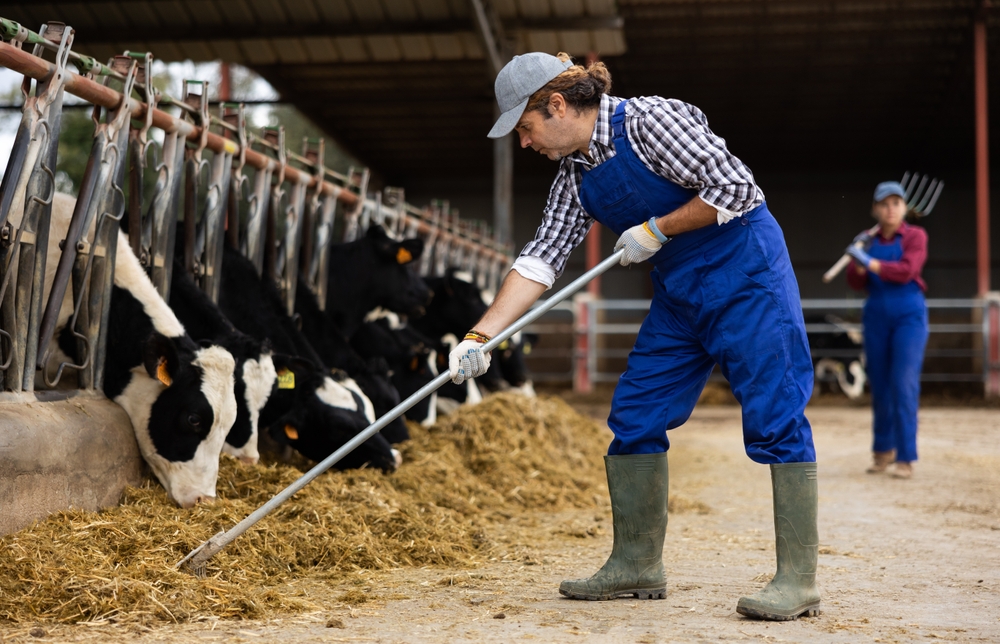
Ryan Akin, New York (Dairy, Forage, Grain, Greenhouse Vegetables) Akin manages a highly diversified operation that utilizes robotic milkers for its dairy herd. However, he emphasized that technology cannot completely replace human care.
“Someone has to feed the cows, someone has to give them medicine when they’re sick… someone has to clean their stalls,” Akin said. While the farm uses H-2A labor for its hand-planted cabbage crops, the dairy side currently lacks legal access to the program. “When we don’t have the labor on a dairy farm… the animals are going to suffer. We need people to take care of the animals that produce the food for all of us.”
Johnny White, California (Wine Grapes, Farm Labor Contractor) White, a sixth-generation farmer in the Napa Valley, operates a farm labor contracting business servicing many local vineyards. He explained that roughly 80% of wine grapes are hand-harvested, and intensive canopy management requires significant hand labor through the spring and summer. He views the bill as an essential tool for smaller producers.
“The H-2A program in its current form is very burdensome and difficult to navigate,” White stated. “This new legislation would really streamline H-2A and how we can use it and who can utilize it… It’s really going to help, and I just really want to end it by saying how excited other farmers and ranchers that I talk to are.”
Building Bipartisan Momentum
John Walt Boatright, AFBF Director of Government Affairs, concluded the briefing by addressing the legislative path forward. He noted that the Securing Agriculture’s Workforce Act builds upon positive aspects of previous legislative attempts, such as capping year-over-year cost increases, which has generated an unprecedented level of industry alignment.
“We’re seeing more than we’ve seen in recent memory: broad support amongst the ag industry for this piece of legislation,” Boatright said. He confirmed that while the bill currently remains under the jurisdiction of the House Judiciary Committee, a massive coalition ranging from the U.S. Chamber of Commerce to regional agricultural bodies is actively lobbying to advance the measure through Congress.
Q&A Highlights: Real-Time Losses and Political Hurdles
Following the grower testimonies, the briefing shifted to questions from the media addressing the direct economic damage of the labor crisis and the political realities facing the bill on Capitol Hill.
Direct Financial and Crop Losses When asked if growers have been forced to limit crops or leave them unharvested due to a lack of workers, John Boelts emphasized that the bureaucratic delays in the H-2A program carry immediate, devastating financial consequences.
“We missed out on four or five days of the best market that we had in our roughly two-month season,” Boelts stated regarding his recent cantaloupe harvest. He noted that the initial market price of $30 per box plummeted to break-even levels of $15 by the time his H-2A workers finally arrived. “We saw about 15,000 cartons of cantaloupes go to waste because we just simply didn’t have the hands to harvest them… We ended the season at a loss on that crop.”
Bipartisan Momentum and Committee Hurdles The discussion also focused on how this legislation differs from past failed efforts, such as the Farm Workforce Modernization Act, and how it is drawing an unusually broad coalition of support. John Walt Boatright noted that the bill successfully incorporates critical cost-stabilization components from past debates, which has united a massive network of agricultural and business associations.
“We’re seeing more than we’ve seen in recent memory: broad support amongst the ag industry for this piece of legislation,” Boatright said.
However, political challenges remain. When questioned about committee jurisdiction and where key leaders like House Judiciary Committee Chairman Jim Jordan stand, Boatright acknowledged that the bill must still navigate the complex legislative process.
“The jurisdiction still lies with the Judiciary Committee,” Boatright explained, adding that the coalition is actively hitting the pavement in Washington to advance the measure. “We’re looking forward to having more conversations with the Judiciary Committee leadership to talk through how we move this bill.”