
The fed cattle trade continued lower last week in what can be aptly described as a precipitous decline in a matter of just four weeks. Average fed steer values have slipped $28.55/cwt. since the week ending June 26th, an 11% price decrease.
The combined effects of fund liquidation in CME Live Cattle contracts and softer cutout values have not been kind to spot cash cattle values. These factors, plus especially high heat indexes across cattle feeding regions have made feedlot managers more willing sellers.
Harvest volumes have not changed appreciably in the past few weeks, although last week’s total was up 3,000 head from the prior week’s total. While packer cash margins are showing improvement, they’re a long way from encouraging upticks in production volume.
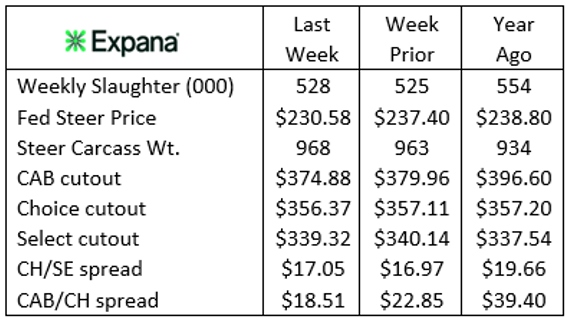
Carcass weights in the latest report show steers 5 lb. heavier to average 968 lb. The seasonal charts suggest that the turnaround, now two weeks dated, may have marked the summer low. Arguing against this, however, is the weather factor that had brutally high heat indexes leaving the heaviest feedlot cattle likely losing weight during the ensuing two weeks yet to be officially reported by USDA.
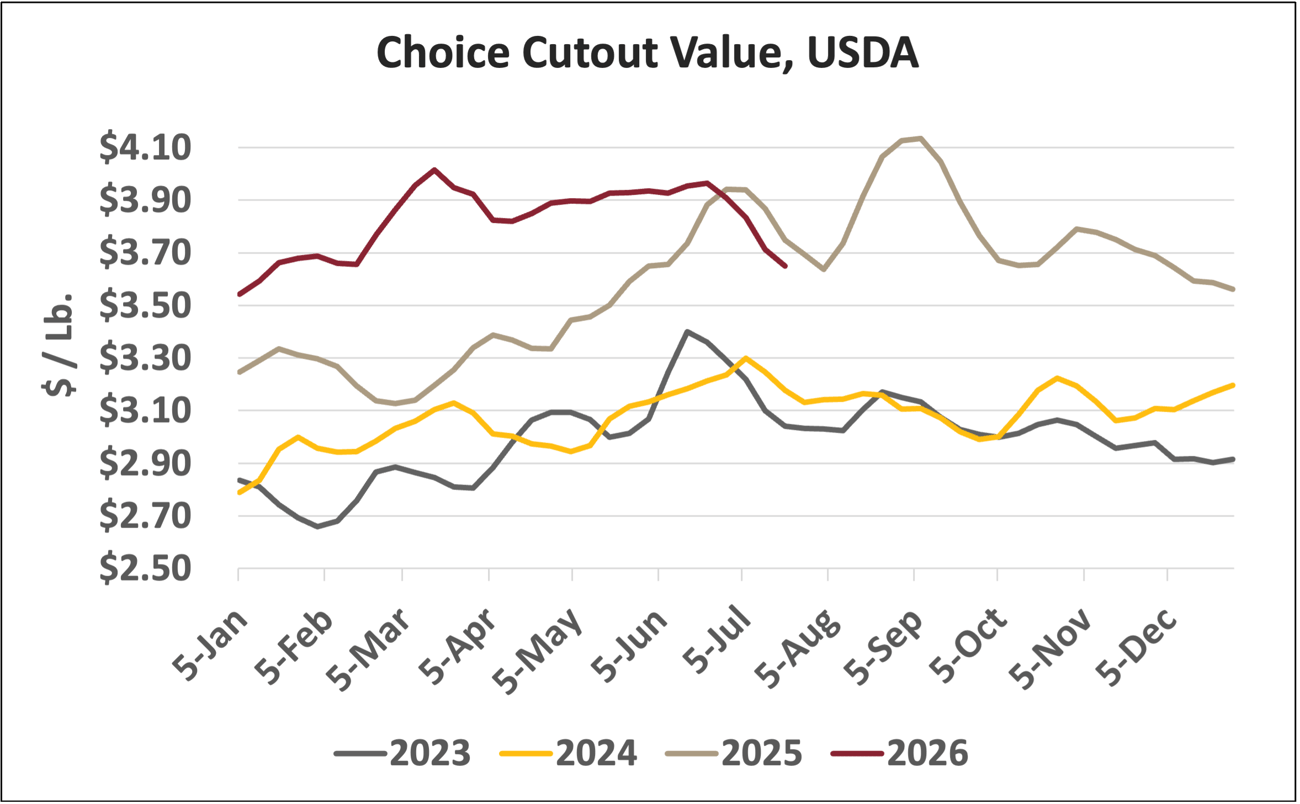
Carcass cutout values were moderately softer in last week’s reports with further July pressure coming from buyers taking a hand-to-mouth approach for their short-term spot market needs. Price weakness is noted especially across the short loin, strip loin and sirloin cuts while chuck and round items held their price positions a bit more firmly.
Shifting July Markets
The July beef market has undergone a seasonal downtrend characteristic of historical performance for the month. Conclusion of the Independence Day holiday normally brings about a marked decline in middle meat demand as summer temperatures elevate. Consequently, total carcass values become pressured as the highest valued cuts give ground to lower prices under this seasonal pressure. The 0x1 strip loin is the cut most impacted by this seasonality as it tends to not only undergo a July dip, but typically continues to complete a nearly 30% price downturn from late June through mid-October.
We often describe July as the month of “burgers and hotdogs” as we consider families embarking on summer vacations and consumers generally turning toward lighter summer fare. Yet wholesale spot market ground beef prices have fallen between 17% and 40% in three of the past five years during the month of July. In the past month, 81% lean ground beef wholesale values have dropped 21% after reaching a high for the year of $4.22/lb. in late June (Expana). Buying should pick up for grinds as the “back to school” and Labor Day seasonal uptick gets underway in August.
Choice carcass values dipped 2% below a year ago in July. This is after averaging a 14% premium to 2025 in the first half of the year. This generates some concern in the industry about waning beef demand. Yet the momentum of increasing beef prices in the past five years has created a short term upward trajectory that, when realistically analysed, is unsustainable. In fact, many might agree that current retail beef prices are challenging for a large portion of the consumer base. The demand that beef has enjoyed is a focal point of mainstream U.S. consumption. It’s a historic development, considering the tightest cattle supplies in 75 years have inflated wholesale cutout values.
The concerning fact that the industry continues to face is that, despite a massive downturn in fed cattle prices in the past few weeks, packers remain unprofitable. Between Hedger’s Edge and Sterling Marketing’s “Profit Tracker”, packer margins are estimated recently between $120 and $200 per head in the red. The only plausible way to get the packing sector to a breakeven is to further align their input costs (cattle) with revenue (beef and offal).
It’s certainly possible that cutout values make another run toward $400/cwt. this year. It seems more likely that the second half of the year could hold cutout values closer to those of a year ago, rather than the 14% increase recorded in the first six months. That would not be altogether bad for consumer demand, but still leaves a lot to discover relative to the fed cattle price piece of the packer’s equation.