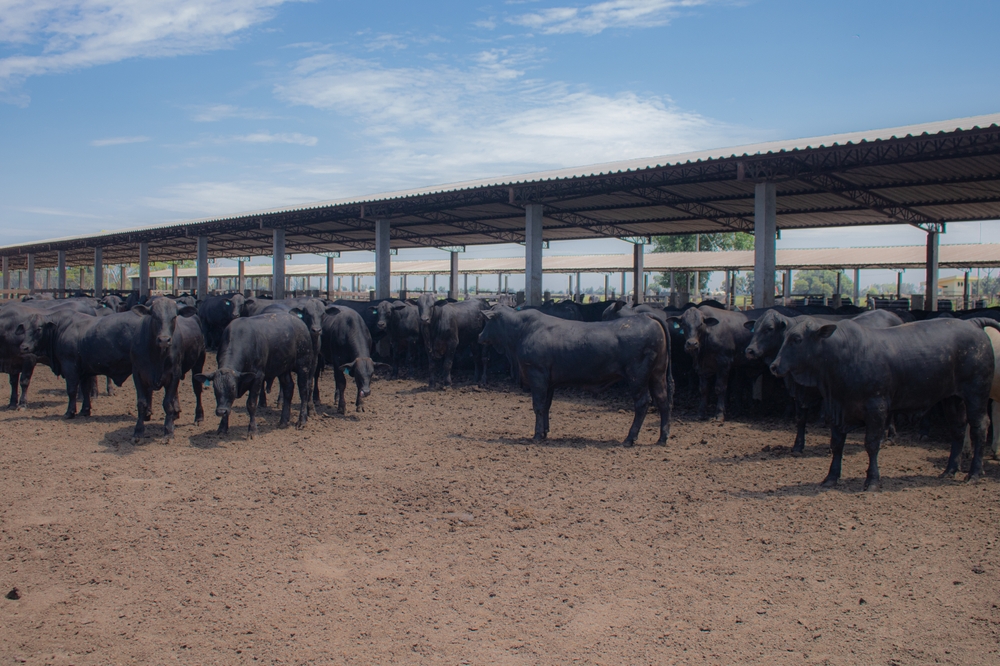
Managing feedlot heat stress mitigation has emerged as a top priority for livestock operations working to prevent severe cattle losses across the Plains during extreme summer heat events. While recent reports across the region indicate scattered cattle deaths due to heat-related illnesses, overall losses remain far lower than the catastrophic numbers seen in previous major heat events. In a comprehensive interview, Farm Director KC Sheperd spoke with Dr. Alfredo DiCostanzo, Beef Systems Extension Educator at the University of Nebraska-Lincoln, to examine how heat events impact regional feedyards, why finished cattle face elevated physiological risks, and the extensive mitigation protocols cattle producers employ to safeguard their herds.
Evaluating the Impact Across the High Plains
As summer temperatures surge into triple digits across Nebraska, Kansas, Oklahoma, and neighboring states, livestock managers remain on high alert. Reports of cattle mortality in regional feedyards during recent heat waves have raised concerns throughout the agricultural sector.
According to Dr. DiCostanzo, while any death loss is deeply demoralizing for a producer, the losses recorded during recent heat events have remained relatively scattered. Operations across the region have generally fared better than during past catastrophic weather events, such as the severe 2023 heat event where extreme conditions caused concentrated, heavy losses. He emphasized that while total prevention is nearly impossible when environmental thresholds are pushed to extremes, proactive management has significantly curbed mortality rates across the region.
Why Finished Cattle Face Higher Vulnerability
A critical topic in managing herd health during high heat is understanding why finished cattle—those near the end of their feeding period—are at far greater risk than lighter-weight feeder cattle or animals grazing on pasture.
- High-Energy Grain Diets: To achieve market weight and desired carcass quality, finishing cattle consume high-energy grain rations. Digesting these dense grain rations generates substantial metabolic heat—often referred to as heat increment. When combined with high environmental temperatures, the animal’s total heat load increases exponentially.
- Behavioral and Dietary Contrast with Pasture Cattle: Cattle grazing on open pasture consume lower-energy forage, which produces less internal heat during digestion. Furthermore, range cattle often move long distances to seek grazing, dissipating sensible body heat more easily into the surrounding air. In contrast, feedlot cattle consume concentrated energy diets intended for rapid growth, limiting their ability to shed body heat naturally.
- Compounded Respiratory History: Cattle that suffered from bovine respiratory disease (BRD) or pneumonia early in life may carry residual lung scarring. Although these animals recover and appear healthy during normal weather, their reduced lung capacity severely impairs their ability to dissipate heat through panting when temperature and humidity spike.
The Deadly Convergence: Humidity, Wind, and Nighttime Recovery
Extremely high ambient temperatures are only one piece of the equation during a heat event. Dr. DiCostanzo noted that severe heat stress occurs when multiple weather conditions align simultaneously:
- Daytime temperatures reaching or exceeding 100°F.
- High relative humidity levels that hinder evaporative cooling through panting.
- Calm winds or lack of air movement needed to clear stagnant, warm air around animals.
- Prolonged solar radiation.
- Lack of nighttime cooling.
Under typical summer conditions, cattle accumulate heat during the afternoon and dissipate it into the cooler night air. However, when nighttime temperatures fail to drop and humidity stays high, cattle enter the next morning with an elevated core body temperature. Without a period of thermal relief, heat stress accumulates over consecutive days, leading to potential exhaustion and heart or respiratory failure.
Predictive Tools: The Cattle Comfort Index
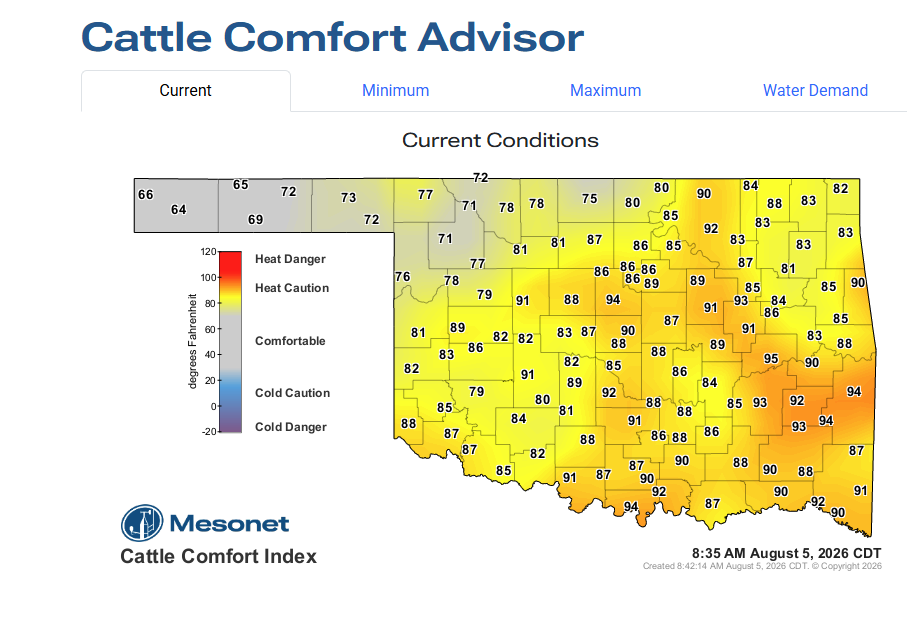
Modern livestock managers rely on advanced meteorological tools to anticipate dangerous heat stress days up to ten days in advance. A key resource across the region is the Cattle Comfort Index, which was developed by animal scientists at the University of Nebraska.
Unlike standard human heat indices, the Cattle Comfort Index integrates five distinct environmental factors:
- Ambient dry-bulb temperature
- Relative humidity
- Wind speed
- Solar radiation
- Seasonal coat conditions
State weather networks, such as the High Plains Regional Climate Center and the Oklahoma Mesonet Cattle Comfort Advisor, supply real-time updates every five minutes and forecast indices up to 84 hours ahead.
When the index rises past normal levels (85°F) into “Caution” or “Danger” zones (exceeding 105°F to 120°F+), feedyard managers enact emergency protocols.
Emergency Feedyard Mitigation Strategies
When extreme heat events are predicted, feedlot operators implement immediate management changes:
- Overnight Ground Cooling: Opening water lines to run continuous streams across pen ground or concrete aprons. This cools the ground surface, allowing cattle to lie down at night and transfer excess body heat directly to the earth.
- Strategic Water Delivery: Ensuring high-volume water tanks are operating at full capacity. Water demand can increase by more than 30% during heat spikes.
- Shifted Feeding Schedule: Moving feed deliveries to late afternoon or evening. This ensures the peak heat generated by digestion occurs during the cooler nighttime hours rather than during the peak heat of the afternoon.
- Sprinklers and Shade Infrastructure: Utilizing large-droplet pen sprinklers to wet cattle coats without increasing local ambient humidity, and deploying physical shade structures to block direct solar radiation.
Producer Dedication and Industry Reality
Addressing common public misconceptions, Dr. DiCostanzo emphasized that animal loss during severe weather events is never due to producer indifference. Feedlot managers, cowboys, and yard crews spend their careers focused on animal husbandry and welfare.
Dr. DiCostanzo shared a personal story from his time overseeing a University of Minnesota research feedlot: while leaving the yard to attend his own annual medical appointment, he noticed a steer showing signs of distress. He immediately turned back, brought the animal into the handling chute, administered treatment, and canceled his doctor’s appointment to ensure the steer recovered safely.
Whether responding to summer heat waves across the Plains or sub-zero winter blizzards, livestock producers continue to invest time, labor, and capital to ensure the health and safety of their cattle.
Producer Commitment to Animal Welfare
Dr. DiCostanzo emphasized that losses during extreme weather events are not the result of producer neglect. Cattle producers invest significant time, capital, and emotional effort into caring for their herds.
Illustrating the dedication inherent to the industry, Dr. DiCostanzo shared a personal experience from his time operating a research feedlot: while en route to his own annual medical checkup, he spotted an animal in need of care, immediately postponed his personal appointment, and stayed on-site to treat the animal.
Whether managing extreme heat in the summer or severe blizzards in the winter, livestock producers consistently prioritize the health, safety, and comfort of their cattle above all else.