As harvest season approaches for Oklahoma agricultural producers they face heightened risks of machinery fires and rapid-moving field blazes fueled by dry conditions, crop residue, and high winds. During an educational webinar hosted by the University of Illinois Agricultural Safety and Health Program, experts shared surveillance data and critical prevention strategies aimed at keeping producers safe and machinery running smoothly in the field.
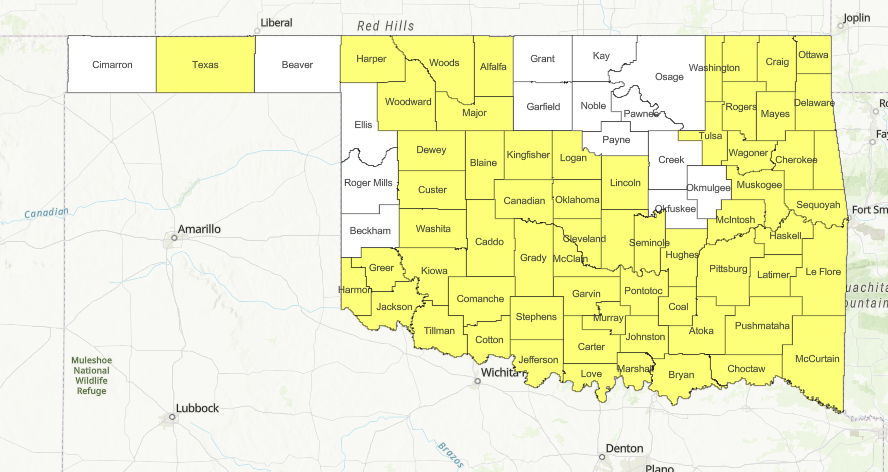
Over the weekend, an aggressive wildfire broke out just east of Binger in northern Caddo County. The Gracemont Fire ignited Sunday, September 13, approximately five to six miles east of town.
Current Status and Impact:
Response: Over 80 personnel, along with multiple local volunteer fire departments, the Oklahoma Forestry Services, and regional mutual-aid strike teams, were deployed to establish containment lines and protect threatened rural homes and ranch infrastructure.
Size and Containment: The blaze exploded rapidly under dry conditions and gusty southeast winds, quickly reaching approximately 1,341 acres. It currently sits at 0% containment. (as of report time Monday)
Fire Behavior: Firefighters have reported extreme fire behavior, including crowning in timber along with rapid running through dry grass and brush understory. The fire sent up a massive pyrocumulus smoke plume that was visible across central Oklahoma and well into the Oklahoma City metro area.
The Fire presentation was led by Dr. Salah Issa, associate professor and extension specialist with the Agricultural Safety and Health Program at the University of Illinois Urbana-Champaign, and Bill Fulton, field staff instructor with the Illinois Fire Service Institute.
Surveillance Shows Spike in Agricultural Vehicle and Field Fires
Dr. Issa noted that the program utilizes a long-standing surveillance dataset tracking agricultural incidents across Illinois through news clipping archives. While the figures represent minimum reported incidents rather than exhaustive totals, the data highlights significant risks.
In 2025, at least 51 agricultural fire incidents were documented in Illinois, including 10 field fires that consumed a minimum of 420 acres, as well as 10 vehicle incidents involving nine combines, two tractors, and a grain cart. The vehicle incidents directly triggered more than 50 acres of field fires. Dr. Issa pointed out that tractor and combine fires typically average four to five per year, but incidents surged to at least 10 cases in 2025, including a fatal November incident where a producer working alone died inside the combine cab after a fire spread to the machine and field.
Understanding Combine Fire Triggers
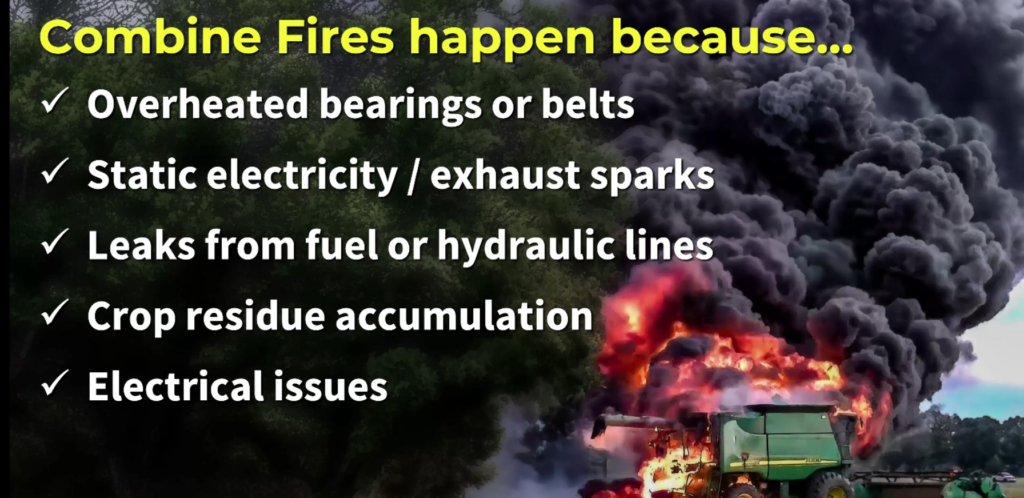
Fulton explained that combine fires frequently stem from mechanical failure, electrical shorts, or excessive friction combined with crop debris.
- Frictional Heat and Bearings: Overheated bearings and jammed belts create intense localized heat.
- Static Electricity: Dry chaff and moving crop material can generate static electricity, prompting some equipment dealers to recommend dragging a grounding chain behind machinery.
- Fluids and Residue: Leaking fuel lines or hydraulic fluid dripping onto hot engine surfaces can quickly ignite accumulated dust and chaff.
- Modern Materials: Newer combines incorporate significant amounts of polycarbonate sheeting, which burns much faster than older sheet metal models. Once a blaze reaches the cab, tires, or fuel tanks, saving the machine becomes nearly impossible.
Both speakers stressed regular maintenance and daily cleaning as the first line of defense. Using an inexpensive infrared thermometer or a handheld thermal imaging camera—often available for under $100—can help producers scan their equipment for hot spots before a bearing fails.
Equipment Preparedness and Safety Protocols
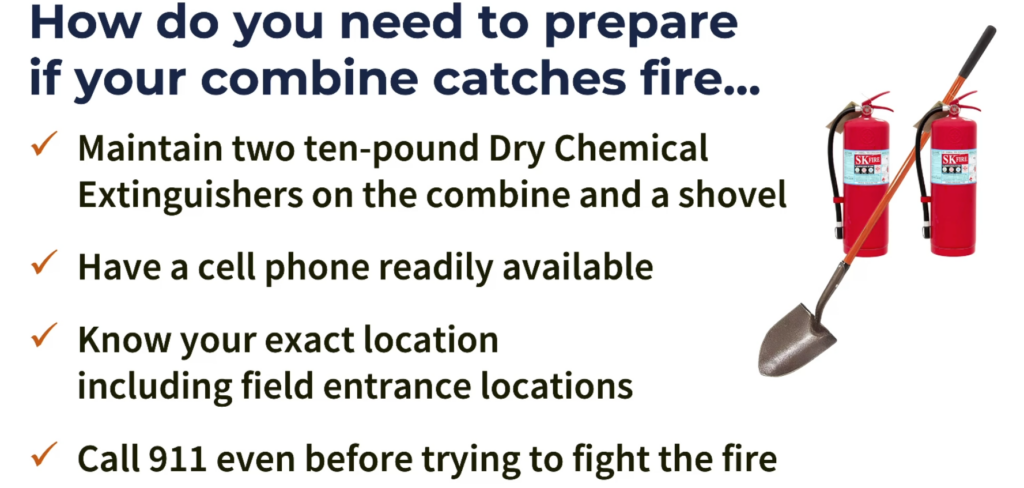
Fulton emphasized that producers should equip combines with two 10-pound ABC dry chemical extinguishers—mounting one near the cab or ladder and keeping a second extinguisher inside the cab. When fires originate near the left ladder, operators can jump clear and use the in-cab extinguisher to knock down the flames.
Key safety measures highlighted during the session include:
- Extinguisher Inspections: Regularly check pressure gauges, shake dry chemical extinguishers to prevent powder compaction, and check hose nozzles for mud dauber nests that can block flow.
- Carrying a Shovel: Keeping a shovel on the combine allows operators to throw dirt on small, low-lying flare-ups or stomp out isolated field sparks.
- Calling 911 Immediately: Always notify emergency responders before attempting to fight the fire alone.
- Field Access Details: Provide dispatchers with the exact location of open field gates, as deep ditches often prevent fire apparatus from entering off the road.
Managing Field Fires and Cooperative Firefighting
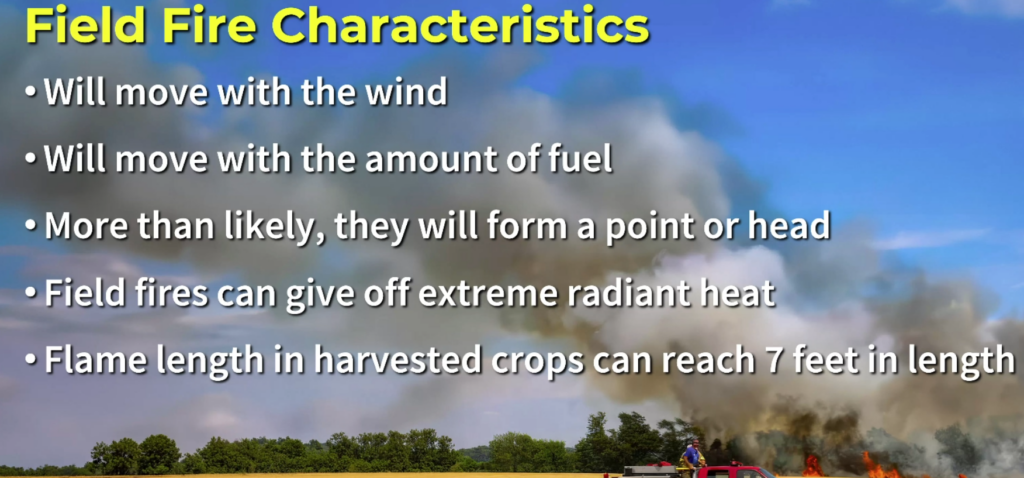
Field fires can travel with extreme velocity, driven by prevailing winds and abundant fuel. Fulton noted that flame lengths can reach up to seven feet in harvested residue and 16 to 20 feet in standing crops, with speeds increasing sharply as fire travels uphill.
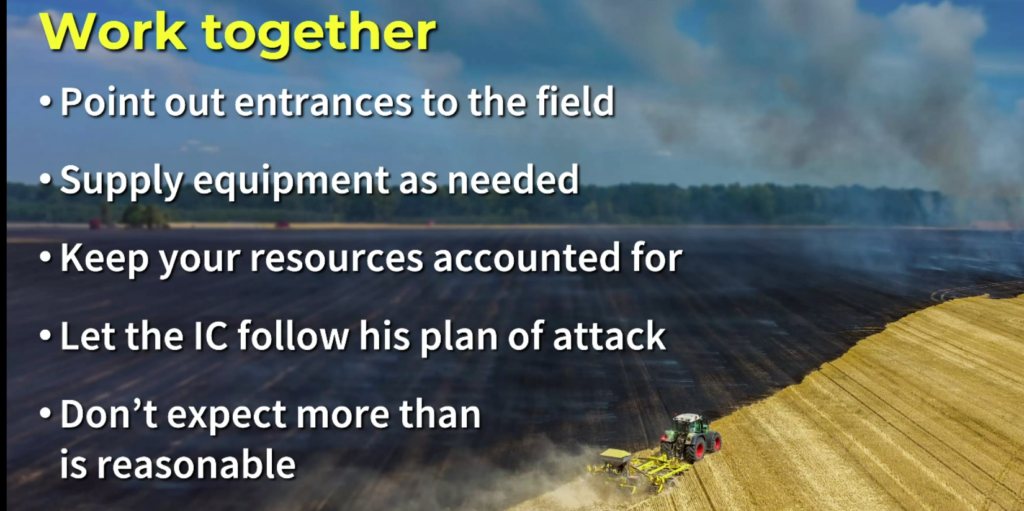
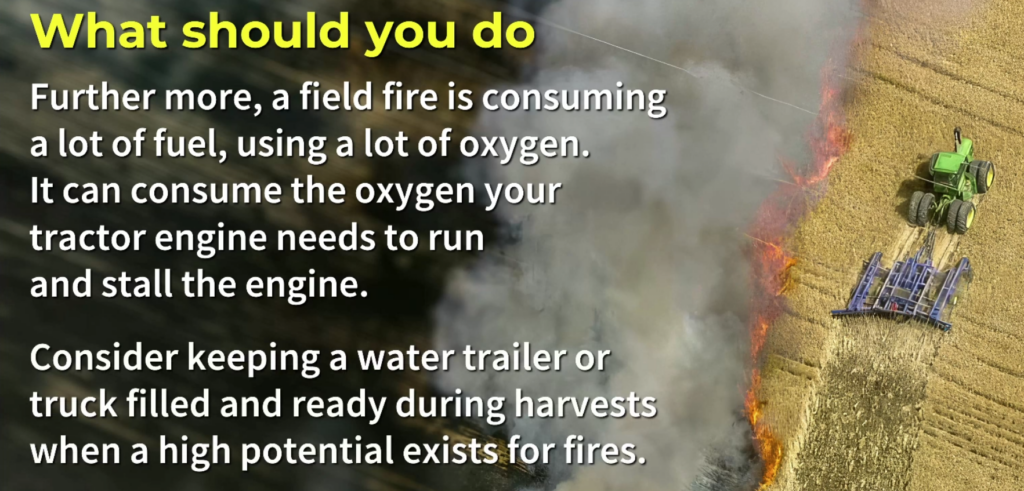
Producers planning to assist fire departments should stage a tractor hooked to a disc or tillage implement in advance to cut firebreaks, as well as keep a full water trailer on hand during harvest. However, Fulton cautioned that operators should never run a tillage tool directly against an advancing flame wall, as fires can starve a tractor engine of oxygen and stall the machine. Producers should also stay on the burned side of the ground to keep hot vehicle catalytic converters from igniting fresh dry vegetation.
Finally, producers are encouraged to establish open communication with their local rural fire departments. Sharing detailed farm layouts, gate locations, and hazard points—using tools such as Farm Mapper—ensures emergency responders have the vital geographic details they need before heading down the road.