Oklahoma agricultural producers and ranchers waiting on meaningful moisture to break ongoing dryness will need to hold onto their patience a bit longer, as the latest weather patterns offer little immediate relief. Oklahoma State Climatologist Gary McManus noted that despite hopes for scattered activity, dry conditions continue to reinforce themselves across much of the state.
Reflecting on the nature of persistent dry spells, McManus shared that expecting sudden relief often runs counter to how these systems behave.
“My hubris was not listening to my own counsel that I’ve shared here many times over the years: It doesn’t rain during droughts. That’s how droughts work,” McManus said.
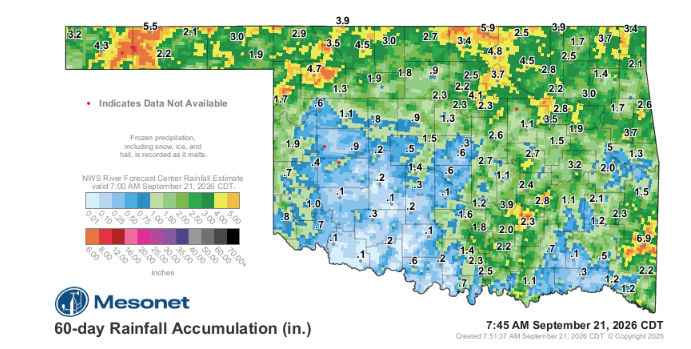
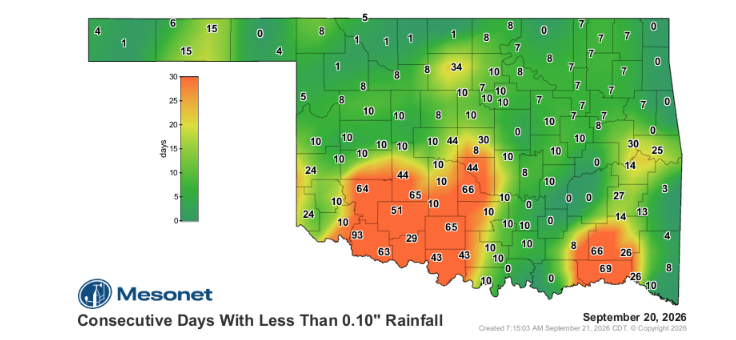
Highlighting the severity of the deficit in central Oklahoma, McManus pointed out that his area in Norman has received just six-tenths of an inch of rainfall over the last 60 days, with 44 consecutive days passing without seeing even a tenth of an inch.
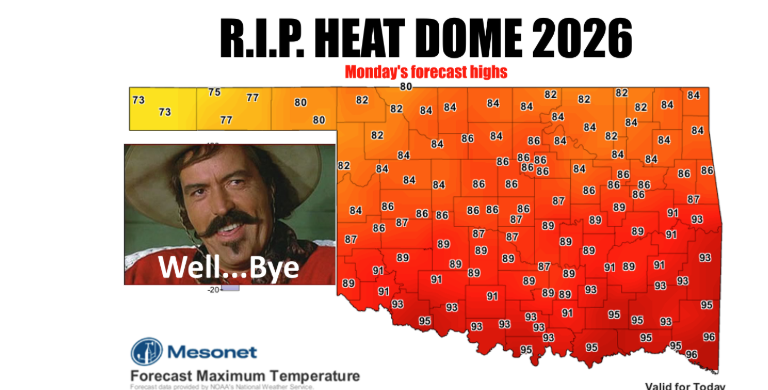
For farmers and ranchers managing pastures, winter wheat planting, and livestock water supplies, the temperature outlook shows both subtle improvements and lingering warmth. While the persistent, oppressive heat dome that fueled an endless run of triple-digit temperatures is finally breaking down and shifting south, late-season warmth will still be a factor across the state.
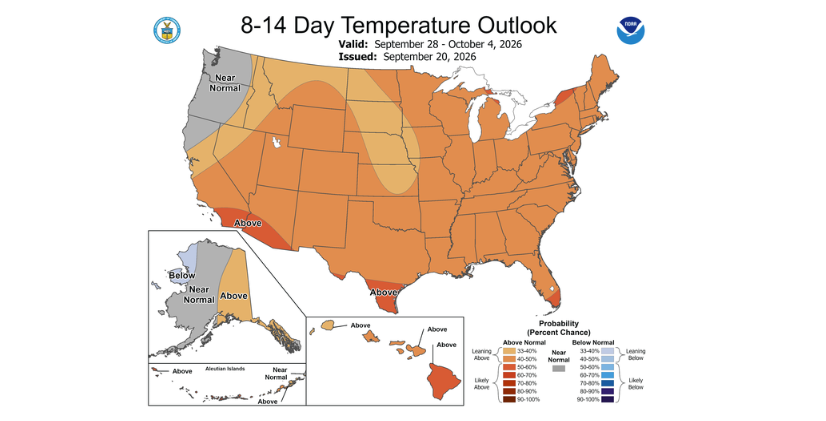
Highs along the Red River are forecast to reach into the mid-90s, and McManus cautioned that while widespread 100-degree days are mostly done for the season, Oklahoma may not have seen its final triple-digit reading just yet. Above-normal temperatures are expected to hold across northern Oklahoma and throughout the state heading into the weekend, with Sunday in particular showing another spike in warmth.
Although the broader pattern will stay somewhat above seasonal averages, it will not bring the relentless summer heat experienced over recent weeks.
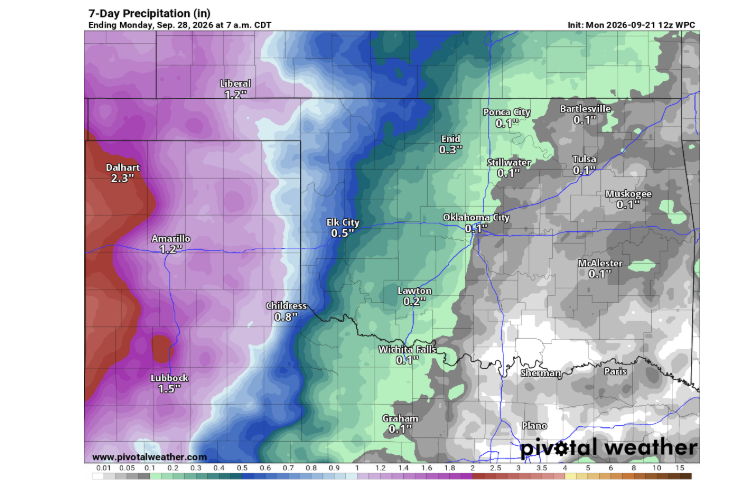
On the precipitation front, widespread drought-busters remain absent from the near-term forecast, with the exception of potential moisture favoring parts of the Panhandle. Outside of those localized chances, producers across the state will have to navigate a warm, largely dry start to the fall season as they await a broader pattern shift.
To read more from State Climatologist Gary McManus on his mesonet ticker, click here: