
Limited cattle supplies continue to anchor historic market prices across the livestock sector, leaving producers to evaluate when herd expansion will begin in earnest. While recent widespread rainfall across the Plains has improved regional outlooks with additional moisture on the horizon, industry analysts caution that a meaningful rebuild remains a multi-year endeavor.
Tim Struck, a hedging strategist with AgMarket.Net, pointed out that current market dynamics are creating unusual herd-management choices. In recent weeks, cull cow prices have dropped significantly, altering standard culling decisions.
“It’s not as attractive to cull cows, so believe it or not, you wouldn’t normally be quick to associate falling or lower cull cow prices with expansion,” Struck explained. “When there’s not as much financial incentive to cull those cows, and calves are still worth a lot, it’s like, ‘Well, we’ll keep that old cow around another year and get another calf out of her.’ So you can actually see that reduction in cull cow prices increase herd size, herd expansion.”
Despite producers retaining mature cows for extra calving cycles, Struck projects it will take at least two years before the domestic beef herd sees meaningful, structural expansion.
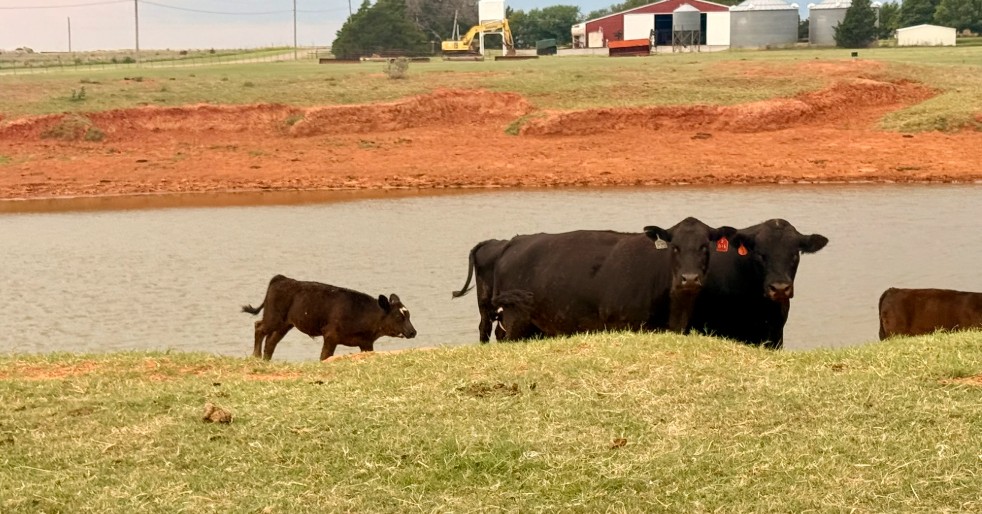
In Oklahoma, moisture conditions remain a primary catalyst in determining when producers can expand rather than maintain existing numbers. Recent Mesonet observations show isolated to widespread relief across parts of the state, though lingering deficits have created varied pasture conditions. Across southern and central corridors, rainfall events delivering between 1 and 3 inches have provided short-term relief to stock ponds and emerged winter wheat, while northwestern regions continue to battle drier subsoil profiles.
Oklahoma State University Extension Livestock Marketing Specialist Dr. Derrell Peel also noted that while price signals strongly incentivize herd rebuilding, operational reality is moving much slower. Peel highlighted that prolonged nationwide drought caused deeper liquidation over multiple seasons, meaning the baseline herd starts from historic multi-decade lows.
According to Peel, heifer retention numbers have not shown aggressive expansion signals because pasture and forage recovery take time to heal from cumulative drought stress. With stocker demand running high and prices for lightweight calves remaining elevated, many producers are taking advantage of strong cash flow rather than holding back significant numbers of replacement heifers, aligning with Struck’s projection that a wider national herd expansion remains delayed.