

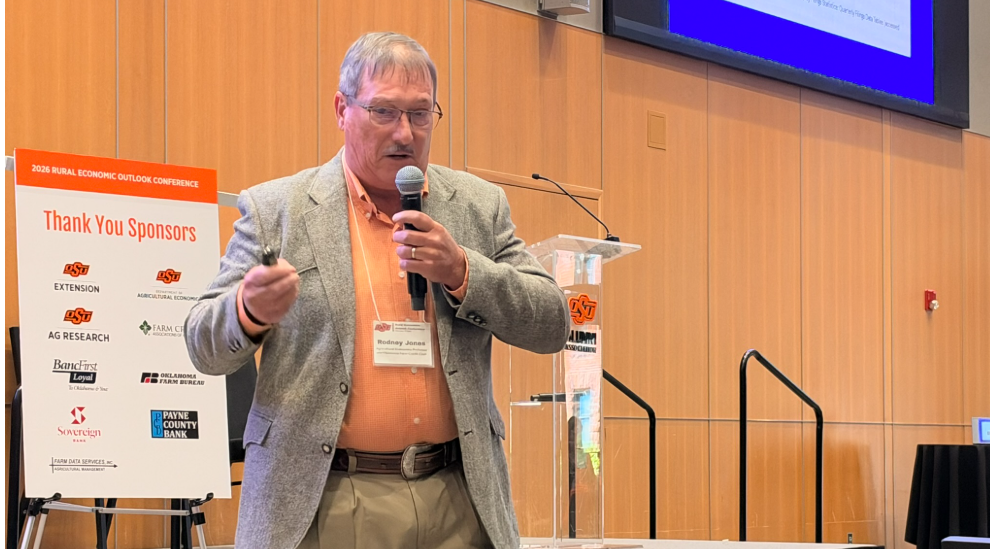
Agricultural producers are navigating an increasingly complex financial landscape marked by rising operating expenses, volatile global markets, high costs, and softened crop commodity prices. In a recent discussion with Farm Director KC Sheperd, Dr. Rodney Jones of Oklahoma State University’s Department of Agricultural Economics outlined the prevailing challenges facing the farm economy while pointing to the fundamental strengths keeping many operations afloat.
The Squeeze: High Costs and Soft Prices
The primary pressure currently felt in farm country comes down to the basics of operational cash flow. Rising inputs have escalated the cost of doing business, while revenues for grain producers have dropped significantly.
“Times are a little bit difficult, mostly driven by costs,” Jones explained. “Fuel costs are high, fertilizer costs are high… the dollars that it takes to run a farm or ranch [are] just astronomical. And of course we’ve seen a little bit of a drop off, well really a significant drop off in especially crop commodity prices. That presents a little bit of a squeeze.”
The broader market environment has also proven sensitive to non-fundamental shocks. Global conflict and policy communication continue to create sudden disruptions in trade and energy flows.
“All of the above have caused significant disruptions really just within the last six months or so,” Jones noted. “Somebody tweets something about a change in policy… and that will throw a certain market into disruption.” He cited broader geopolitical tensions, such as conflict in the Baltic region, the war in Ukraine affecting export and production facilities, and Middle Eastern friction disrupting oil flows, as compounding pressures on input and crop markets alike.
Strong Financial Foundations Offer Protection
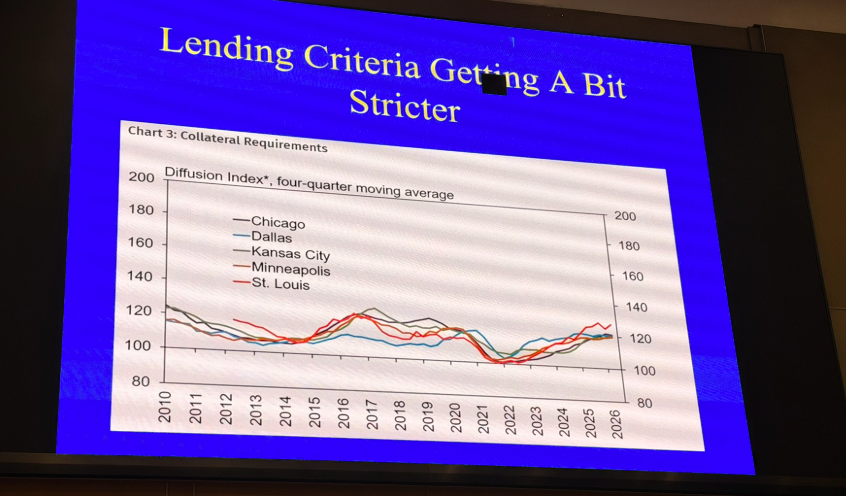
Despite the current margin compression, Jones emphasized that producers entered this cycle in a stronger structural position than during past downturns. Robust liquidity reserves and built-up equity have provided an essential safety net.
“We came into this in very strong equity positions, very strong liquidity positions,” Jones said. “So I’m confident that we’re going to weather the storm, at least in the short run. It’s always a question of how long this downturn will last.”
Part of that endurance stems from an ingrained mindset across the sector.
“Farmers are eternally optimistic,” Jones said. “We’ve just seen so many times that we’ve weathered bad time periods—financially difficult time periods—and then things have turned around, and of course everyone expects that to happen this time around.”
The Oklahoma Perspective: Cattle and Climate
For Oklahoma specifically, diverse enterprise mixes provide some insulation. While crop margins remain tight, the livestock sector has delivered crucial support.
“For our Oklahoma producers, we’re so reliant on the cow-calf sector and, you know, calf prices are high,” Jones observed. He noted that while crop farming is challenging right now, diversified operations find that “the cattle are maybe offsetting that.”
However, operating in the Southern Plains introduces unique environmental friction. Beyond economic pressures, local producers must continuously contend with erratic weather patterns.
“Everybody faces price challenges, everybody faces cost challenges,” said Jones, reflecting on conversations with peers across the country. “But try combining that with the weather challenges that we face in Oklahoma, and you really do have a very challenging environment within which to run a farming operation.”
The Road Ahead
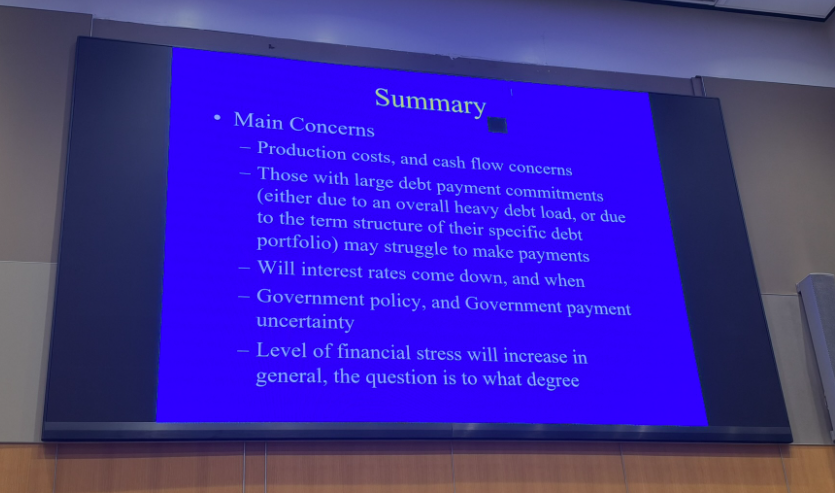
Looking forward, Jones stressed that meaningful relief will require two key developments: a rebound in grain commodity values and an easing of input costs, particularly energy. Because world grain markets reflect global trade flows and international supply rather than regional output, local growers must wait for cyclical market adjustments to run their course.
When asked what catalyst could turn conditions around quickly, Jones pointed to international stabilization.
“Getting some of these global conflicts resolved or more stabilized… might settle these markets down a little bit,” Jones said. “Even just the thought that maybe there won’t be as big a chance of a disruption next week… I think that would be a big help.”







