

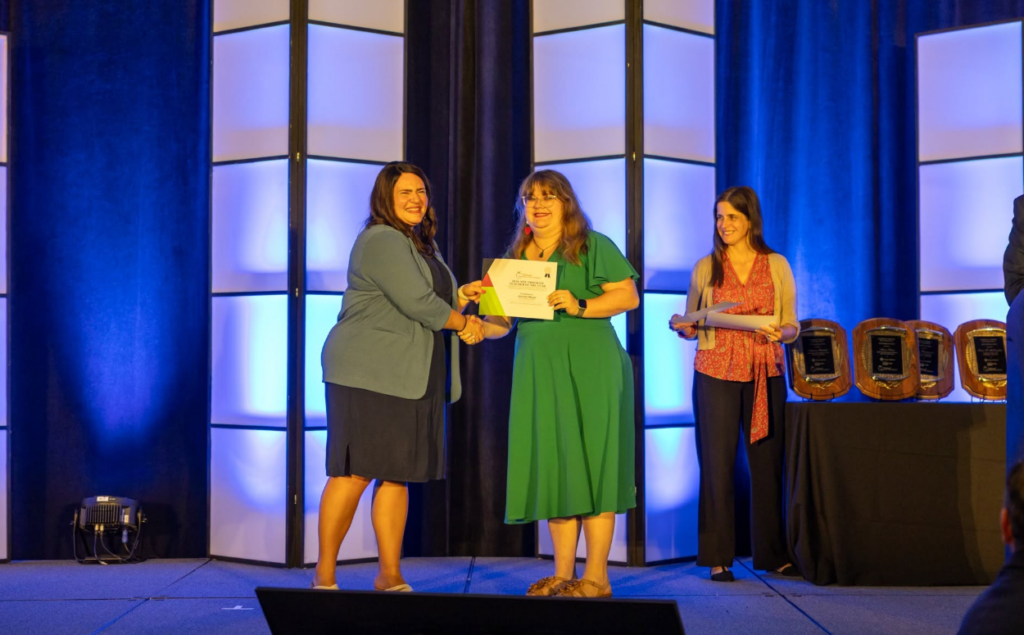
Agriculture education in Oklahoma classrooms is helping young students understand where their food, fiber and fuel come from, and 2026 Ag in the Classroom Teacher of the Year Jennifer Meyer is making those lessons a regular part of her first-grade classroom.
Mrs. Meyer teaches first grade at Grove Elementary in Shawnee, Oklahoma. She recently completed her sixth year at Grove and has been teaching for a total of 16 years, including nine years at Strother.
Through hands-on activities, classroom projects and food tastings, Mrs. Meyer works to introduce her students to agriculture and help them understand the role it plays in their everyday lives.
When asked why she believes agriculture education is important for young students, Mrs. Meyer said even some of the most basic concepts about agriculture are not always understood.
“I think it’s important because I teach first graders, and we just had our dairy cow announced. We adopted a cow through Discover Dairy, and most of them thought that we were going to adopt a boy calf,” Mrs. Meyer said. “They did not understand that dairy cows are the mothers, and the females are the ones that produce milk.”
She said experiences like that demonstrate why students need opportunities to learn about agriculture at an early age. “Just even like basic things like, where does my milk come from? They need to know,” she said.
Mrs. Meyer explained that understanding where food comes from also helps students recognize the work that goes into producing the products they find at the grocery store. “Everybody needs to know where their food and fiber and fuel come from,” she said. “If they know where their food comes from, they can understand, ‘Oh, this is all the hard work that came along to get it to the store where I buy it.’”
Hands-On Agriculture Lessons Keep Students Engaged
One of the ways Mrs. Meyer incorporates agriculture into her classroom is through special Ag fun Fridays, which give students something new to look forward to each week.
She said the students have become so excited about the lessons that parents have even noticed their enthusiasm. “I’ve even had parents say, like, they had to come to school. They wouldn’t let me check them out early because they know that they’re going to have some new ag lessons,” Mrs. Meyer said.
She added that students particularly enjoy lessons that allow them to taste different agricultural products. “We’ve tasted soybeans, we’ve tasted strawberries, and other things as well,” she said.
Her classroom also features a hydroponic garden provided by the Soybean Board. Students have been watching their plants grow and are waiting for their tomatoes to ripen.
The garden also includes jalapenos, which will give the class an opportunity to make salsa together. “We probably don’t like tomatoes and jalapenos by themselves, but if you make it into salsa and have that tortilla chip, they’re so excited to try that,” Mrs. Meyer said.
Through activities like these, students can see how agricultural products are grown and how they become foods they recognize and enjoy.
Mrs. Meyer Encourages Teachers to Start Small With Agriculture Education
For teachers interested in bringing more agriculture into their classrooms, Mrs. Meyer recommends starting with the resources available through Oklahoma Ag in the Classroom.
She encouraged educators to visit the Oklahoma Ag in the Classroom website or attend one of its training opportunities, where teachers can learn from others who are already incorporating agriculture into their lessons.
Mrs. Meyer also emphasized that teachers do not need to be agricultural experts to get started.
In fact, she said she continues to learn about agriculture alongside her students. “Even I didn’t know much about agriculture. I was kind of removed from that, from, you know, one generation, and it’s gone. And so I’m learning along with my students,” she said.
When she discovers a subject that interests her, she enjoys bringing that excitement into the classroom and sharing it with her students. “If I find something that I’m passionate about,im able to bring it back and say, ‘Hey, class, guess what we’re going to learn about,’” Mrs. Meyer said.
Her advice to other educators is to avoid feeling overwhelmed by the number of resources and lessons available. “Just pick one or two lessons to start with, or reach out to someone that uses Ag in the Classroom lessons, and just get involved that way,” she said. “Because you don’t have to do everything all the time.”
“Just do one thing that works in your classroom, and then that kind of just grows from there,” Mrs. Meyer added. Through her work with first-grade students, Mrs. Meyer is helping build agricultural awareness at an early age, giving students a better understanding of the people, resources and work behind the food they eat every day.







