
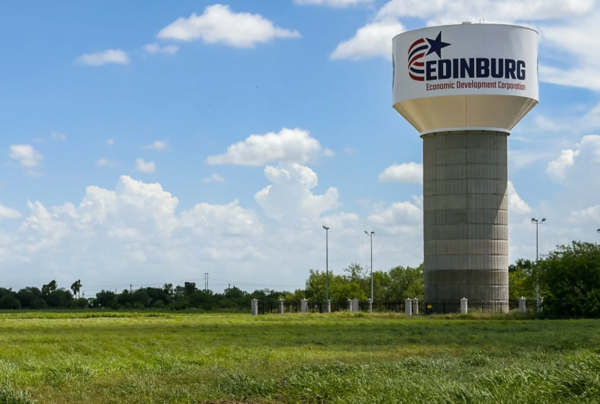
U.S. Secretary of Agriculture Brooke L. Rollins announced today that the U.S. Department of Agriculture (USDA) will begin hiring for 228 positions at the New World Screwworm (NWS) Sterile Fly Production Facility in Edinburg, Texas, starting this month. Those interested in the positions can apply online starting today at USAJobs.gov or can attend a hiring event in McAllen, Texas, from Nov. 17-19, 2026.
“Protecting U.S. livestock and wildlife from New World Screwworm is a national security priority, and this new facility will drastically boost the availability of sterile flies – our most successful offensive capability to drive these serious pests away from our border,” said Secretary of Agriculture Brooke L. Rollins. “The people filling these vital positions will serve at the front lines in our battle against this serious pest and help ensure that we again eradicate it from our country. Thanks to the speed of the Trump Administration and the support of the Department of War and the Army Corps of Engineers, this facility will open in record speed, nearly five years ahead of schedule.”
“The men and women of USDA’s Animal and Plant Health Inspection Service are vital to defending our nation against invasive pests and diseases that could devastate the agricultural industry, and we need skilled professionals dedicated to this mission on our front lines,” said Under Secretary for Marketing and Regulatory Programs Dudley Hoskins. “This hiring event gives people who may never have considered working in government an opportunity to join a mission worthy of the challenging work.”
The hiring event will be held at the Embassy Suites by Hilton McAllen Convention Center, 800 Convention Center Blvd. in McAllen, Texas; Nov. 17-19, 2026; from 8 a.m. to 8 p.m. CST each day. Hiring managers will be on site and conducting interviews during the event. For more information about this event, please visit https://www.aphis.usda.gov/careers/job-openings/now-hiring-texas-moore-air-base.
The new facility housed at Moore Air Base in Edinburg, Texas, helps achieve a cornerstone of Secretary Rollins’ five-pronged strategy (PDF, 1005 KB) to combat NWS, expanding the nation’s domestic capacity to protect livestock, wildlife, and public health from this serious pest.
The sterile insect technique is a sustainable, eco-friendly way to control insect pests by disrupting their ability to reproduce. In a biosecure environment, NWS flies are raised and sterilized using irradiation before being released in targeted areas. Because female screwworm flies mate only once, mating with sterile males results in eggs that do not hatch. Sterile flies are safe—because they can’t produce larvae, they cannot cause harm. They pose no risk to animals or people.
This technique, paired with surveillance, animal movement restrictions and education and outreach, has been the foundation of successful screwworm eradication efforts for decades.
Construction will be completed at the Texas facility in April 2027. It will be the first U.S.-based sterile fly production facility and is anticipated to begin producing 100 million sterile flies per week in 2027 and approximately 300 million sterile flies per week once it is operating at full capacity. Currently, USDA funds two sterile fly production facilities in North America. The facility in Panama is the backbone of current efforts, producing 100 million sterile flies per week. The facility in Mexico opened in June 2026 and continues to ramp up production. It is expected to produce 100 million sterile flies per week once it has reached full capacity.
Once fully operational, this expanded production network will provide the speed, scale, and domestic capability needed to rapidly counter any NWS threat—reducing risks to producers, protecting animal health, and strengthening the resilience of America’s livestock industry.
Fertile screwworms infest living tissue of warm-blooded animals and pose a threat to livestock and wildlife. However, they are not a food safety concern because they do not infest meat, fruits, vegetables, or other food sources.
For more information about New World Screwworm and USDA’s prevention efforts, visit Screwworm.gov.