
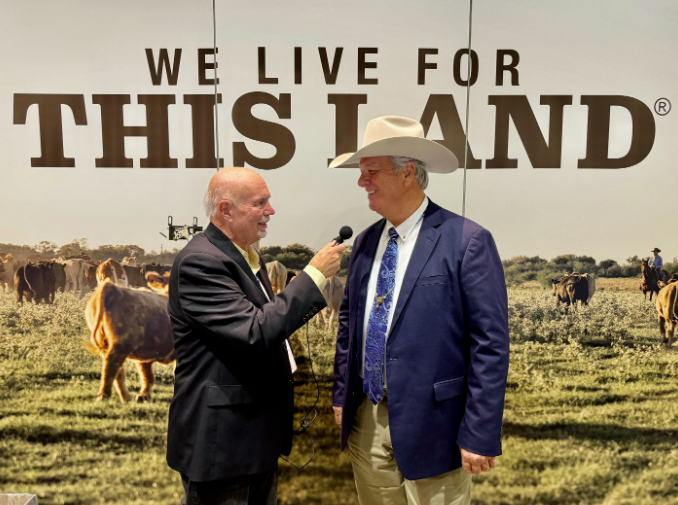
In today’s Beef Buzz, senior farm and ranch broadcaster Ron Hays speaks with Clay McKinney, executive director of Law Enforcement and Brand Inspection Services for the Texas and Southwestern Cattle Raisers Association (TSCRA), about the association’s Special Ranger program and its role in protecting cattle producers across Texas and Oklahoma. With livestock theft and agricultural equipment crimes continuing to affect ranchers, McKinney explains how the Special Rangers investigate these cases, work alongside local law enforcement and help producers protect their property.
Special Rangers Provide Law Enforcement Services to Ranchers
TSCRA has 27 Special Rangers assigned across Texas and Oklahoma, serving more than 19,000 association members. Commissioned by the Texas Department of Public Safety, the Special Rangers are peace officers with full arrest and search powers who specialize in agriculture-related crimes. “When a member calls us and needs our service, they have, in essence, a police force that comes and investigates that activity for them,” McKinney said.
The program dates back to 1877, when cattlemen organized to combat livestock theft and cattle rustling. Today, the Special Rangers continue that mission with an experienced group of law enforcement professionals. “We’re kind of picky, and a lot of times we get some really seasoned guys that have either been in Homeland Security or Texas Rangers, or Texas Parks and Wildlife, or even from a police department or sheriff’s office that are very seasoned individuals,” McKinney said.
Working With Law Enforcement Across Two States
While the Special Rangers provide specialized agricultural crime investigations, they also work closely with local, county and state law enforcement agencies.
McKinney said agencies frequently reach out when they need additional expertise investigating livestock theft or other agricultural crimes. “A lot of times, we will have those agencies contact us for our expertise and say, ‘Hey, we’ve got this report. We’ve had 20 head of cattle missing. Would you jump on board with us and help us?’ And of course, we do,” McKinney said.
He added that cooperation between agencies is an important part of the program. “We’ll assist, and they take the lead, or we’ll take the lead and they assist. We do not care. We’re there to help,” McKinney said.
That work resulted in approximately $12.9 million in recovered property last year, according to McKinney’s recent report to the association’s directors.
Branding Livestock Helps Prevent Theft
One of the biggest challenges investigators face is identifying livestock that has been stolen or gone missing. McKinney encourages producers to brand their cattle and horses and maintain other forms of identification.
He said investigators can face significant setbacks when livestock has no brand or earmark, particularly when animals have been missing for several days. “It’s not impossible, but it’s an extreme setback for us to try to find those cattle,” McKinney said.
Producers can also take steps to protect equipment and other valuable property. McKinney recommends keeping barns and saddle houses locked, making sure outdoor lighting works and installing motion-activated lights.
He also encourages ranchers to engrave identifying information, such as a driver’s license number, on valuable equipment, saddles and trailers. “If we do find the saddle, we can positively ID it because your driver’s license is underneath the skirt,” McKinney said.
Be Aware of Opportunities for Livestock Theft
With cattle and horses carrying significant value in today’s markets, McKinney said producers need to remain aware of their surroundings and the security of their livestock.
One situation that can create an opportunity for thieves is leaving cattle in a pen overnight, particularly near a farm-to-market road. “The crooks are watching all the time, and they see those cattle in there, and the front gate to the pasture is unlocked. They go get a trailer, come back, load them up, and they’re gone,” McKinney said.
He recommends returning cattle to a more secure pasture when possible or working them in pens that are away from the highway and out of public view.
How Producers Can Contact a Special Ranger
Producers who experience livestock theft or other agriculture-related crimes can find their district’s Special Ranger through the TSCRA website at TSCRA.org. The website includes a map with each Special Ranger’s photograph and contact information.
McKinney emphasized that producers do not have to be TSCRA members to contact a Special Ranger for assistance with a theft investigation.
Although membership helps support the program, the service is available to ranchers who need help protecting their livestock and property.
McKinney said the Special Ranger program remains one of the services TSCRA members value most, with many producers continuing their membership year after year because of the assistance it provides.
The Beef Buzz is a regular feature heard on radio stations around the region on the Radio Oklahoma Ag Network and is a regular audio feature found on this website as well. Click on the LISTEN BAR above for today’s show and check out our archives for older Beef Buzz shows covering the gamut of the beef cattle industry today.