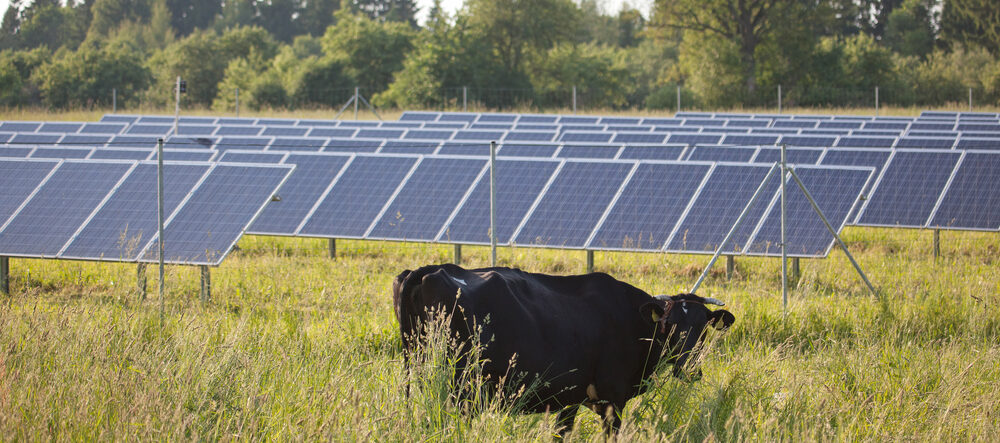
In recent years, solar energy has received growing attention in agriculture for its potential to diversify energy supplies, lower energy costs, and create additional farm income. But how interested are farmers themselves in installing solar panels on their farm operations? In 2025, we surveyed Alabama farmers regarding their (dis)agreement with the statement “I am interested in installing solar panels on my farm.” We summarize their responses and note differences in interest in on-farm solar across stages of their farming careers and plans for the future of their farming operations.
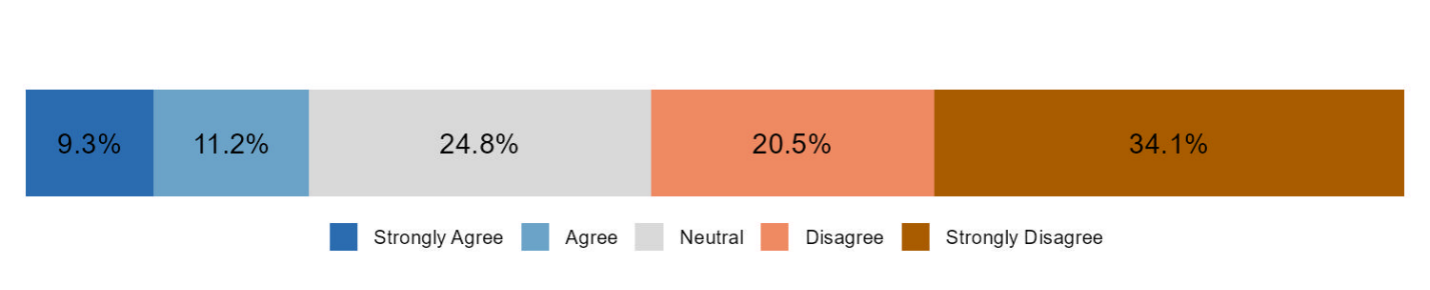
Among the 258 farmers who responded to the question, approximately one in five respondents expressed interest in installing solar panels (Figure 1). More than half of the respondents expressed no interest in on-farm solar panels. About one-quarter of respondents remained neutral.
Figure 1. Respondents’ interest in installing solar panels on their farms (n = 258)
We examined interest in installing solar panels by retirement and succession plans. We combined two questions to create this measure: one asked farmers whether they planned to retire from or quit farming in the next five years (Yes/No), and the other asked whether they had identified a potential successor to take over their farms (Yes/No).
Figure 2. Respondents’ interest in installing solar panels on their farms, by retirement and succession plans. Retiring refers to respondents who reported plans to retire within the next five years.
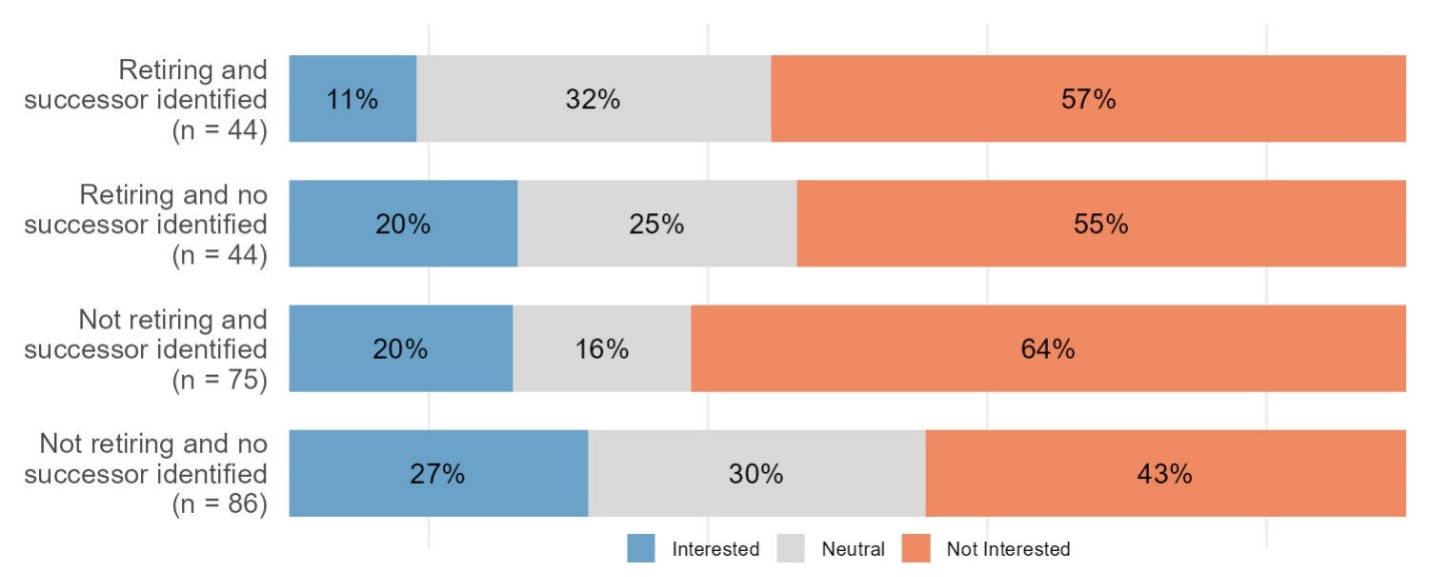
We observed the lowest levels of interest (11%) among respondents who planned to retire and had identified a successor (Figure 2). Interest rose to 20% among retiring respondents without an identified successor, which is similar to those who were not planning to retire but had identified a successor. We saw the greatest interest (27%) with respondents who were not planning to retire and had not identified a successor. That is the only group in which fewer than half of respondents (43%) report being uninterested.
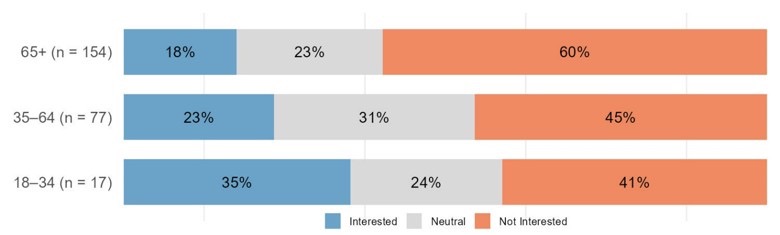
We were also interested in the age composition of these groups. The younger respondents (18-34 years old) expressed the highest interest (35%) (Figure 3), while respondents aged 65 or older had the lowest percentage (18%) expressing interest in on-farm solar.
Figure 3. Respondents’ interest in installing solar panels on their farms, by age group.
We examined solar interest across farm commodities, using respondents’ report of their primary commodity, that is the single crop or livestock commodity of farm product that provided the most total farm sales in 2024. Interest in installing solar panels was relatively similar across commodities. Twenty-four percent of poultry producers expressed interest, compared to 21% of crop producers and 20% of beef cattle producers. However, only 34% of poultry producers expressed no interest, compared with 59% of crop producers and 58% of beef cattle producers.
Overall, the results suggest that interest in installing solar panels is limited among the survey respondents, with variation across different age groups and retirement and succession circumstances. These descriptive results do not inform us of the reasons behind these differences. The survey question also did not distinguish between installing solar panels for farm energy use and leasing farmland for larger-scale solar development. Respondents may therefore have interpreted the question differently. These different forms of solar development may involve multiple considerations, including cost of installation, energy needs, expected returns, land ownership, and the anticipated future of the farm, to name a few. Understanding how farmers weigh these considerations may help clarify when and why they view on-farm solar as a worthwhile investment.
Francois, Jean R., Kelli J. Russell, and Mykel R. Taylor. “Interest in On-Farm Solar among Alabama Farmers.” Southern Ag Today